Apparel pricing is shaped by time. A style launches. Sizes sell unevenly. Colors perform differently. Competitors promote similar products. Weather shifts demand. Inventory builds in some locations while other channels sell through faster. The season moves forward, and the window for full-price selling gets shorter every week.
In this environment, price changes can feel like the safest response.
A competitor discounts a similar sweater. A dress is selling slower than planned. A seasonal jacket has inventory risk. A sandal style is underperforming in one color. A category manager sees a gap and lowers the price slightly. Then another small change follows. Then another.
At first, each move may look reasonable. But over time, frequent price changes can create markdown drift.
Markdown drift happens when repeated reactions gradually pull a product away from its intended pricing strategy. A style that should have held full price longer enters markdown too early. A promotional move becomes a new baseline. A price reduction meant for one color or size spills into broader style logic. The assortment begins to discount because the workflow is reacting, not because the business case is strong.
This is why apparel pricing teams should track price change frequency by style and season.
Hypersonix helps retailers bring more discipline to apparel pricing decisions by connecting competitor context, expected demand impact, inventory and forecasting signals, product-role rules, and business guardrails. Competitor AI helps validate whether competitor offers are truly comparable. Pricing AI uses historical sales and pricing patterns to support targeted recommendations, disciplined holds, and expected demand impact. Guardrails such as margin floors, movement limits, meaningful gap thresholds, and price holds help prevent unnecessary reductions before they become markdown drift.
The goal is not to stop markdowns. Markdown management is essential in apparel. The goal is to know when price movement is justified, when it is premature, and when repeated changes are quietly eroding margin and assortment value.
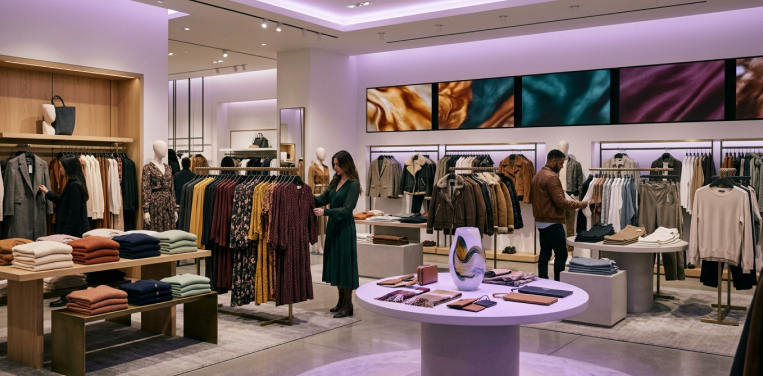
Why Price Change Frequency Matters in Apparel
Apparel is one of the most sensitive retail categories for price movement because products have short selling windows and visible lifecycle stages.
A price change on a seasonal item sends a signal. It can suggest urgency, aging inventory, weak demand, or promotional positioning. Customers may learn to wait. Merchandising teams may lose clarity on whether a style is underperforming because of product fit, weather, allocation, channel visibility, competitive pressure, or price.
Tracking price change frequency helps teams see whether they are making controlled decisions or simply reacting too often.
A style that has moved once may be following plan. A style that has moved four times in six weeks may indicate something else entirely. The issue may not be the final price level alone. It may be the pattern of repeated intervention.
Frequent price changes can signal:
- overreaction to competitor promotions
- weak product matching against non-equivalent items
- unclear markdown rules by lifecycle stage
- pressure from uneven size or color sell-through
- inventory risk that was not addressed earlier
- pricing overrides that bypassed guardrails
- promotional activity that reset base price expectations
- delayed recognition of demand softness
Apparel teams need to know not only where prices are today, but how often they have changed, why they changed, and whether those changes were aligned with the style’s seasonal plan.
Markdown Drift Starts With Small Decisions
Markdown drift rarely begins with one dramatic price cut.
It usually begins with small moves that look manageable in isolation.
A top is reduced by 5 percent because a competitor appears cheaper. A dress is adjusted again because a similar style is in promotion. A jacket is lowered after a week of soft sell-through. A colorway receives a discount, then the parent style is reviewed again. A limited promotion ends, but the everyday price does not fully recover.
Each decision may feel rational at the moment. But if the team is not tracking price change frequency, the pattern can be missed.
The danger is that markdown decisions start happening earlier and more often than the seasonal strategy intended. Instead of a structured path from full price to planned markdown to clearance, the style drifts through repeated adjustments.
This weakens margin, complicates reporting, and makes it harder to understand true product performance.
Style, Color, and Size Performance Should Not Be Treated the Same
Apparel pricing is complicated because performance is rarely uniform.
A style may sell well overall, but one color may lag. Core sizes may sell quickly while fringe sizes build inventory. A dress may perform well online but slowly in stores. A jacket may sell in colder regions but stall elsewhere.
If price change frequency is tracked only at the SKU level without style and season context, teams may miss the larger pattern. If it is tracked only at the parent style level, teams may overreact to issues that are isolated to a specific size, color, or location.
A strong apparel pricing workflow should distinguish between:
- style-level performance
- color-level performance
- size-level availability and sell-through
- channel-level demand
- location or climate differences
- lifecycle stage
- planned promotion or markdown timing
This helps teams avoid broad markdowns when the issue is narrow.
For example, if only one color of a sweater is underperforming, the best response may be targeted review or promotion for that color, not a price move across the full style. If only fringe sizes are left, the price decision may be about inventory clearance rather than competitive positioning. If one channel is slow, the issue may involve visibility, allocation, or merchandising instead of price.
Hypersonix helps teams bring inventory and forecasting context into pricing decisions so they can separate true pricing issues from assortment, lifecycle, or allocation issues.
Competitor Comparisons Can Trigger Unnecessary Movement
Apparel competitor comparisons are often imperfect.
Two items may look similar in a search result, but differ in fabric, fit, construction, brand positioning, season, pattern, length, color, size availability, or promotional terms. A competitor’s blouse may be last season’s clearance item. A dress may appear similar but use different material or have a different silhouette. A jacket may include a temporary promotion or limited-size availability.
If those differences are not recognized, pricing teams may react to false undercuts.
This is one of the biggest causes of unnecessary price movement in apparel. A retailer lowers price because a competitor appears cheaper, but the competitor item is not truly equivalent. The result is margin loss without a real improvement in competitive position.
Hypersonix Competitor AI helps improve product matching and relevance filtering so apparel teams can compare more meaningful competitive offers. Competitor monitoring can be configured on daily, weekly, or monthly cycles depending on category volatility and business needs.
The key is to use competitor data as a decision input, not an automatic trigger.
A competitor gap should move a style toward action only when the match is reliable, the competitor is relevant, and the gap is meaningful enough to affect demand or price perception.
Seasonality Changes the Meaning of a Price Move
A price reduction means something different at different points in the season.
Early in the season, a price cut can damage full-price potential and signal that the style is weaker than expected. Mid-season, a targeted move may help recover demand or manage inventory exposure. Late in the season, markdowns may be necessary to clear inventory before the selling window closes.
This is why price change frequency should be tracked against lifecycle stage.
A style that changes price three times late in the season may be following a clearance strategy. A style that changes price three times in the first month may indicate overreaction, weak matching, or a lack of hold discipline.
Seasonal context should influence:
- how quickly price changes are allowed
- how large each movement can be
- which items require review before markdown
- when holds should be favored
- when inventory risk justifies action
- when clearance logic should take over
Hypersonix supports guardrails such as movement limits, margin floors, meaningful gap thresholds, price holds, and exception-based review. These controls help teams avoid early, repeated markdowns unless the business case is clear.
Price Change Frequency Helps Detect Overreaction
Overreaction is not always obvious when teams review one exception at a time.
A pricing manager may approve a price move because the current recommendation looks reasonable. But if the style has already been changed several times, the next move may carry more risk than it appears.
Tracking price change frequency gives the team a memory.
It helps answer questions such as:
- How many times has this style changed price this season?
- Were the changes driven by competitor signals, inventory pressure, promotions, or overrides?
- Did previous price moves improve demand enough to justify the margin loss?
- Did the price restore after a temporary promotion?
- Has the item moved more often than similar styles?
- Is the recommendation creating controlled markdown progression or drift?
- Should this item move again, hold, review, or be investigated?
These questions help pricing teams identify when the decision process is becoming reactive.
Hypersonix can support this discipline through exception-driven workflows and guardrails that flag excessive movement, recommendations near limits, and cases where a hold may be more profitable than another reduction.
Movement Limits Are Critical in Apparel Pricing
Movement limits help prevent repeated small price changes from becoming uncontrolled markdown behavior.
In apparel, movement limits can be applied in several ways. They may restrict how much a price can change in one step, how frequently a product can move within a time period, or how many times a style can be reduced during a specific lifecycle stage before review is required.
This is especially useful for seasonal categories.
A movement limit can help stop early-season overreaction. It can also ensure that mid-season moves remain controlled and that late-season markdowns follow a clear plan rather than a series of disconnected adjustments.
For example, a retailer may decide that a new-season style should not receive multiple price reductions within its first selling window unless inventory risk, demand impact, and competitor relevance meet defined thresholds. A high-margin premium style may require review before any repeated movement. A clearance item may allow more movement, but within defined margin and lifecycle rules.
Hypersonix supports movement controls as part of a broader pricing guardrail framework. This helps teams act when necessary while preventing frequent, low-confidence changes from weakening profitability.

Price Holds Should Be Treated as Decisions
In apparel, a hold can be just as important as a markdown.
Holding price may be appropriate when a competitor comparison is weak, the product is still early in the season, inventory risk is manageable, demand is expected to improve, or a price reduction would not generate enough incremental demand to justify the margin loss.
But price holds often need explanation.
Merchandising, ecommerce, and finance teams may see soft sell-through or a competitor promotion and expect action. A hold can appear passive unless the workflow shows why the price should remain unchanged.
An effective hold should explain:
- the competitor match is not equivalent
- the offer is temporary or clearance-driven
- the style is still early in its lifecycle
- inventory risk is not yet material
- expected demand impact is limited
- the move would breach margin or movement guardrails
- recent price changes have already occurred
- the issue may involve allocation, visibility, sizing, or assortment mix
Hypersonix supports explainable recommendations and price holds so restraint becomes visible and defensible. This matters because preventing an unnecessary markdown can create as much value as approving the right one.
Expected Demand Impact Should Separate Useful Moves From Margin Leakage
A markdown should not be evaluated only by whether it increases units sold.
The question is whether the expected demand impact justifies the margin trade-off.
Some apparel items respond strongly to price changes. Others do not. A customer may buy a seasonal dress because of style preference, fit, color, event timing, brand affinity, or availability. A small markdown may not change behavior enough to offset lost margin.
Hypersonix Pricing AI uses historical sales and pricing patterns to support expected demand impact at the SKU or product-cluster level. This helps teams evaluate whether another price reduction is likely to produce meaningful value or simply give away margin.
Expected demand impact becomes even more important when a style has already changed price multiple times. If earlier reductions did not materially improve sell-through, another reduction may not be the answer. The issue may be product appeal, broken sizes, poor visibility, or late-season timing.
A disciplined pricing workflow should distinguish between price-responsive exceptions and cases where markdowns are unlikely to solve the real problem.
Inventory Context Prevents Broad Markdown Mistakes
Inventory pressure is one of the biggest drivers of apparel markdowns.
But inventory risk must be interpreted carefully.
A style may show high inventory overall, but sell-through may be strong in core sizes. A color may be overstocked while another color is selling well. A regional weather shift may explain temporary softness. A channel may be underperforming because inventory was allocated incorrectly.
Without this context, pricing teams may mark down too broadly.
Hypersonix helps combine pricing, inventory, and forecasting context so teams can evaluate whether pressure is broad, narrow, temporary, or structural.
This helps determine whether the correct action is:
- a style-level price move
- a color-specific action
- a size or location review
- a temporary promotion
- a price hold
- an inventory or allocation investigation
- a planned markdown based on lifecycle stage
The more precise the diagnosis, the less likely pricing teams are to create unnecessary markdown drift.
Promotions Can Distort Markdown Discipline
Apparel teams often run promotions alongside markdowns.
Temporary sitewide offers, loyalty events, category promotions, and competitor discounts can make it difficult to know whether the base price should move. If temporary promotional activity is treated as a signal that the base price is too high, styles may be marked down earlier than necessary.
This is especially risky when competitors promote similar products that are not truly equivalent or are already in clearance.
A competitor promotion should be evaluated based on relevance, product equivalence, seasonality, inventory position, and expected demand impact before it influences base pricing.
Hypersonix helps teams separate temporary promotional pressure from lasting category price pressure. Guardrails such as meaningful gap thresholds, movement limits, margin floors, and price holds help prevent promotions from resetting base price logic.
Overrides Can Reveal Where Pricing Rules Need Improvement
Tracking price change frequency also helps teams identify override patterns.
If pricing teams repeatedly override recommendations for a specific category, brand, style type, or lifecycle stage, the issue may not be isolated. It may indicate that guardrails, competitor sets, product matching rules, or inventory thresholds need refinement.
For example, repeated overrides may show that:
- a category is too sensitive to competitor clearance activity
- movement limits are too loose for early-season styles
- margin floors are too aggressive for end-of-season clearance
- product matching is creating too many false comparisons
- private label or exclusive products need different rules
- planners are using pricing to solve allocation problems
- certain promotions are distorting everyday price decisions
These insights can help teams improve the pricing workflow over time.
Hypersonix supports explainable workflows and guardrails that make pricing decisions easier to review, refine, and govern. The goal is not to eliminate human judgment. It is to give teams better evidence and clearer control.
A Practical Framework for Tracking Price Change Frequency
Apparel pricing teams can track price change frequency across several dimensions.
The most useful view is not just “how many price changes occurred,” but “which products changed, when, why, and with what result.”
A practical framework should include:
- style and SKU
- color and size where relevant
- category and product role
- season and lifecycle stage
- date and size of each price change
- reason for change
- competitor signal quality
- inventory position
- expected demand impact
- margin impact
- promotion context
- override status
- execution status
- outcome after the move
With this view, teams can spot patterns early.
A style that moved too often before mid-season can be flagged for review. A category with repeated low-impact markdowns can be evaluated for better guardrails. A competitor set that repeatedly triggers false undercuts can be refined. A product group that responds poorly to reductions can receive stronger hold discipline.
This turns price change frequency into a governance metric.
Move, Hold, Review, or Investigate
The value of tracking price change frequency is that it improves the next decision.
A pricing exception should not simply say, “This item is underperforming” or “A competitor is cheaper.” It should help route the style to the right decision path.
Move
A move may be appropriate when the competitor comparison is reliable, expected demand impact is meaningful, inventory risk is material, the lifecycle stage supports action, and the recommendation fits within margin and movement guardrails.
Hold
A hold may be appropriate when the style is early in the season, the competitor signal is weak, demand is expected to recover, inventory risk is manageable, or the item has already moved too often.
Review
A review may be needed when the style has changed price frequently, the margin impact is meaningful, the competitive signal is uncertain, or the recommendation is approaching a guardrail.
Investigate
An investigation may be needed when the issue may involve product matching, allocation, broken sizes, content visibility, forecasting, promotion setup, or price execution rather than base pricing.
This decision structure helps apparel teams avoid treating every underperformance signal as a markdown problem.
Price Execution Monitoring Helps Close the Loop
Even when the pricing decision is right, execution can still create problems.
A markdown may be approved but not applied. A temporary price may remain active too long. One channel may show the new price while another does not. A style-level action may be applied to the wrong color or size. A promotion may overlap with a markdown in a way that was not intended.
These issues can contribute to markdown drift because the executed price no longer reflects the approved strategy.
Hypersonix price execution monitoring helps verify that approved price actions were implemented as intended. This is especially important in apparel because style, color, size, channel, and season create many opportunities for execution gaps.
Tracking price change frequency should include whether each change was applied correctly and whether temporary actions were restored as planned.
How Hypersonix Supports Apparel Price Change Discipline
Hypersonix helps apparel retailers move from reactive markdown management to controlled pricing decisioning.
Competitor AI improves product matching and relevance filtering so teams can avoid reacting to non-equivalent offers across style, fabric, fit, color, season, promotion, and seller conditions. Pricing AI uses historical sales and pricing patterns to support expected demand impact and targeted recommendations. Inventory and forecasting context helps teams understand whether pressure is tied to demand softness, seasonal timing, stock exposure, or allocation issues.
Business guardrails help teams apply margin floors, movement limits, meaningful gap thresholds, price holds, category-specific rules, product-role constraints, and exception-based review. Explainable workflows help pricing, merchandising, ecommerce, and finance understand why a style should move, hold, review, or investigate. Price execution monitoring helps verify that approved actions were carried out correctly.
Together, these capabilities help apparel teams:
- track how often styles change price across the season
- identify early signs of markdown drift
- avoid reacting to weak or non-equivalent competitor signals
- protect full-price selling windows
- apply movement limits by lifecycle stage
- use expected demand impact before approving further reductions
- hold price when another markdown is unlikely to pay back
- distinguish product, inventory, allocation, and execution issues from pricing issues
- reduce unnecessary markdowns while still acting where risk is real
The result is a more disciplined pricing process that protects margin, improves markdown control, and helps teams make decisions with greater confidence.
Conclusion
Apparel pricing teams should not measure only the current price or the final markdown.
They should measure how often the price changed, when those changes occurred, why they happened, and whether they created the expected outcome.
Frequent price movement can be an early warning sign. It can reveal overreaction to competitor promotions, weak product matching, inventory pressure, unclear lifecycle rules, or pricing being used to solve non-pricing problems. If left unchecked, those small changes can become markdown drift.
Hypersonix helps apparel retailers track and control price decisions with cleaner competitor intelligence, expected demand impact, inventory and forecasting context, business guardrails, explainable workflows, and price execution monitoring.
The strongest apparel pricing teams do not simply ask, “Should we mark this down?”
They ask, “Has this style already moved too often, is another move justified, and are we protecting the season’s pricing strategy?”
That is how retailers detect overreaction before it becomes markdown drift.






Ready to Let AI Agents Work for Your Margins?
Leading brands are already growing profits on autopilot. Join them.


Trusted by 1000+ leading retail brands