Grocery ecommerce is one of the most price-sensitive areas of retail. Customers often compare prices on everyday essentials. Competitors may adjust prices on key value items, private-label products, fresh categories, household staples, and promotional bundles. A small price difference on a visible product can influence price perception. A larger gap on a high-volume item can affect conversion, basket value, or margin.
But there is a risk in reacting too quickly.
Not every competitor price gap deserves a price change.
A competitor may appear cheaper, but the product may not be truly comparable. The pack size may differ. The brand may be different. The offer may be temporary. The product may be out of stock. The price gap may be too small to influence shopper behavior. The item may be low on inventory, making a discount unnecessary. Or the product may already be operating near a margin floor.
This is why grocery ecommerce teams need competitor-aware pricing, not competitor-led pricing.
Modern Pricing Software for Ecommerce should help grocery retailers understand competitor movement while still protecting margin, inventory position, and product-level profitability. It should support daily, weekly, or monthly competitor tracking, accurate product matching, meaningful price gap analysis, and disciplined workflows that help teams avoid unnecessary discounting.
Similarly, Competitor Analysis Software for Ecommerce should not simply collect competitor prices. It should help teams filter noise, identify relevant price differences, and understand where competitor movement should inform action, review, or a price hold.
For grocery retailers, the goal is not to chase every price difference. The goal is to respond intelligently when competitor signals are accurate, relevant, and commercially meaningful.
Grocery Pricing Moves Fast, But That Does Not Mean Every Price Should Move
Grocery ecommerce teams operate in a dynamic environment.
Prices can change across fresh products, packaged goods, household items, health products, beverages, snacks, and pantry staples. Promotions can shift weekly. Competitor offers can vary by item, store, region, pack size, or availability. Some products are highly price-sensitive, while others are less exposed to direct comparison.
This creates pressure to respond quickly.
But speed without context can create margin leakage.
If a grocery team lowers price every time a competitor appears cheaper, it may give away margin on products where the price gap does not matter. It may reduce prices on items with stable demand. It may discount products that are already low on stock. It may react to poor matches, temporary promotions, or competitor listings that are not relevant to the shopper’s decision.
A more disciplined workflow asks better questions:
- Is the competitor product truly comparable?
- Is the price gap large enough to matter?
- Is the competitor offer active and relevant?
- Is the product a key value item or a long-tail item?
- Is our inventory position healthy enough to support a reduction?
- Would lowering price improve demand enough to justify the margin loss?
- Should the product move, hold, or be reviewed?
Competitor-aware pricing helps grocery teams balance market relevance with profitability.
Competitor-Aware Pricing Is Different From Chasing Competitors
There is an important difference between monitoring competitors and following competitors.
Competitor monitoring helps teams understand what is happening in the market. It provides visibility into price changes, promotional activity, product availability, and market positioning. That visibility is valuable, especially in grocery categories where shoppers may compare prices frequently.
But following competitors blindly can be risky.
A competitor may be using a temporary promotion. They may be clearing inventory. They may have different supplier economics. They may be using certain products as traffic drivers. They may have different fulfillment costs, store economics, regional strategy, or customer acquisition goals.
A competitor price can be a signal, but it should not automatically become the decision.
Competitor-aware pricing means using competitor data as one input alongside margin, inventory, demand, product role, forecast, and business guardrails. It helps teams decide whether a price gap is meaningful enough to justify action.
This is where Competitor Analysis Software for Ecommerce becomes more useful. The value is not only in seeing competitor prices. The value is in understanding which competitor signals deserve attention and which should be filtered out.
Daily, Weekly, or Monthly Competitor Tracking Should Match Business Needs
Competitor tracking does not need to follow a single cadence for every grocery product.
Some items require frequent visibility. Others can be reviewed less often. A high-volume staple or key value item may need daily monitoring because it affects price perception and competitive positioning. A slower-moving specialty item may not need the same level of attention. A seasonal product may require closer monitoring during peak demand, then less frequent tracking afterward.
Hypersonix Competitor AI supports competitor tracking on daily, weekly, or monthly cadences based on business needs, product role, category volatility, and competitive intensity.
This matters because not all competitor movement has the same urgency.
Daily tracking may be useful for:
- key value items
- highly visible grocery staples
- promotion-sensitive products
- fast-moving products
- items with frequent competitor changes
- products central to price perception
Weekly tracking may be useful for:
- standard grocery categories
- products with moderate price movement
- routine competitive review
- promotional planning cycles
- category-level monitoring
Monthly tracking may be useful for:
- slower-moving items
- specialty products
- lower-risk categories
- long-tail assortment review
- strategic price benchmarking
The right cadence helps grocery teams stay informed without creating unnecessary noise.
Product Matching Is Critical in Grocery Ecommerce
Competitor price data is only useful when the product match is accurate.
Grocery product matching can be more complex than it appears. Similar products may differ by brand, size, weight, flavor, count, formulation, packaging, organic status, private-label status, freshness, or bundle structure. A competitor price may look lower, but the item may not be equivalent.
For example, a 500g product should not be compared directly with a 750g product without normalization. A pack of six should not be treated the same as a single unit. Organic and conventional products may have different price expectations. A private-label item may not be directly comparable to a national brand. A promotional bundle may not be comparable to a standard product listing.
Weak product matching can lead to poor decisions.
A retailer may discount unnecessarily because the competitor product was not truly comparable. Or the team may miss a meaningful gap because comparable products were not matched correctly.
Hypersonix Competitor AI helps improve product matching by identifying more relevant competitive comparisons. This supports better decision-making because teams can evaluate price gaps based on stronger product relevance.
In grocery ecommerce, accurate matching is not a technical detail. It is the foundation of competitor-aware pricing.
Meaningful Price Gaps Matter More Than Every Price Gap
Not every price gap is worth acting on.
A competitor may be slightly cheaper, but the difference may not influence shopper behavior. A small gap may be acceptable if the retailer has better availability, faster fulfillment, stronger customer trust, or a broader basket value proposition. In some cases, a price gap may be too small to justify the margin loss from matching or beating the competitor.
This is why meaningful price gap analysis matters.
A meaningful gap is large enough to deserve review because it may influence price perception, demand, or competitive position. The threshold may vary by product role, category, margin, and customer sensitivity.
For grocery retailers, meaningful gap thresholds may differ across:
- key value items
- fresh categories
- pantry staples
- household essentials
- private-label products
- premium products
- specialty products
- seasonal products
- promotional items
A small gap on a highly visible grocery staple may deserve review. A similar gap on a niche product may not matter. A large gap on a high-volume item may require action, while a smaller gap on a low-margin product may need review against margin guardrails.
Hypersonix supports meaningful gap thresholds as part of broader pricing workflows, helping teams avoid overreacting to small or irrelevant price differences.
This allows grocery teams to focus attention where competitor movement is most likely to matter.
Avoiding Unnecessary Discounting Protects Grocery Margins
Grocery margins can be tight, which makes unnecessary discounting especially risky.
A small price cut can quickly reduce profitability on high-volume products. A broad reaction to competitor prices can create margin leakage across the assortment. A price reduction on a product that would have sold anyway can weaken profit without creating enough incremental demand.
Discounting may be unnecessary when:
- demand is stable
- inventory is low or constrained
- the competitor gap is not meaningful
- the competitor product is not truly comparable
- the product is already near a margin floor
- the offer is temporary or conditional
- the product has a strong role in the basket
- the expected demand impact is limited
A price hold can be the better decision when the business case for a reduction is weak.
Modern Pricing Software for Ecommerce should help teams identify these situations. It should not push every competitor gap into a price reduction. It should help retailers decide whether a product should move, hold, or be reviewed.
For grocery ecommerce, this discipline can make a meaningful difference because margin leakage can accumulate quickly across frequent transactions and large product assortments.
Inventory Context Should Influence Competitor Response
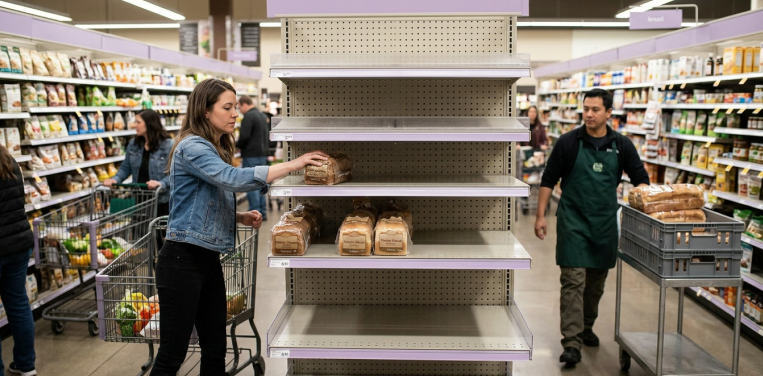
Competitor price gaps should not be evaluated without inventory context.
If a grocery product is low on stock, lowering price may increase demand the retailer cannot fulfill. The result may be lower margin on the remaining units and a higher risk of stockout. If a product is overstocked, a competitor signal may be more relevant, but the team still needs to evaluate margin, demand, freshness, product role, and expected impact.
Inventory context changes the pricing decision.
A low-stock product may need protection from unnecessary discounting.
An overstocked product may need review, but not always a broad price cut.
A fast-moving product may need a hold if demand is already strong.
A slow-moving product may require a pricing or promotion review if inventory risk is increasing.
Hypersonix Inventory AI and Pricing AI can help retailers connect inventory signals with pricing recommendations. This helps teams avoid treating competitor price differences as isolated triggers.
For grocery teams, this matters because inventory risk can be immediate. A product may spoil, sell out, or create basket gaps if pricing and inventory decisions are not aligned.
Product Role Should Shape the Response
Not every grocery product plays the same role.
Some products are key value items that influence price perception. Others are traffic drivers, margin builders, basket complements, seasonal products, fresh items, premium products, private-label items, or long-tail SKUs.
The product role should shape how teams respond to competitor pricing.
A key value item may require closer competitor monitoring and tighter gap thresholds. A margin-building product may need more protection from unnecessary reductions. A fresh product may require faster review when inventory or demand changes. A premium product may not need to match a lower-priced alternative if the value proposition is different.
Pricing software should help teams apply different rules by product role.
Hypersonix supports product-role rules, business guardrails, margin floors, price movement limits, price holds, and exception-based review workflows. These help grocery teams avoid a one-size-fits-all pricing response.
This is especially important in grocery because a broad price-matching strategy can weaken margins across products that do not need to compete in the same way.
Pricing Recommendations Need Explainability
A recommendation is only useful if the team can understand why it was made.
If the system recommends a price reduction, the grocery team needs to know the reasoning. Is it because of a meaningful competitor gap? Is the competitor match strong? Is inventory building? Is demand softening? Is the product a key value item? Does the recommendation stay within margin guardrails?
If the system recommends holding price, the team should also understand why. Demand may be stable. Inventory may be constrained. The competitor signal may be weak. The gap may not be meaningful. The expected impact may not justify the margin loss.
Explainability helps teams make better decisions.
It also supports alignment between pricing, ecommerce, merchandising, category management, and finance teams. When teams understand the logic behind a recommendation, they can review exceptions more efficiently and avoid debates based only on instinct.
Hypersonix Pricing AI and Competitor AI support explainable workflows so teams can evaluate recommendations with business context. This helps grocery retailers decide whether to move, hold, or review a product before taking action.
Competitor Analysis Software Should Reduce Noise, Not Add More
Many ecommerce teams already have access to large volumes of market data.
But more data does not always mean better decisions.
If competitor analysis software floods teams with every price difference, every change, and every match without context, it can increase workload instead of improving outcomes. Grocery teams need relevance, not just volume.
Effective Competitor Analysis Software for Ecommerce should help teams:
- monitor competitor prices on daily, weekly, or monthly cadences
- improve product matching accuracy
- filter irrelevant competitor signals
- identify meaningful price gaps
- compare offers with product context
- support exception-based review
- connect competitor signals with pricing recommendations
- avoid unnecessary discounting
- protect margins through guardrails
- support move, hold, or review decisions
The purpose is not to create more alerts. It is to help teams focus on the competitor signals that actually matter.
Forecasting Helps Grocery Teams Avoid Reactive Pricing
Competitor price movement is only one part of the decision.
Grocery teams also need to understand expected demand. A product may have a competitor price gap, but if demand is stable and inventory is low, a price reduction may not make sense. Another product may have growing inventory risk and slowing demand, making the competitor signal more relevant.
Forecasting helps teams anticipate demand and inventory risk before pricing decisions become urgent.
Hypersonix Forecasting AI can support demand planning and expected sales visibility. When used with Pricing AI, Inventory AI, and Competitor AI, forecasting helps teams evaluate whether a price move is likely to support the business objective or simply reduce margin.
For grocery ecommerce, this is important because demand can be influenced by seasonality, holidays, promotions, weather patterns, replenishment behavior, and basket-building habits.
A more forward-looking pricing workflow helps teams avoid purely reactive decisions based on competitor movement alone.
Promotion Context Also Matters
Grocery pricing and promotions are deeply connected.
A competitor may appear cheaper because they are running a temporary promotion. A product may have a price gap because of a bundle, multi-buy, loyalty offer, or short-term campaign. If a retailer reacts by changing the base price, it may create unnecessary margin loss after the competitor promotion ends.
Pricing teams should distinguish between a competitor’s base price and a promotional offer.
Hypersonix Promo AI supports promotion planning and offer effectiveness analysis. When connected with competitor and pricing intelligence, retailers can better understand whether a price gap is tied to a temporary promotion, whether a response is needed, and whether a promotion or price change is the better path.
For grocery ecommerce teams, this helps avoid one of the most common mistakes: turning a temporary competitor signal into a permanent price reduction.
Price Execution Monitoring Protects the Final Decision
A pricing decision is only valuable if it is executed correctly.
A grocery team may approve a price change, price hold, or promotional price, but execution issues can still create margin leakage. A price reduction may not be applied. A price hold may be overridden. A temporary price may remain active too long. A product may not return to its planned price after a promotion. A price may sync incorrectly across channels.
In grocery, execution issues can be costly because high-volume products move quickly.
Hypersonix price execution monitoring helps verify whether approved pricing actions were implemented as intended. It can help identify delayed, missed, inconsistent, or incorrect price changes after approval.
This matters because competitor-aware pricing is not only about the recommendation. It is also about ensuring the approved decision is carried through accurately.
For pricing software for ecommerce, execution visibility supports stronger governance and better margin protection.
How Hypersonix Helps Grocery Teams Make Competitor-Aware Pricing Decisions
Hypersonix supports grocery ecommerce teams with capabilities that connect competitor intelligence, pricing recommendations, inventory context, forecasting, promotions, guardrails, and execution monitoring.
For competitor-aware pricing, Hypersonix can help teams:
- track competitor prices on daily, weekly, or monthly cadences
- improve product matching across grocery items, pack sizes, and variants
- filter irrelevant or weak competitor signals
- identify meaningful price gaps
- evaluate whether a product should move, hold, or be reviewed
- apply margin floors and movement limits
- use product-role rules for key value items and other product groups
- consider inventory position before approving price changes
- evaluate demand patterns and expected impact
- avoid unnecessary discounting when the business case is weak
- monitor execution after pricing decisions are approved
This creates a more disciplined pricing workflow.
The goal is not to remove human judgment. The goal is to give pricing, ecommerce, merchandising, and category teams better context so they can make more informed decisions.
What Grocery Teams Should Look for in Pricing and Competitor Analysis Software
Grocery teams evaluating Pricing Software for Ecommerce or Competitor Analysis Software for Ecommerce should look for capabilities that support both competitive awareness and profit protection.
Important capabilities include:
- daily, weekly, or monthly competitor tracking
- strong product matching
- pack-size and variant-aware comparisons
- competitor relevance filtering
- meaningful price gap thresholds
- pricing recommendations with explainability
- inventory-aware pricing workflows
- margin floors and business guardrails
- price movement limits
- price holds
- product-role rules
- exception-based review
- demand forecasting
- promotion context
- price execution monitoring
Together, these capabilities help grocery teams avoid two extremes: ignoring the market or chasing every competitor change.
A strong pricing workflow does neither. It helps teams respond when action is justified and hold when restraint protects more value.

Conclusion
Grocery ecommerce teams need competitor visibility, but they also need discipline.
Competitor prices matter, especially for visible products, key value items, and high-volume categories. But not every competitor price gap deserves a reaction. Some gaps are too small to matter. Some products are not true matches. Some offers are temporary. Some products are low on stock. Some reductions would weaken margin without creating enough business value.
Modern Pricing Software for Ecommerce and Competitor Analysis Software for Ecommerce should help grocery retailers make competitor-aware decisions without overreacting to every price gap.
Hypersonix supports this through Competitor AI, Pricing AI, Inventory AI, Forecasting AI, Promo AI, business guardrails, explainable workflows, and price execution monitoring. Competitor tracking can be configured on daily, weekly, or monthly cadences based on product role, category volatility, and business needs.
For grocery retailers, the strongest pricing decisions are not always the fastest reactions.
They are the decisions that combine competitor context with product matching, meaningful price gaps, margin protection, inventory reality, demand signals, and disciplined execution.




Ready to Let AI Agents Work for Your Margins?
Leading brands are already growing profits on autopilot. Join them.


Trusted by 1000+ leading retail brands