Beauty retail is a category built on momentum. A hero serum can sell out quickly after strong customer demand. A fragrance set can spike during a seasonal campaign. A skincare bundle can drive basket growth. A makeup shade can move fast for one audience and slowly for another. A slow-moving product can sit in inventory longer than expected, while a best seller may run low before the next replenishment cycle.
For beauty retailers, pricing decisions are rarely simple.
The category often includes best sellers, replenishment products, bundles, kits, seasonal collections, influencer-driven demand, promotion-sensitive products, and premium brands where pricing decisions can affect both margin and brand perception. A discount may help clear excess stock, but it can also weaken profitability if applied too broadly. A price hold may protect margin on a strong-performing product, but only if demand and inventory context support it. A pricing recommendation may be useful, but teams still need to understand why the recommendation was surfaced and whether it fits the product’s role.
This is why Pricing Software for Ecommerce and Pricing Software for Retail need to support more than basic price changes. Beauty retailers need product-level intelligence, demand visibility, inventory context, margin-aware recommendations, competitor-aware decision-making, and explainable workflows.
Hypersonix Pricing AI is designed to help retailers make more informed pricing decisions by combining predictive analytics, product clustering, pricing recommendations, business guardrails, and decision support. When connected with capabilities such as Competitor AI, Inventory AI, Forecasting AI, Promo AI, and price execution monitoring, beauty retailers can better evaluate when to move price, when to hold price, and when to review a product before taking action.
The goal is not to discount more often.
The goal is to price with better context across best sellers, slow movers, and inventory risk.

Beauty Pricing Is Different From Other Retail Categories
Beauty retail has its own pricing dynamics.
Some products are replenishment-driven, such as skincare essentials, haircare items, and everyday cosmetics. Some are trend-driven, such as seasonal shades, limited collections, viral products, or influencer-backed launches. Some are brand-led, where price perception and premium positioning matter. Others are promotion-sensitive, where shoppers may respond strongly to bundles, kits, limited-time offers, or gift-with-purchase strategies.
This makes pricing complex because not every product should be treated the same way.
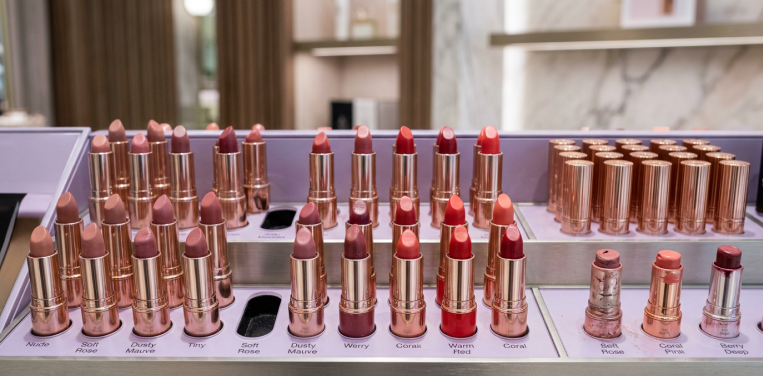
A best-selling moisturizer with stable demand may not need a discount. A low-stock hero product may need price protection rather than a reduction. A slow-moving lipstick shade may require review before markdown. A beauty bundle may need margin analysis because the total offer must still support profitability. A product with rising demand may deserve a price hold, while a product with excess inventory may need a targeted pricing or promotion strategy.
Beauty retailers need to understand the role each product plays.
That role should influence the pricing decision.
Best Sellers Need Protection, Not Automatic Promotion
Best sellers are often the products teams watch most closely.
They drive revenue, attract customers, support loyalty, and contribute to category strength. But because they are highly visible, they are also frequently pulled into promotions. That can create unnecessary margin leakage if the product would have sold well without a discount.
A beauty best seller may deserve a price hold when demand is stable, inventory is limited, and margin contribution is healthy. If shoppers are already buying the product at the current price, a discount may increase units but reduce profit. If the product is low on stock, a discount can create additional demand that the retailer cannot fully support.
Pricing AI can help beauty retailers evaluate best sellers with more discipline.
Instead of asking only, “Can we increase volume with a lower price?” teams can ask:
- Is demand already healthy?
- Is the product contributing margin?
- Is inventory available to support additional demand?
- Is the product part of a premium or brand-sensitive assortment?
- Would a price reduction create enough incremental value?
- Should this product move, hold, or be reviewed?
Hypersonix Pricing AI supports pricing recommendations with business guardrails, helping retailers evaluate the trade-off between price movement, demand impact, and margin protection. This is especially important for best sellers because the wrong discount can scale quickly across high-volume products.
Slow Movers Need Review Before Markdown
Slow-moving beauty products can create pressure.
They may tie up inventory, consume working capital, and eventually require markdowns if not addressed. But slow movement does not automatically mean the product should be discounted immediately.
The product may need better merchandising. It may be affected by seasonality. It may be part of a bundle strategy. It may be a niche product with lower velocity but healthy margin. It may have weak product visibility rather than a pricing issue. It may be overstocked because demand was overestimated.
A pricing workflow should help teams investigate before acting.
For slow movers, beauty retailers should review:
- product-level demand patterns
- inventory position
- margin contribution
- product lifecycle stage
- promotion history
- pricing movement history
- category role
- competitor relevance
- expected impact of a price change
Pricing AI can support this review by helping teams identify whether a price reduction is likely to improve performance or whether the product should be held, monitored, promoted differently, or routed for further review.
For beauty retailers, this matters because broad markdowns can weaken category margin. A more precise approach helps teams avoid discounting products that may need a different intervention.
Inventory Risk Should Shape Every Pricing Decision
Inventory is one of the most important pricing signals in beauty retail.
A product with excess stock may require attention, especially if demand is slowing or if the product is seasonal. But a product that is low on stock may require the opposite response. Discounting a low-stock best seller may increase demand while reducing margin on the remaining units.
Inventory context changes the decision.
An overstocked product may need a pricing review, targeted promotion, or markdown strategy. A low-stock product may need a price hold, replenishment review, or protection from promotional activity. A product with balanced inventory and stable demand may not need any price movement at all.
This is why Pricing Software for Ecommerce should connect pricing recommendations with inventory context.
Beauty teams should not review price in isolation. They need to understand whether inventory risk supports a move, a hold, or further investigation.
Hypersonix Inventory AI and Pricing AI can work together to help retailers evaluate product availability, inventory risk, and pricing opportunities. This helps beauty retailers avoid one of the most common pricing mistakes: treating every demand issue as a price issue.
Demand Patterns Can Reveal When to Move or Hold Price
Beauty demand can shift quickly.
A product may gain momentum after a campaign, social trend, seasonal event, influencer mention, or new customer interest. Another product may slow because the trend cycle has passed, the season changed, or shoppers shifted to newer alternatives.
Pricing AI can help retailers identify demand patterns that matter for pricing decisions.
For example, a product with stable or increasing demand may not need a reduction. If the product is selling well and inventory is manageable, holding price may protect margin. A product with declining demand and rising inventory may need review for pricing or promotion. A product with an unusual demand spike may require inventory review before any discounting decision.
Demand patterns help answer important questions:
- Is the product gaining or losing momentum?
- Is demand stable enough to hold price?
- Is demand softening while inventory builds?
- Is demand rising while inventory is constrained?
- Is the product responding to prior promotions?
- Is the expected demand impact worth the margin trade-off?
Hypersonix Pricing AI uses historical sales and pricing patterns, predictive analytics, and clustering to help retailers evaluate pricing decisions across products with similar behaviors. This can support more consistent decisions across large beauty assortments.
Product-Level Profitability Matters More Than Category Averages
Beauty retailers often look at category performance, but category averages can hide product-level issues.
A skincare category may look healthy overall, while certain SKUs are underperforming. A cosmetics line may show strong revenue, while specific shades carry excess inventory. A fragrance category may perform well during a season, while specific gift sets have weaker margins. A bundle may appear successful from a revenue perspective but may need closer margin analysis.
Product-level profitability helps retailers understand which items are strengthening the business and which may be weakening it.
This is important because a product can sell well and still create margin pressure. It may rely too heavily on discounts. It may be priced too low. It may be bundled in a way that reduces profitability. It may have costs that are not reflected in the current price.
Pricing Software for Retail should help teams identify:
- products with weak margin contribution
- products priced below acceptable margin thresholds
- products where promotions are eroding profitability
- products that should hold price
- products that need pricing review
- products where business guardrails should prevent a move
Hypersonix supports guardrails such as margin floors, movement limits, price holds, product-role rules, meaningful gap thresholds, and exception-based review. These guardrails help beauty retailers make pricing decisions that are consistent with business goals and margin discipline.
Competitor Prices Should Inform Decisions, Not Control Them
Beauty retailers often operate in competitive categories.
A competitor may offer a lower price on a skincare product. A marketplace seller may promote a fragrance set. Another retailer may bundle a product differently. A beauty marketplace may run a limited-time campaign. These competitor signals can be useful, but they must be interpreted carefully.
Not every competitor signal deserves action.
The product may not be truly comparable. The competitor may be offering a different size, bundle, kit, shade, variant, seller condition, or promotional structure. The offer may be temporary. The price gap may not be meaningful enough to affect demand. The product may have low stock, making a discount unnecessary.
Hypersonix Competitor AI helps retailers monitor competitor pricing on daily, weekly, or monthly cadences based on business needs. It supports product matching, relevance filtering, and meaningful gap analysis so pricing teams can avoid reacting to noise.
For beauty retailers, this is especially important because product comparability can be complex. A 30 ml serum is not the same as a 50 ml serum. A single lipstick is not the same as a kit. A gift set may not be directly comparable to a standalone product. A shade, finish, or bundle configuration can change the pricing context.
Competitor intelligence should help beauty retailers make better decisions, not push them into unnecessary discounts.
Pricing Recommendations Should Be Explainable
A pricing recommendation needs to be trusted before it can be acted on.
If a system recommends a price move, the team should understand the reasoning. Is the recommendation tied to demand patterns, inventory risk, margin pressure, competitor movement, or product role? Is the product overstocked? Is it low on stock? Is the expected impact strong enough? Does the recommendation fit business guardrails?
Explainability is especially important in beauty because pricing decisions can affect brand perception, promotion strategy, and customer expectations.
A recommendation to discount a best seller should be reviewed carefully. A recommendation to hold price on a slow mover should be supported by context. A recommendation to review a bundle should explain why the bundle deserves attention.
Hypersonix supports explainable workflows so teams can evaluate pricing recommendations with context rather than treating them as black-box outputs. This helps pricing, merchandising, ecommerce, and category teams align around the reason behind a decision.
For Pricing Software for Ecommerce, this is a critical capability. Recommendations should help teams understand what to do and why.
Promotions Need to Work With Pricing, Not Against It
Beauty retail is often promotion-heavy.
Retailers may use seasonal campaigns, bundle offers, gift-with-purchase strategies, loyalty incentives, and limited-time promotions. Promotions can drive demand, but they can also weaken margin if they are not planned carefully.
Pricing and promotions should work together.
A product that is already low on stock may not need promotion support. A best seller with stable demand may not require a discount. A slow mover may need a targeted offer, but the offer should be evaluated for margin impact. A bundle may look attractive, but the total economics must still make sense.
Hypersonix Promo AI can support promotion planning and offer effectiveness analysis. When connected with Pricing AI, retailers can better evaluate how promotions affect demand, margin, and inventory outcomes.
For beauty retailers, this matters because promotions can become habitual. Pricing AI helps bring more discipline to the question: should this product be discounted, held, promoted differently, or reviewed further?
Forecasting Helps Retailers Anticipate Inventory and Demand Risk
Beauty retailers need to plan ahead.
Demand may rise before holidays, gifting periods, seasonal launches, product campaigns, or replenishment cycles. It may slow after a trend fades or when a product reaches the later stage of its lifecycle. Inventory risk can build quietly if demand does not match expectations.
Forecasting helps teams anticipate these changes before they become pricing emergencies.
Hypersonix Forecasting AI can support demand forecasting and planning by helping retailers understand expected demand patterns. When used alongside Pricing AI and Inventory AI, forecasting can help teams evaluate whether inventory risk is likely to grow, whether a product can support current pricing, or whether a review is needed before a markdown becomes urgent.
For example:
- A best seller with rising forecasted demand and low stock may need price protection.
- A slow mover with growing overstock risk may need pricing or promotion review.
- A seasonal product near the end of its lifecycle may require a more urgent decision.
- A stable replenishment product may not need a price move if demand and inventory are balanced.
Forecasting helps retailers avoid reactive pricing decisions by giving teams better visibility into what may happen next.
Price Execution Monitoring Helps Protect Approved Decisions
A pricing decision only matters if it is executed correctly.
Beauty retailers may approve price changes, promotions, or holds across many SKUs, bundles, variants, and channels. Execution errors can create margin leakage, customer confusion, and inconsistent pricing.
A price reduction may be approved but not applied. A promotion may remain active longer than intended. A product may not return to its planned price after a temporary campaign. A bundle price may be applied incorrectly. A price hold may be overridden by another process.
Hypersonix price execution monitoring helps verify whether approved pricing actions were implemented as intended. It can help identify delayed, missed, inconsistent, or incorrect price changes after approval.
For Pricing Software for Retail, this is important because pricing governance does not end with the recommendation. Retailers need confidence that approved decisions are reflected correctly across systems and channels.
How Beauty Retailers Can Apply Pricing AI Across Product Types
Beauty assortments include different product types, and each requires a slightly different pricing approach.
Best sellers may need margin protection and inventory-aware price holds. Slow movers may need review for pricing, promotion, merchandising, or inventory action. Bundles may need margin analysis and offer evaluation. Seasonal products may need lifecycle-aware pricing. Replenishment products may need stable pricing discipline. Premium products may need careful guardrails to protect brand positioning.
Pricing AI can help teams apply more consistent logic across these product types.
For best sellers, it can help evaluate whether demand supports a hold.
For slow movers, it can help identify whether a price move is justified.
For overstocked items, it can support review of pricing and promotion options.
For low-stock items, it can help avoid unnecessary reductions.
For competitor-sensitive products, it can help evaluate meaningful gaps.
For margin-sensitive products, it can apply guardrails before recommendations are approved.
This creates a more structured pricing workflow across beauty assortments.
What Beauty Retailers Should Look for in Pricing Software
Beauty retailers evaluating Pricing Software for Ecommerce or Pricing Software for Retail should look for capabilities that support both commercial growth and pricing discipline.
The software should help teams understand product-level profitability, evaluate pricing recommendations with context, incorporate inventory signals, assess competitor movement, and apply business guardrails.
Important capabilities include:
- product-level pricing visibility
- predictive pricing recommendations
- demand pattern analysis
- inventory-aware pricing workflows
- overstock and low-stock context
- margin floors and business guardrails
- price movement limits
- price holds
- competitor tracking on daily, weekly, or monthly cadences
- product matching and relevance filtering
- meaningful competitor gap thresholds
- promotion planning and effectiveness analysis
- demand forecasting
- exception-based review workflows
- price execution monitoring
Together, these capabilities help beauty retailers make decisions that are more precise, more explainable, and more aligned with profitability goals.
Pricing AI Helps Teams Decide When to Move, Hold, or Review
One of the biggest benefits of Pricing AI is that it helps teams move beyond simple price reductions.
A product does not always need a discount. Sometimes it should hold price. Sometimes it should move. Sometimes it needs review before any action is taken.
This move, hold, or review framework is especially useful in beauty.
A best seller with stable demand and low stock may need to hold.
A slow mover with growing inventory risk may need a pricing or promotion review.
A product priced below margin expectations may need correction.
A competitor-sensitive product may need action only if the price gap is meaningful and the match is relevant.
A bundle may need review if the offer is driving sales but weakening contribution.
Pricing AI helps support these decisions with product-level data, predictive insights, guardrails, and explainability.
For beauty retailers, this is the difference between reactive discounting and strategic pricing discipline.

Conclusion
Beauty retailers operate in a category where demand can move quickly, promotions are frequent, inventory risk matters, and product-level profitability can vary widely across best sellers, slow movers, bundles, kits, and replenishment products.
That complexity makes pricing decisions difficult, but it also makes Pricing AI valuable.
Modern Pricing Software for Ecommerce and Pricing Software for Retail should help beauty teams balance best sellers, slow movers, and inventory risk with stronger product-level visibility, margin context, demand patterns, competitor intelligence, pricing recommendations, forecasting, promotion planning, and price execution monitoring.






Ready to Let AI Agents Work for Your Margins?
Leading brands are already growing profits on autopilot. Join them.


Trusted by 1000+ leading retail brands