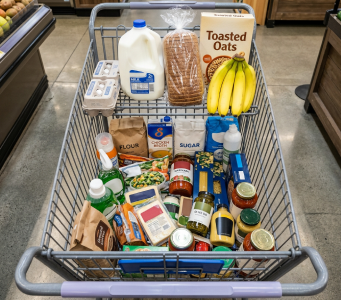
Grocery price image is shaped by memory, not by the full shelf. Shoppers remember a small set of staples and use those prices to decide whether a retailer feels like value. That is why most grocery pricing teams focus hard on key value items and other highly visible products.
The frustrating part is that many teams still lose margin even when they feel they are winning price image. They stay competitive where it counts, yet profitability keeps slipping week after week.
This usually happens because the effort to protect price image turns into broad discounting. A few competitor gaps trigger price moves across dozens or hundreds of products that shoppers are not actively using to judge value. Promotions create noise, pack sizes distort comparisons, and internal pressure pushes teams to “play it safe” by lowering more prices than necessary.
Modern Competitor Analysis Software for Retail, Competitor Analysis Software for Ecommerce, Pricing Software for Retail, and Pricing Software for Ecommerce helps fix that pattern. Competitor AI improves true-equivalent comparisons and relevance filtering so teams do not react to misleading signals. Pricing AI then supports disciplined holds and guardrails so non-perception items do not get pulled into a price war they never needed.
Before getting into the solution, it helps to see how margin disappears even when price image looks strong.
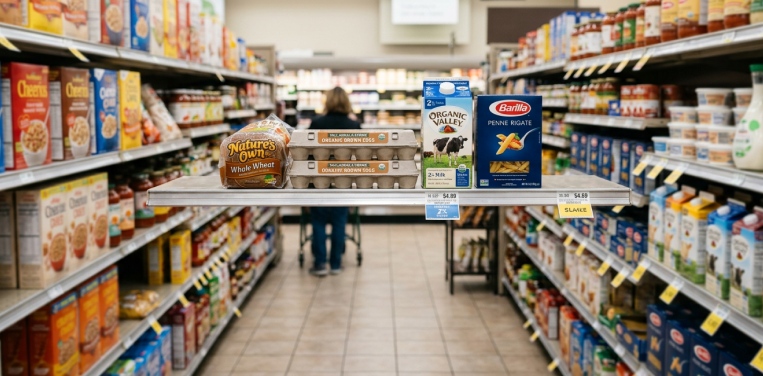
Price Image Is Won on a Small Set of Items
Most shoppers do not evaluate a retailer by the average price of the entire assortment. They judge based on a handful of products they buy often, notice quickly, and compare across stores. When a retailer is out of position on those, it can feel expensive even if many other items are priced competitively.
That reality is not a problem. The problem is the response. Many retailers treat price image as a category-wide obligation rather than a targeted strategy. That is how a small set of perception drivers turns into broad markdowns.
This is where Pricing Software for Retail and Pricing Software for Ecommerce becomes important. It helps teams compete precisely where it changes perception and hold price where discounting is unnecessary.
Margin Loss Usually Comes From the Spillover
Most margin erosion is not caused by competing on a few highly visible items. It is caused by what happens next.
A competitor drops price on a staple, and a retailer responds. Then a competitor runs a promotion, and another set gets pulled down “just in case.” Then teams try to preserve internal price relationships in a subcategory, so adjacent SKUs move as well. Within a few cycles, the retailer has lowered prices far beyond the original perception set.
Those additional reductions rarely improve price image. They simply reduce gross margin across the basket.
An effective pricing strategy must stop the spillover. It must make it easy to respond narrowly and resist the temptation to reset broader pricing.
Grocery Competitive Data Is Easy to Misread
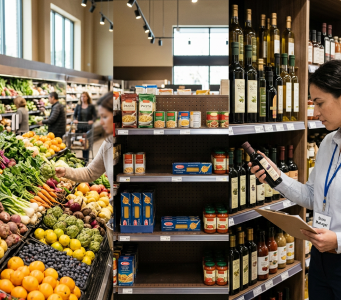
Grocery is full of comparability traps. A competitor offer can appear lower but not be truly equivalent.
Pack sizes differ. Multipacks distort unit comparisons. Temporary discounts and promotional mechanics can look like a permanent market shift. If teams act on these signals without normalization and relevance checks, they can end up chasing a price gap that is not real.
This is why Competitor Analysis Software for Retail and Competitor Analysis Software for Ecommerce cannot simply aggregate competitor prices. It must ensure the competitor comparison is valid and truly comparable.
How Competitor AI Reduces False Competitive Pressure
Competitor AI helps grocery teams by cleaning the competitive signal before it drives action.
It improves product matching so the team compares true equivalents rather than lookalikes. This includes handling differences that commonly distort grocery comparisons, such as quantity and pack size differences, and ensuring the benchmark is the correct product reference.
It also supports relevance filtering so teams are not forced to react to every visible low price that is not a meaningful competitive threat.
Competitor monitoring can be configured on daily, weekly, or monthly refresh cycles depending on category volatility and business needs.
When the competitive signal is cleaner, teams stop reacting to noise. They focus on the few gaps that actually influence shopper perception.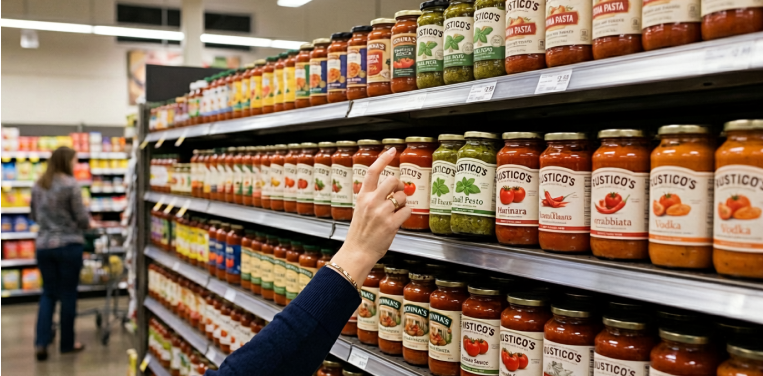
The Profit Move Is Often a Disciplined Hold
The most effective way to protect grocery margin is not finding more discounts. It is knowing what not to discount.
Many non-perception items have more stable demand than teams assume. They are purchased out of routine, preference, or basket convenience. Small price differences often do not meaningfully shift behavior, particularly when shoppers are not actively comparing those items across retailers.
If a retailer discounts these items simply because competitors are promoting elsewhere, the margin loss is immediate, while the demand gain is uncertain.
A disciplined hold strategy protects profitability while still allowing the retailer to compete where perception is won.
How Pricing AI Helps Teams Compete Narrowly Without Chaos
Pricing AI supports precision by grounding decisions in expected demand response using historical sales and pricing patterns. It helps teams distinguish between:
- Products where competitiveness is likely to change conversion and basket behavior
- Products where holding price protects margin with minimal demand impact
- Products where a small targeted move is sufficient, rather than a category-wide reset
Pricing AI also supports guardrails so the business does not drift into repeated exception-driven discounting. These guardrails can include margin floors, movement limits, and thresholds that define what a meaningful gap actually is.
This is where Pricing Software for Retail and Pricing Software for Ecommerce becomes an operating system, not just an analytics layer.
A Practical Operating Model for Grocery Pricing
Winning price image profitably requires a simple operating model that teams can repeat.
Start by defining the perception set. These are the products that anchor value perception and deserve tight competitive review. Keep this set intentionally small.
Then, for the rest of the assortment, work only the exceptions. Items should move only when there is a clear reason, such as a meaningful competitive gap against the relevant competitor set or an expected demand response that justifies the trade.
This model is what modern Competitor Analysis Software for Retail and Competitor Analysis Software for Ecommerce enables. It reduces manual work, improves confidence in competitor comparisons, and supports faster decisioning without broad discounting.
From “Winning Price Image” to “Winning Profitably”
Grocery pricing works when price image is treated as a targeted strategy rather than a blanket discount policy.
Competitor Analysis Software for Retail, Competitor Analysis Software for Ecommerce, Pricing Software for Retail, and Pricing Software for Ecommerce supported by Competitor AI and Pricing AI enables grocery teams to:
- Stay sharp on the small set of items shoppers use to judge value
- Improve comparability through accurate matching and normalization of equivalent offers
- Filter competitive noise so short-term promotions do not trigger broad reactions
- Hold price on non-perception items when demand response does not justify margin sacrifice
- Apply guardrails that prevent repeated exceptions from becoming the new baseline
This approach turns price image work into disciplined competitiveness that protects margin.
Conclusion
Grocery teams lose margin even when they “win” price image because they often compete broadly instead of precisely. A small set of visible gaps turns into widespread price reductions across products that shoppers never used to judge value.
Modern Competitor Analysis Software for Retail, Competitor Analysis Software for Ecommerce, Pricing Software for Retail, and Pricing Software for Ecommerce helps prevent this pattern. Competitor AI ensures the competitive signal is accurate and relevant. Pricing AI supports targeted actions on perception drivers and disciplined holds on the rest of the assortment, backed by guardrails that keep pricing from drifting downward.
Hypersonix help grocery retailers protect price image and protect profit at the same time, which is the only version of winning that scales.


Ready to Let AI Agents Work for Your Margins?
Leading brands are already growing profits on autopilot. Join them.


Trusted by 1000+ leading retail brands