Grocery price wars rarely begin with a strategy memo. They begin with a single competitor move that feels too visible to ignore. A rival drops price on a staple. A marketplace listing looks cheaper. A weekly promo hits the market. The pricing team reacts quickly to protect price image.
Then the cascade starts.
One price change creates pressure to adjust adjacent items to keep internal price relationships intact. Another competitor promotion appears, and the team widens the response “just to be safe.” Within a few cycles, a targeted competitive move turns into broad reductions across categories that shoppers were not even comparing. Margin erodes, and the retailer feels trapped in deeper discounting to maintain the same results.
This is where Competitor Analysis Software for Retail, Competitor Analysis Software for Ecommerce, Pricing Software for Retail, and Pricing Software for Ecommerce must do more than show competitor prices. Competitor AI improves true-equivalent comparisons and relevance filtering so teams do not react to misleading signals. Pricing AI supports disciplined decisioning and guardrails so a single competitor move does not trigger uncontrolled reductions across the assortment.
Before looking at how to stop the cascade, it helps to understand the mechanics of how grocery price wars actually form.
How the Cascade Starts: A Small Gap That Feels Too Risky
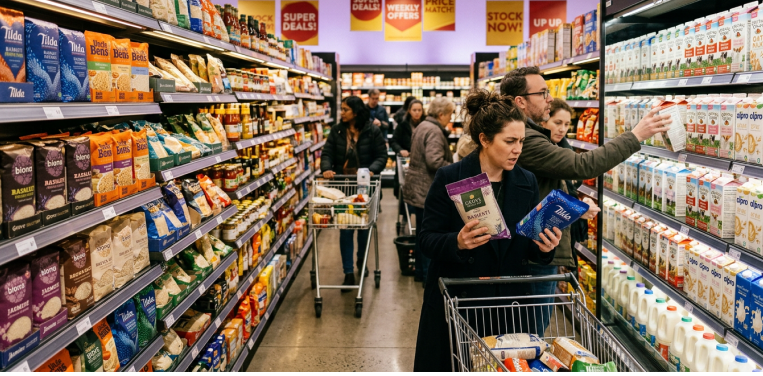
Grocery shoppers judge value using a small set of visible items. When a competitor undercuts a staple, it triggers a fear: if shoppers notice, they will assume the whole store is expensive.
That fear drives quick action. The team matches or closes the gap on the visible item. So far, that is not the problem. The problem is what happens next.
The initial adjustment becomes a reference point for everything around it. Teams worry about price ladders, price-per-unit perception, and internal consistency. To protect those relationships, they adjust nearby items. Then the scope expands from a single SKU to a subcategory.
This is how a price war begins without anyone intending to start one.
Why Grocery Competitive Signals Create False Urgency
Grocery competitor data is noisy, and the noise usually points in one direction: down.
Pack sizes differ. Multipacks distort comparisons. Promotions create temporary lows that look like permanent shifts. Loyalty mechanics and conditional offers change the effective price. If these signals are not normalized and filtered, pricing teams can end up matching a competitor offer that is not truly comparable.
When that happens, the retailer is not competing. It is discounting based on a misread.
This is why Competitor Analysis Software for Retail and Competitor Analysis Software for Ecommerce must ensure that the competitive signal is clean before it influences pricing decisions.
The Internal Consistency Trap: When One Move Forces Ten More
Most grocery price cascades are not driven by shoppers. They are driven by internal rules and perceptions.
If a key item drops, teams worry that the rest of the shelf will look wrong. They try to preserve price steps, keep a logical price-per-unit story, and maintain the expected relationship between sizes and brands.
Those goals are valid, but when they are managed manually, the easiest response is broad reduction. It feels cleaner than handling exceptions, and it avoids internal debate.
The cost is that internal consistency becomes the reason margin is sacrificed, even when shoppers would not have noticed the difference.
How Competitor AI Keeps Competitive Gaps Real
Competitor AI helps prevent accidental price wars by improving the quality of the input signal. The goal is not more competitor prices. The goal is more trustworthy competitor comparisons.
Competitor AI supports accurate product matching so comparisons reflect true equivalents rather than lookalikes. In grocery, that includes normalizing differences that commonly distort comparisons such as quantity, pack size, and similar-looking variants. It also supports relevance filtering so teams focus on competitor moves that are truly meaningful for their market and customer base.
Competitor monitoring can be configured on daily, weekly, or monthly refresh cycles depending on category volatility and business needs.
When competitive gaps are validated, teams reduce the number of false alarms that trigger unnecessary matching.
How Pricing AI Stops the Cascade With Guardrails and Disciplined Holds
Once competitor signals are clean, the next question is whether responding broadly will actually improve outcomes.
Pricing AI supports disciplined decisioning by grounding recommendations in expected demand response using historical sales and pricing patterns. In grocery, this helps teams distinguish between:
- Items where competitiveness truly impacts conversion and basket behavior
- Items where a small targeted adjustment is enough
- Items where a hold protects margin with minimal demand impact
Pricing AI also supports guardrails that prevent cascades, such as:
- Margin floors so competitive reactions do not destroy profitability
- Movement limits so repeated reductions do not become the new baseline
- Thresholds that define what a meaningful competitive gap really is
- Rules that isolate action to the items that shape price image rather than the whole shelf
This is how Pricing Software for Retail and Pricing Software for Ecommerce enables teams to respond to competition without turning every response into a broader markdown wave.
A Practical Response Model: Compete Narrowly, Hold Broadly
Stopping the price war is not about ignoring competitors. It is about choosing the right scope.
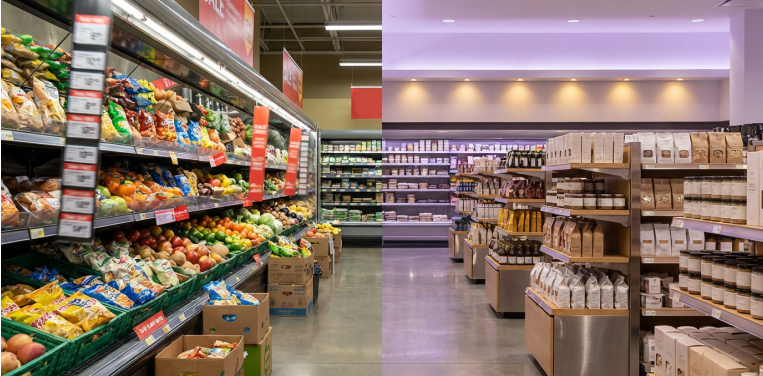
A practical model starts by identifying the perception set. These are the items shoppers notice, compare, and use to judge value. This set should stay intentionally small and should be evaluated against a relevant competitor set using true-equivalent comparisons.
Everything else should be managed through exceptions. Items move only when there is a clear reason, such as a validated meaningful gap or an expected demand response that justifies the trade.
This is how retailers keep price image sharp without dragging the entire assortment into the same competitive posture.
The Weekly Routine That Prevents Accidental Price Wars
Accidental price wars happen when teams work in firefighting mode. A consistent rhythm prevents the panic loop.
A strong weekly routine includes:
- Reviewing validated competitive gaps on the perception set
- Reviewing categories where prices have drifted downward through repeated reactions
- Adjusting guardrails and thresholds before peak promo periods
- Checking that pack-size and unit comparisons remain consistent without broad reductions
This routine is easier to run when Competitor Analysis Software for Retail and Competitor Analysis Software for Ecommerce provides clean competitive context and when Pricing Software for Retail and Pricing Software for Ecommerce provides explainable recommendations and guardrails that teams trust.
From Unintended Price War to Disciplined Competition
Grocery pricing will always involve competitor pressure. The difference is whether pressure triggers targeted action or uncontrolled cascades.
Competitor Analysis Software for Retail, Competitor Analysis Software for Ecommerce, Pricing Software for Retail, and Pricing Software for Ecommerce supported by Competitor AI and Pricing AI enables grocery teams to:
- Validate competitor gaps using true-equivalent matching and relevance filtering
- Reduce false urgency caused by pack size differences and promotional noise
- Respond narrowly on perception items without resetting the broader assortment
- Apply guardrails that prevent repeated reductions from becoming the new baseline
- Hold price with confidence on items where broad discounting is unlikely to pay back
This approach transforms grocery pricing from reactive discounting into controlled competitiveness.
Conclusion
The grocery price war you didn’t mean to start is usually the result of a small competitor move triggering a broad internal cascade. Weak comparisons, promotional noise, and the desire for internal consistency expand a targeted response into widespread reductions that shoppers were not even using to judge value.
Modern Competitor Analysis Software for Retail, Competitor Analysis Software for Ecommerce, Pricing Software for Retail, and Pricing Software for Ecommerce helps stop that pattern. Competitor AI improves matching accuracy and relevance filtering so competitive pressure is real and comparable. Pricing AI supports disciplined recommendations and guardrails so teams can compete on the right items and hold price on the rest.
Hypersonix helps grocery retailers stay sharp on price image while protecting margin, so competition stays intentional instead of accidental.





Ready to Let AI Agents Work for Your Margins?
Leading brands are already growing profits on autopilot. Join them.


Trusted by 1000+ leading retail brands