Retail pricing now operates in high-frequency environments. Competitors change prices daily. Market places surface new sellers continuously. Promotions launch and disappear within hours. In many categories, especially grocery, electronics, fashion, and home improvement, pricing is no longer reviewed weekly; it is pressured constantly.
In response, many retailers have adopted faster pricing systems. Prices update more frequently. Alerts trigger immediately. Competitor feeds refresh daily or even hourly.
But speed alone does not protect margin.
In high-frequency price environments, reacting to every move is often the fastest way to erode profitability. What retailers truly need is Pricing Software for Retail that balances speed with discipline, systems that track competition continuously but act selectively.
This is where Pricing AI and Competitor AI redefine how pricing should work. Instead of accelerating reaction, they enable intelligent restraint.
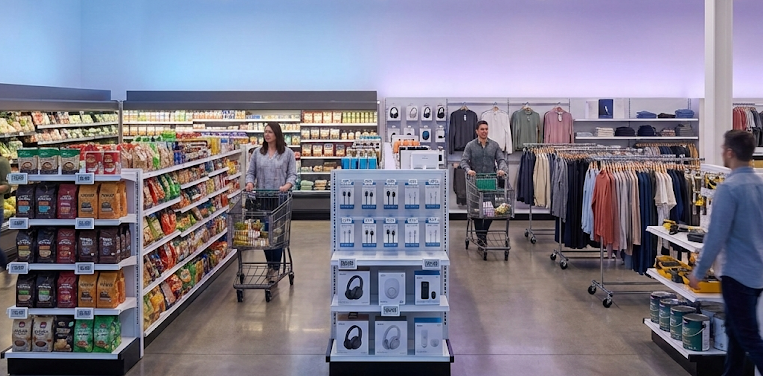
Why High-Frequency Price Environments Are So Dangerous
Fast-moving markets create constant internal pressure.
When competitors adjust prices daily, pricing teams feel compelled to respond just as quickly. Even minor competitor shifts can trigger urgent discussions, automated rules, or cascading price updates across assortments.
The risks in this environment are subtle but compounding:
First, temporary competitor promotions are mistaken for structural price shifts. Retailers match discounts that were never meant to reset market pricing.
Second, noise overwhelms judgment. When dozens or hundreds of SKUs show competitive changes each day, it becomes difficult to distinguish meaningful threats from irrelevant fluctuations.
Third, small reactive adjustments accumulate. A one percent drop here, a small match there over time, baseline margins reset lower without any meaningful gain in demand.
High-frequency pricing environments reward intelligence, not reflexes.
The Problem with Speed-Only Pricing Systems
Many legacy systems were built to solve slow reaction times. Their primary function was automation: detect a competitor price change and execute a response.
While automation improves speed, it does not improve decision quality.
Traditional pricing software for retail often treats all competitor movements equally. A temporary clearance discount triggers the same response as a sustained strategic price repositioning. A minor local competitor influences decisions at the same level as a category leader.
Without interpretation, fast systems become overactive systems.
In volatile markets, speed without intelligence amplifies error.
Why Restraint Is the Real Competitive Advantage
In high-frequency environments, the most profitable pricing decisions are often the ones not taken.
Restraint is not inactivity. It is informed confidence.
Restraint means holding price when elasticity signals show demand is stable. It means ignoring competitor noise that has no measurable impact on customer behavior. It means avoiding unnecessary matching that only sacrifices margin.
Modern Pricing Software for Retail must empower teams to move fast when required—but also to confidently hold when appropriate.
This balance is only possible when competitive data and demand behavior are interpreted together.
How Competitor AI Filters Noise in Fast-Moving Markets
Continuous competitive tracking is essential. But raw tracking alone creates overwhelm.
Competitor AI changes the dynamic by evaluating competitor moves through relevance.
Instead of flagging every price shift as urgent, it ensures:
- Accurate product matching, so only true equivalents are compared
- Differentiation between temporary promotions and sustained price changes
- Identification of competitors that genuinely influence demand
- Prioritization of meaningful threats over marketplace noise
This filtering dramatically reduces unnecessary reactions.
In high-frequency price environments, clarity is more valuable than speed. Competitor AI provides that clarity.

Pricing AI and Elasticity: The Foundation of Intelligent Restraint
Even when a competitor move is real, the critical question remains: will customers respond?
Pricing AI answers this through SKU-level elasticity modeling.
Elasticity reveals how sensitive demand is to price changes. Some products are highly price sensitive. Others are resilient because of brand loyalty, convenience, or limited substitution.
In high-frequency environments, this distinction becomes crucial.
If elasticity signals show that demand will hold despite a competitor discount, Pricing AI recommends restraint. If elasticity indicates genuine risk, it guides proportionate adjustments rather than blanket matching.
This transforms Pricing Software for Retail from a reactive tool into a decision engine.
Price changes are no longer driven by fear of losing parity. They are driven by expected demand response.
Preventing the Margin Cascade Effect
One of the most dangerous patterns in high-frequency pricing is the cascade effect.
A competitor discounts. One retailer matches. Others follow. Within days, category pricing resets lower without any meaningful gain in demand.
Pricing AI helps prevent this cascade by grounding every adjustment in elasticity and competitive relevance.
By combining Competitor AI’s filtering with Pricing AI’s demand modeling, retailers can avoid being pulled into price wars that destroy margin without delivering incremental volume.
Over time, this discipline stabilizes baseline pricing and protects long-term profitability.
Micro-Adjustments Instead of Broad Reactions
High-frequency markets do not require constant large price moves. They require precise micro-adjustments.
Pricing AI identifies:
- Small increases that low-elasticity SKUs can absorb
- Targeted reductions where demand risk is real
- Stores or regions where competitive pressure is localized
- Products where holding price is optimal
Instead of sweeping reactions, pricing becomes granular and controlled.
Across thousands of SKUs, these small, disciplined decisions compound into significant margin protection.
Explainability Builds Confidence in Volatile Markets
In fast-moving pricing environments, organizational pressure increases. Stakeholders expect immediate action when competitors move.
Explainable AI is critical in this context.
When pricing recommendations clearly show:
- Which competitor signal was evaluated
- Whether the move is temporary or structural
- How elasticity influenced the decision
- The expected impact on demand and margin
Teams gain confidence in restraint.
Pricing discussions shift from urgency to evidence.
This transparency is essential for modern Pricing Software for Retail to function effectively in volatile conditions.
From Reactive Chaos to Controlled Agility
High-frequency price environments are not going away. If anything, they are intensifying.
Retailers cannot slow the market. But they can control how they respond to it.
Pricing Software for Retail must combine:
- Continuous competitive tracking
- Accurate product matching
- Elasticity-driven demand modeling
- Explainable, confidence-building recommendations
Platforms powered by Pricing AI and Competitor AI enable this controlled agility.
Prices move quickly when necessary. They remain stable when restraint protects margin. Decisions are deliberate rather than reactive.

Conclusion
In high-frequency price environments, reacting faster is not the answer. Reacting smarter is.
Modern Pricing Software for Retail must interpret competition, model demand behavior, and empower disciplined decision making at scale. Speed without intelligence erodes margin. Intelligence without speed misses opportunity. The future belongs to systems that balance both.
By combining Competitor AI and Pricing AI, retailers can navigate fast competitor moves with confidence and restraint. Instead of chasing every fluctuation, they focus on the price changes that truly matter.
In volatile retail markets, margin protection is not about constant motion. It is about controlled, intelligent action.



Ready to Let AI Agents Work for Your Margins?
Leading brands are already growing profits on autopilot. Join them.


Trusted by 1000+ leading retail brands