Optical retail occupies a unique position in the retail landscape. Unlike many high volume consumer categories, eyewear purchases are often infrequent, medically influenced, and closely tied to personal preference. Frames reflect style and identity. Lenses involve prescription precision. Service and trust matter as much as price.
Yet pricing pressure still exists.
Online eyewear retailers, discount chains, and marketplace sellers create visible price comparisons. When competitors lower prices, the instinct to match can be strong. However, in optical retail, racing to the bottom is rarely necessary and often damaging.
Modern Pricing Software for Retail must help optical retailers compete on value rather than reflexively matching competitor discounts. By understanding low substitutability and filtering competitive relevance, Pricing AI and Competitor AI enable disciplined pricing decisions that protect margin without sacrificing competitiveness.
Before exploring how this works, it is important to understand why optical retail behaves differently from many other sectors.
Optical Retail Is Not Fully Price Driven
In categories such as electronics or commodity grocery items, products are highly comparable and easily substituted. In optical retail, substitution is more limited.
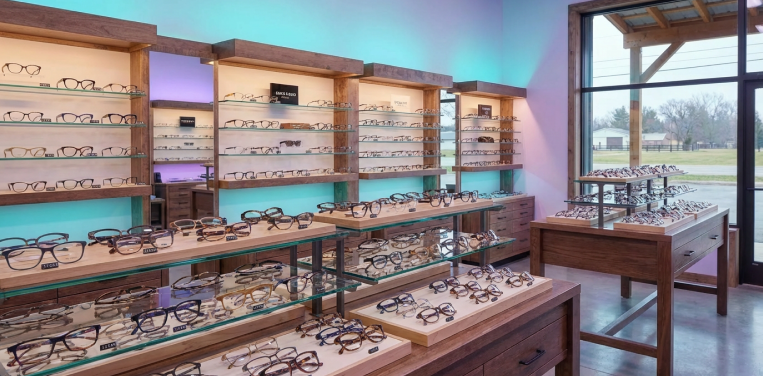
Frames differ by brand, design, material, and fit. Prescription lenses vary by coating, thickness, and customization. Service levels, eye exams, and in store expertise further differentiate retailers.
Because of these factors, many optical products show lower substitutability than assumed. A customer who selects a specific branded frame may not view alternative frames as interchangeable simply because they are priced lower elsewhere.
This dynamic reduces the impact of small competitor price differences on demand.
However, traditional pricing systems do not account for this nuance. When competitor tracking tools detect a lower price, they often trigger matching behavior regardless of actual demand sensitivity.
Pricing Software for Retail must instead evaluate whether a competitor move truly influences customer choice.
The Risk of Competing Only on Price
Optical retailers that default to price matching risk undermining their value proposition.
Frequent discounting can shift customer perception from trusted healthcare and style advisor to low cost seller. Margins shrink on products that may not have required discounting in the first place. Over time, brand positioning weakens.
Many competitor promotions in optical retail are also tactical. Online flash discounts, limited inventory offers, or bundle pricing experiments may not represent sustained market shifts.
Without competitive relevance filtering, pricing teams react to noise rather than meaningful threats.
Pricing Software for Retail must distinguish between competitor moves that affect demand and those that do not.
Understanding Low Substitutability Through Elasticity
Elasticity modeling provides the foundation for intelligent restraint.
Pricing AI evaluates how demand responds to price changes at the SKU and product cluster level. In optical retail, certain products often exhibit low elasticity. Customers may prioritize brand trust, fit, aesthetics, or bundled services over small price differences.
If elasticity signals show that demand remains stable despite minor price gaps, holding price becomes a rational strategy.
This protects margin while preserving brand integrity.
For more price sensitive products, such as entry level frames or promotional bundles, elasticity modeling can identify where targeted adjustments may be necessary.
Pricing Software for Retail must apply different logic depending on product characteristics and customer behavior.

Filtering Competitor Relevance in Optical Markets
Not every competitor is equally relevant in optical retail.
A local independent optician may compete differently than a national discount chain. An online marketplace seller offering limited inventory may not meaningfully influence in store purchasing decisions. Bundled online pricing may not be directly comparable to in store service packages.
Competitor AI ensures accurate product matching and evaluates competitive relevance before influencing pricing decisions.
It distinguishes between true equivalents and loosely similar items. It separates temporary online promotions from sustained strategic price shifts. It prioritizes competitors that historically impact demand.
By filtering competitive noise, Pricing Software for Retail prevents unnecessary reactions that erode margin without protecting volume.
Competing on Value Rather Than Price Alone
Optical retail is fundamentally value driven.
Customers consider factors such as:
Frame quality and brand reputation
Lens customization and coatings
Professional eye care services
Warranty and after sales support
Convenience and location
Pricing AI supports value based competition by identifying where price holds are appropriate. If demand resilience is strong and competitor influence is limited, maintaining price reinforces perceived quality.
This disciplined approach allows retailers to protect margin while differentiating on service and expertise rather than engaging in price wars.
Preventing the Cascade Effect
Even in optical retail, price cascades can occur. A competitor introduces a visible discount. Others respond. Over time, category pricing resets lower even if substitution risk was minimal.
Elasticity guided pricing helps prevent this cascade.
By evaluating expected demand impact before acting, Pricing Software for Retail avoids participating in unnecessary price reductions.
When price holds are supported by data, retailers maintain confidence in their value proposition and resist short term pressure.
Micro Adjustments Instead of Broad Discounts
Competing on value does not mean ignoring pricing opportunities.
Pricing AI can identify specific products or segments where modest adjustments may improve competitiveness without compromising margin broadly. Entry level assortments, seasonal collections, or bundled offers may show different elasticity patterns.
Instead of applying sweeping discounts across the assortment, retailers can implement precise adjustments informed by demand signals and competitive context.
This targeted approach preserves profitability while maintaining market relevance.
Explainable Intelligence Builds Confidence
Optical pricing decisions often involve multiple stakeholders including merchandising, store operations, and clinical teams. Without transparency, price holds may be questioned when competitors promote aggressively.
Explainable Pricing AI provides clarity on why a price is being held or adjusted. Teams can see elasticity trends, competitive signals evaluated, and expected impact on demand and margin.
This transparency builds organizational confidence to compete strategically rather than react emotionally.
Modern Pricing Software for Retail must provide both intelligence and explainability to operate effectively in value driven categories.
From Reactive Matching to Value Led Strategy
Optical retail does not require racing to the bottom to remain competitive.
Pricing Software for Retail powered by Pricing AI and Competitor AI enables retailers to:
- Identify low substitutability products
- Hold price where demand resilience is strong
- Filter irrelevant competitor noise
- Apply targeted adjustments when necessary
- Protect brand positioning alongside margin
By shifting from reflex price matching to disciplined evaluation, optical retailers compete on value, service, and trust rather than price alone.
Conclusion
In optical retail, small price differences do not always drive customer decisions. Low substitutability and strong brand influence mean that many products can sustain disciplined pricing.
Modern Pricing Software for Retail must understand elasticity and competitive relevance before recommending changes. By combining SKU level elasticity modeling with intelligent competitor filtering, retailers can avoid unnecessary discounting while staying competitive where it truly matters.
Platforms like Hypersonix enable optical retailers to protect margin, preserve brand integrity, and compete strategically.
In a category defined by trust and differentiation, the retailers who win are not those whose only strategy is to lower prices fastest. They are those who know when price does not need to change at all.






Ready to Let AI Agents Work for Your Margins?
Leading brands are already growing profits on autopilot. Join them.


Trusted by 1000+ leading retail brands