Beauty retail is one of the most competitive and promotion-heavy sectors in retail. Customers are surrounded by discounts, influencer campaigns, loyalty programs, and seasonal sales across both online and physical stores. Price transparency is high, and promotions appear almost constantly.
Because of this environment, many retailers rely heavily on price matching. When competitors reduce prices, the instinct is to respond immediately. However, in beauty retail this strategy often creates more problems than it solves.
Many beauty products benefit from strong brand affinity. Customers develop loyalty to specific brands, ingredients, and routines. In these situations, small price differences do not always change purchasing behavior.
At the same time, constant promotions create another challenge: promotion fatigue. When customers see discounts too frequently, the perceived value of products declines and margins erode.
Modern Pricing Software for Retail must move beyond automatic price matching. By modeling elasticity and filtering competitive relevance, Pricing AI and Competitor AI help beauty retailers understand when discounts actually influence demand and when price holds protect both margin and brand perception.
Beauty Retail Is Driven by Brand Affinity
Beauty products are rarely treated as simple commodities. Customers often build routines around specific products or brands. Skincare users may trust a particular formulation or ingredient profile. Makeup buyers may prefer a certain brand’s shade range or finish. Haircare shoppers may stick with products that have proven effective for them.
Because of this brand affinity, many beauty products demonstrate lower substitutability than expected.
If a customer prefers a specific skincare serum or cosmetic brand, a small competitor discount on a similar product may not trigger switching behavior. Convenience, familiarity, and perceived effectiveness can outweigh minor price differences.
However, traditional pricing systems frequently overlook this nuance. Competitor tracking tools may trigger price changes automatically whenever a lower price appears in the market.
Pricing Software for Retail must instead evaluate whether a competitor move is likely to influence customer behavior.

The Problem with Constant Price Matching
In beauty retail, excessive price matching creates several problems.
First, it erodes brand value. Premium beauty brands rely on perceived quality and trust. Frequent discounting can signal reduced value and weaken brand positioning.
Second, it reduces margin unnecessarily. If demand for a product remains stable despite competitor discounts, matching those discounts simply sacrifices profit.
Third, it contributes to promotion fatigue. When customers see discounts too often, they begin to delay purchases until the next promotion appears. This behavior makes it increasingly difficult to sustain full price sales.
Price matching may protect short term competitiveness, but over time it can undermine both profitability and brand perception.
Elasticity Reveals When Price Actually Matters
Elasticity modeling helps retailers understand how demand responds to price changes.
Pricing AI evaluates historical pricing behavior, sales response, and contextual signals to estimate elasticity at the SKU and product cluster level. This analysis shows whether small price changes meaningfully affect demand.
In beauty retail, elasticity varies widely across products.
Highly differentiated or premium items often show lower elasticity because customers are loyal to the brand. Limited edition releases or cult favorite products may maintain demand even when priced above competitors.
Other products such as entry level cosmetics or commoditized beauty accessories may show higher elasticity and respond more strongly to promotions.
By understanding these differences, Pricing Software for Retail can recommend precise actions rather than blanket discounting.
Managing Promotion Fatigue Through Pricing Discipline
Promotion fatigue is a growing issue in beauty retail. Continuous discounts across retailers train customers to expect lower prices and reduce the effectiveness of promotional campaigns.
Elasticity insight helps break this cycle.
When Pricing AI identifies products with resilient demand, retailers can confidently maintain price stability rather than joining every competitor promotion. This preserves product value and reduces unnecessary discounting.
For products where promotions genuinely drive demand, targeted discounts can still be applied strategically.
The key difference is precision. Promotions become intentional tools rather than routine reactions.
Filtering Competitive Noise
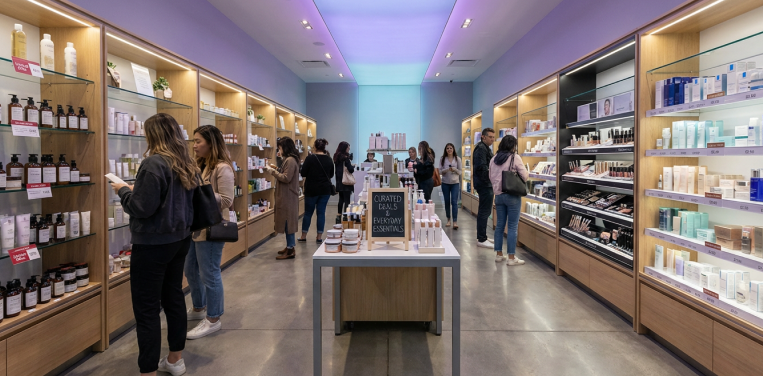
Beauty markets generate constant competitive signals. Online flash sales, influencer driven campaigns, bundle offers, and marketplace discounts create a steady stream of pricing activity.
Not all of these signals require action.
Competitor AI ensures accurate product matching and evaluates competitive relevance before influencing pricing decisions. It distinguishes between comparable products and loosely similar alternatives. It separates temporary promotions from sustained pricing shifts.
When Pricing Software for Retail filters irrelevant competitor activity, pricing teams avoid reacting to noise and focus on meaningful market changes.
Protecting Margin Through Targeted Adjustments
Elasticity driven pricing does not mean ignoring market dynamics. Instead, it allows retailers to respond more intelligently.
Pricing AI can identify products where modest adjustments improve competitiveness without triggering broad discounting. Entry level products, seasonal launches, or new product trials may require different strategies than established premium items.
Across large beauty assortments, small targeted adjustments often generate better results than sweeping price reductions.
By applying micro adjustments rather than blanket discounts, retailers protect margin while maintaining market relevance.
Explainable Pricing Builds Confidence
Beauty retail organizations often involve merchandising teams, brand partners, and marketing departments in pricing decisions. When competitors discount aggressively, internal pressure to react can increase.
Explainable Pricing AI helps address this challenge. Pricing teams can see which competitive signals were evaluated, how elasticity influenced the recommendation, and what impact is expected on demand and margin.
This transparency allows teams to make disciplined decisions rather than reacting out of caution.
Modern Pricing Software for Retail must provide both intelligence and explainability to support sustainable pricing strategies.
From Promotion Dependence to Strategic Pricing
Beauty retailers do not need to compete purely on price.
With elasticity modeling and competitive relevance filtering, Pricing Software for Retail enables retailers to:
- Identify products with strong brand driven demand
- Avoid unnecessary price matching
- Reduce promotion fatigue
- Target discounts where they truly influence demand
- Protect margin while maintaining competitiveness
This shift moves beauty pricing from reactive promotion cycles toward disciplined, value driven strategy.
Conclusion
Beauty retail is shaped by brand affinity and customer loyalty. Many products are chosen because of trust, formulation, or identity rather than small price differences.
Modern Pricing Software for Retail must recognize these dynamics. By combining elasticity modeling with intelligent competitive filtering, retailers can avoid unnecessary discounting and focus promotions where they truly matter.
Platforms like Hypersonix help beauty retailers move beyond reflexive price matching toward disciplined pricing strategies that protect both margin and brand perception.
In an industry built on brand value and customer loyalty, the retailers who succeed are not those who discount the fastest. They are those who understand when price changes actually influence demand and when holding price strengthens long term value.



Ready to Let AI Agents Work for Your Margins?
Leading brands are already growing profits on autopilot. Join them.


Trusted by 1000+ leading retail brands