In eCommerce, price matching has become almost instinctive. A competitor drops a price and within hours, sometimes minutes, automated systems respond. For years, this behavior was considered a sign of pricing sophistication. Faster reactions were equated with smarter pricing.
Today, that assumption is costing retailers millions.
The reality is that not every competitor price move deserves a response. Some discounts are temporary. Some are tactical. Some are irrelevant. Yet many pricing systems still treat every change as a threat, triggering unnecessary price matching that erodes margin without protecting demand.
This is where modern Pricing Software for eCommerce must evolve. Winning on price today is not about reacting to every competitor move. It is about understanding which moves are structural, which are temporary, and when holding price is the most profitable decision.
Hypersonix Pricing AI and Competitor AI are built for this exact challenge. They help retailers distinguish meaningful competitive threats from short lived noise, allowing teams to compete intelligently instead of reflexively.
Before exploring how AI makes this possible, it is important to understand why traditional pricing systems struggle so deeply with competitor relevance.
Why Reflexive Price Matching Is Breaking eCommerce Margins
Many pricing tools still rely on a simple assumption. If a competitor changes price, respond.
This logic worked when markets were slower and competitors were predictable. In today’s environment, it creates three major problems.
First, marketplaces amplify temporary behavior. Sellers run flash discounts to clear inventory, test price sensitivity, or boost short term rankings. These price drops often last hours or days, not weeks. Reactive systems match them instantly, sacrificing margin for changes that would have disappeared on their own.
Second, rule based systems cannot distinguish intent. A strategic price reset looks the same as a clearance discount to a rules engine. Both trigger the same response, even though the business implications are completely different.
Third, repeated reactive matching trains customers. When shoppers see prices constantly dropping, they learn to wait. Price credibility weakens, baseline margins shrink, and promotions lose effectiveness.
The issue is not speed. The issue is context. Traditional pricing software for eCommerce reacts to movement without understanding meaning.
This is where intelligent competitor differentiation becomes essential.

Temporary vs Structural Competitor Moves: Why the Difference Matters
Not all competitor price changes are created equal.
A temporary move is often driven by short term factors. Excess inventory, campaign timing, or marketplace algorithms frequently cause brief discounts that are never meant to reset long term pricing.
A structural move signals something else entirely. It may indicate a cost reduction, a new positioning strategy, or a permanent change in assortment economics. These moves can reshape customer expectations and demand patterns.
Matching a temporary move destroys margin unnecessarily. Ignoring a structural move risks losing relevance.
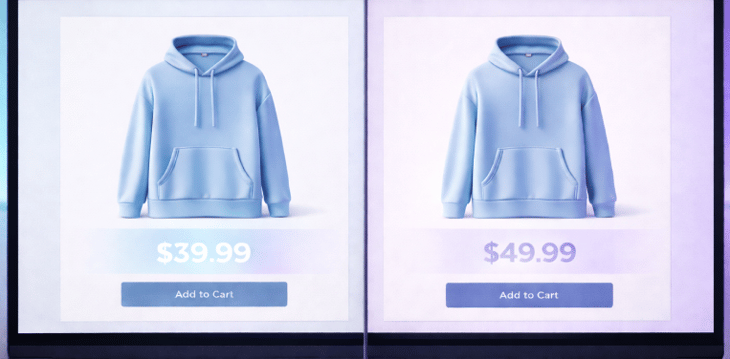
The challenge for retailers is that both moves appear identical in basic pricing feeds.
Modern Pricing Software for eCommerce must do more than detect price changes. It must interpret them.
How Competitor AI Identifies Which Moves Actually Matter
Hypersonix Competitor AI transforms competitor monitoring from raw data collection into relevance driven intelligence.
Instead of flooding teams with alerts, the system evaluates competitor price changes through multiple lenses.
It examines historical pricing behavior to understand whether a competitor regularly discounts and rebounds or sustains price changes over time. It looks at frequency, duration, and depth of price movements to identify patterns.
It also applies AI powered product matching to ensure comparisons are valid. Many price drops occur on non equivalent SKUs, bundled offers, or lower spec products. Traditional systems treat these as direct competition. Hypersonix filters them out.
Most importantly, Competitor AI classifies competitive moves based on significance. Temporary promotions, isolated anomalies, and irrelevant sellers are separated from meaningful shifts that could influence demand.
This filtering alone eliminates a large portion of unnecessary price matching.
But relevance is only half the equation. The next question is whether customers will actually respond.
Pricing AI and Elasticity: Knowing When Holding Price Is Smarter
Even when a competitor move is real, it does not always require action.
This is where Pricing AI adds a critical layer of intelligence.
Hypersonix Pricing AI models elasticity at the SKU and product cluster level. It measures how sensitive demand is to price changes for each item, rather than relying on category averages or assumptions.
If elasticity signals show that demand remains stable despite competitor discounts, the system recommends holding price. This allows retailers to protect margin without losing volume.
If elasticity indicates high sensitivity, Pricing AI can recommend targeted, proportionate responses instead of broad price cuts.
This combination changes the role of pricing software for eCommerce. Price changes are no longer reflexive reactions. They become evidence based decisions.
Retailers gain the confidence to say no when matching is unnecessary and yes only when it is justified.
Avoiding the Cascade Effect of Unnecessary Matching
One of the hidden dangers of reactive pricing is the cascade effect.
A single competitor discount triggers a response. Another competitor then matches that new price. Soon, the entire category resets lower, even though demand never required it.
Pricing AI helps stop this cycle by grounding decisions in expected customer response rather than competitor behavior alone.
By understanding elasticity and competitor intent together, retailers avoid being pulled into price wars they never needed to fight.
Over time, this stabilizes baseline pricing, improves margin predictability, and strengthens price perception with customers.
Explainable Intelligence Builds Trust in Holding Price
One reason teams struggle to avoid matching competitors is organizational pressure. When prices drop elsewhere, stakeholders want to act quickly.
Hypersonix addresses this through explainable AI.
Every recommendation includes clear reasoning. Teams can see whether a competitor move is temporary or structural, how elasticity influenced the decision, and what impact holding or changing price is expected to have.
This transparency shifts pricing discussions from fear driven debates to data driven alignment.
Pricing managers, merchants, and leadership teams gain a shared understanding of why not matching can sometimes be the most competitive move.
What This Means for Modern Pricing Software for eCommerce
The future of pricing software for eCommerce is not about matching faster. It is about deciding better.
Retailers need systems that understand competitive relevance, customer behavior, and financial impact simultaneously. They need tools that help them resist unnecessary pressure while responding decisively when it truly matters.
Hypersonix Pricing AI and Competitor AI deliver this capability by turning competitive activity into structured insight instead of noise.
Pricing becomes intentional. Margin becomes protected. Competition becomes manageable.
Conclusion
Matching competitors blindly is no longer a viable pricing strategy. In a market defined by constant change, the retailers who win are those who know when not to move.
Modern Pricing Software for eCommerce must distinguish temporary competitor noise from structural shifts and pair that understanding with elasticity driven decision making.
Hypersonix Pricing AI and Competitor AI give retailers the intelligence to do exactly that. They replace reflexive reactions with confident, data-backed pricing decisions.







Ready to Let AI Agents Work for Your Margins?
Leading brands are already growing profits on autopilot. Join them.


Trusted by 1000+ leading retail brands