Grocery pricing is judged in snapshots. Shoppers do not evaluate every SKU. They notice a small set of staples, high-visibility categories, and familiar brands that anchor their sense of value. If those few items look uncompetitive, the whole store can feel expensive, even if most of the assortment is priced reasonably.
That reality creates a common trap. Pricing teams work hard to stay sharp on visible items, but end up discounting far beyond what shoppers actually notice. A competitor runs a short-term promotion. A multipack looks cheaper. A different pack size triggers an undercut alert. Small reactions spread across adjacent items to preserve internal price relationships. Over time, the basket baseline drifts down and margin leaks in places that never needed to move.
This is where Competitor Analysis Software for Retail, Competitor Analysis Software for Ecommerce, Pricing Software for Retail, and Pricing Software for Ecommerce should operate together. Competitor AI helps clean competitive signals by improving product matching, normalizing comparisons across pack sizes, and filtering promotional noise. Pricing AI then helps teams decide where to act and where to hold, using guardrails that prevent spillover discounting across the rest of the basket.
Before outlining how to compete where shoppers notice without sacrificing margin everywhere else, it helps to understand why grocery price pressure gets misread.

Why Grocery Price Perception Creates Overreaction
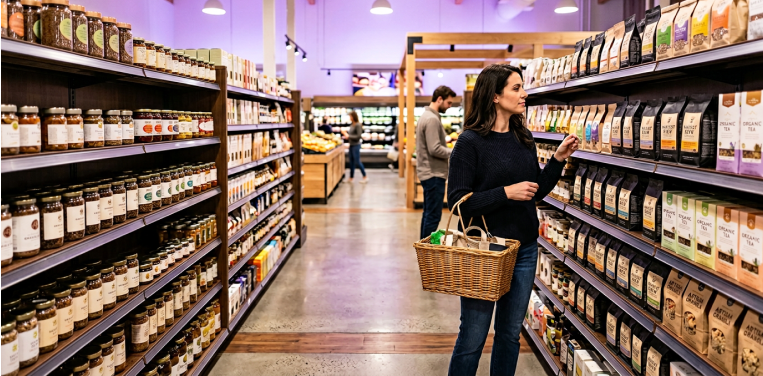
Grocery price perception is a shortcut. Shoppers build a value opinion based on a limited reference set, and those impressions stick.
Inside the business, this creates urgency. A competitor appears cheaper on a visible item and the instinct is to match quickly. That initial move is often justified. The problem is the organizational reflex that follows: if one item drops, nearby items “should” move to keep price steps logical. If a competitor promotion appears, a broader set “should” be protected. If a marketplace listing looks lower, teams “should” close the gap.
The word “should” is where margin gets lost. Grocery pricing becomes a chain reaction rather than a targeted strategy.
Pack Sizes and Multipacks Create Fake Competitive Gaps
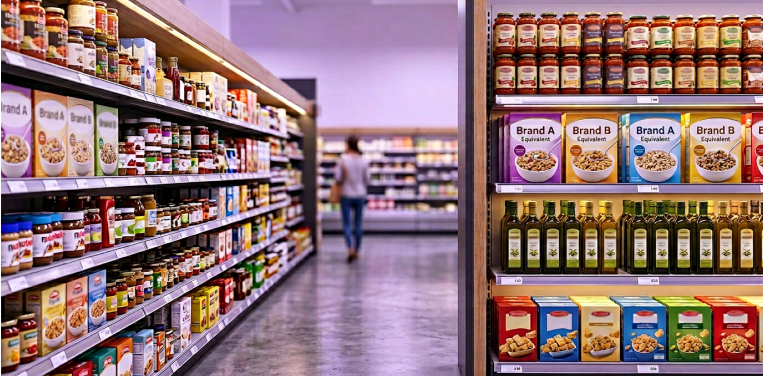
Many competitive pricing alerts in grocery are not real competitive threats. They are pack-size distortions.
A competitor might offer a smaller size at a lower shelf price, which looks like an undercut even if the unit price is higher. A multipack might create a better unit deal, but only for a different quantity than what you sell. A slightly different weight or count can flip the story entirely.
When competitive tracking treats these as equivalent, teams end up responding to fake gaps. That response can lower base price unnecessarily and trigger spillover across the shelf.
This is one reason Competitor Analysis Software for Ecommerce is particularly important in grocery. Online listings compress details and amplify headline price, so mismatches spread faster and cause more internal pressure.
Promotional Noise Looks Like Structural Change
The second major source of overreaction is promotional noise.
Weekend deals, flash sales, loyalty pricing, and limited-time offers can look like permanent market movement. Internally, those promos show up as competitor price drops, and teams feel compelled to respond to avoid being visibly higher.
If a retailer treats every promo price as structural, the base price floor resets lower over time. That is how a store becomes more promotional without choosing to be. The competition did not change the market permanently, but your reactions did.
The Spillover Problem: One Move Forces Ten More
Even when the initial competitive response is valid, margin loss usually comes from spillover.
One item is adjusted. Then a nearby size must be “kept consistent.” Then a private label equivalent needs to maintain its value gap. Then an adjacent brand must not look overpriced. Within a few cycles, a narrow competitive action becomes broad discounting, and the original purpose is lost.
The result is that the retailer competes everywhere, even though shoppers notice only a fraction of the basket.
Stopping spillover is the core discipline goal.
How Competitor AI Filters Noise and Improves True Equivalence
Competitor AI helps grocery teams compete with cleaner signals by improving the quality of competitive comparisons.
It supports accurate product matching so the team compares true equivalents rather than lookalikes. That includes handling pack-size and quantity differences that commonly distort grocery comparisons. It also supports relevance filtering so teams focus on competitor moves that matter for their market and category, rather than reacting to every visible deal.
Competitor monitoring can be configured on daily, weekly, or monthly refresh cycles depending on category volatility and business needs.
When the competitive signal is cleaner, pricing teams see fewer false undercuts, fewer promo-driven emergencies, and fewer noisy alerts that would otherwise trigger unnecessary reactions.
How Pricing AI Keeps the Basket Stable With Guardrails
Once competitive signals are clean, the next question is scope. Where should you act, and where should you hold?
Pricing AI supports this by grounding recommendations in expected demand response using historical sales and pricing patterns. It helps teams distinguish between:
- Items where competitiveness is likely to influence conversion and basket behavior
- Items where a small adjustment is sufficient rather than a broader reset
- Items where a hold protects margin with minimal demand impact
Pricing AI also supports guardrails that prevent small reactions from turning into basket-wide margin leakage:
- Margin floors to protect profitability
- Movement limits to prevent repeated reductions becoming the baseline
- Meaningful gap thresholds so teams do not chase trivial differences
- Rules that isolate actions to the items that shoppers actually notice
This is how Pricing Software for Retail and Pricing Software for Ecommerce enables targeted competitiveness without letting the rest of the basket drift downward.
A Practical Model: Compete Narrowly, Manage the Rest by Exceptions
The most scalable grocery pricing model is simple.
First, define the high-visibility set. These are the items that anchor price perception and deserve tighter competitive review, using true-equivalent comparisons.
Second, keep the rest of the basket stable by default. Items only enter the decision queue when there is a validated reason, such as a meaningful competitive gap against relevant competitors or a change where expected demand impact justifies action.
Third, review drift weekly. Look for items that have been reduced repeatedly in small steps and determine whether those moves were justified or were reactions to noise.
This model replaces broad reactions with controlled decisions and protects margin without sacrificing price image.
From Price Image Work to Profitable Competitiveness
Grocery retailers do not win by discounting everything. They win by being sharp where shoppers notice and disciplined everywhere else.
Competitor Analysis Software for Retail, Competitor Analysis Software for Ecommerce, Pricing Software for Retail, and Pricing Software for Ecommerce supported by Competitor AI and Pricing AI enables grocery teams to:
- Reduce false undercuts by matching true equivalents across pack sizes and multipacks
- Filter promotional noise so short-term deals do not reset everyday pricing
- Compete tightly on high-visibility items without pulling down the whole category
- Hold price with confidence where demand response does not justify margin sacrifice
- Apply guardrails that prevent spillover discounting and base price drift
This approach transforms grocery pricing from reactive price matching into disciplined competition that scales.
Conclusion
Grocery shoppers notice a small set of items, but many retailers discount far beyond that set because pack-size distortions and promotional noise create constant urgency. Those small reactions spread across the basket and become permanent base price drift.
Modern Competitor Analysis Software for Retail and Competitor Analysis Software for Ecommerce helps prevent misreads through true-equivalent matching and relevance filtering. Pricing Software for Retail and Pricing Software for Ecommerce helps teams act with discipline using expected demand response and guardrails that keep the broader basket stable.
Hypersonix helps grocery teams compete where it matters most while protecting margin everywhere else, turning price image into an advantage rather than a margin leak.



Ready to Let AI Agents Work for Your Margins?
Leading brands are already growing profits on autopilot. Join them.


Trusted by 1000+ leading retail brands