Electronics and beauty are two of the most transparent and unforgiving categories in eCommerce. Prices are visible everywhere, competitors move fast, and customers compare options instantly. A single price change on a bestseller can trigger reactions across marketplaces, brand sites, and retail channels within hours.
For many retailers, this transparency creates constant pressure to react. When competitors drop prices, teams feel compelled to match. When marketplaces surface lower-priced sellers, discounts follow. Over time, pricing becomes defensive rather than strategic, and margins quietly erode.
This is where modern Pricing Software for eCommerce must evolve. In high-transparency categories, success is all about understanding which competitive moves actually matter and how customers respond to price changes across very different product types.
Hypersonix Pricing AI and Competitor AI are designed specifically for this challenge. They help retailers navigate fast competitor movement while accounting for elasticity variance across electronics and beauty, enabling confident pricing decisions that protect margin without sacrificing competitiveness.
Before exploring how AI changes outcomes in these categories, it is important to understand why electronics and beauty behave so differently from other verticals.
Why Electronics and Beauty Are Uniquely Challenging to Price
Electronics and beauty share one defining trait: extreme price transparency. But beneath that similarity, they differ significantly in how customers respond to price changes.
In electronics, products are highly comparable. Model numbers, specifications, and features are standardized, making it easy for shoppers to identify exact equivalents. A price drop on one site is noticed immediately, and demand can shift quickly if pricing is out of alignment.
Beauty, on the other hand, combines transparency with emotional buying behavior. While prices are visible, brand loyalty, ingredients, routines, and perceived quality heavily influence demand. Two products may look similar but are not interchangeable in the customer’s mind.
These dynamics create two major challenges for pricing software for eCommerce.
First, competitor moves happen fast and frequently. Marketplaces, authorized resellers, and gray-market sellers all contribute to constant price fluctuation.
Second, elasticity varies dramatically within the same category. Some SKUs are extremely price sensitive, while others are remarkably resilient.
Traditional pricing systems struggle to handle this complexity.
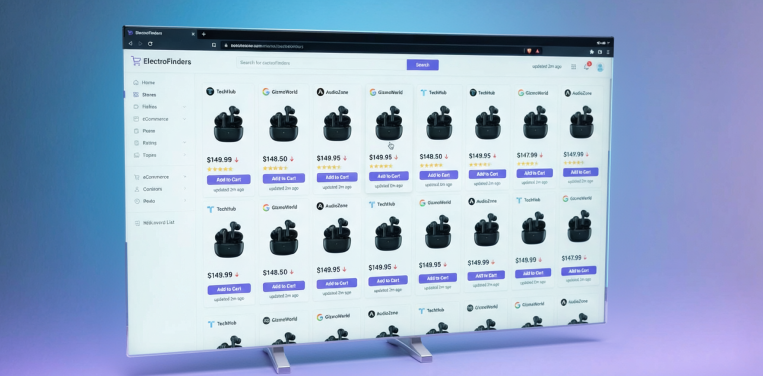
Why Reactive Pricing Fails in High-Transparency Categories
Many legacy pricing tools rely on reactive logic. When a competitor price changes, the system responds. When conversion dips, a discount is triggered. This approach feels logical in transparent markets, but it creates serious problems.
In electronics, reactive pricing often leads to unnecessary price wars. Temporary competitor discounts, clearance events, or limited-stock sellers trigger matching behavior that permanently resets baseline pricing.
In beauty, reactive pricing is even more damaging. Discounting premium or hero products based on irrelevant competitor moves weakens brand positioning without driving incremental demand.
The core issue is not visibility. It is interpretation.
Pricing software for eCommerce that reacts without understanding relevance or elasticity treats all price changes as equal. In categories where competitor noise is constant, this approach accelerates margin erosion rather than protecting performance.
This is where Competitor AI and Pricing AI fundamentally change the equation.
How Competitor AI Brings Order to Fast-Moving Markets
In high-transparency categories, the volume of competitive data is overwhelming. Prices shift across retailers, marketplaces, and sellers every day. Without intelligent filtering, pricing teams are buried in alerts.
Hypersonix Competitor AI focuses on relevance, not volume.
The system continuously collects competitor pricing data across digital channels, but it does not treat every change as actionable. Instead, it evaluates competitor moves based on several critical factors.
First, it ensures accurate product matching. In electronics, this means matching exact models and specifications rather than surface-level similarities. In beauty, it means understanding size, formulation, bundles, and brand positioning to avoid false comparisons.
Second, Competitor AI distinguishes temporary activity from structural shifts. Short-term promotions, inventory-driven discounts, and marketplace anomalies are separated from sustained pricing changes that truly affect customer perception.
Third, it prioritizes competitive signals based on historical impact. If a competitor’s price changes have not historically influenced demand, they are deprioritized.
By filtering noise and surfacing only meaningful threats, Competitor AI allows pricing software for eCommerce to remain calm and focused, even when markets are volatile.
Elasticity Variance: Why One Pricing Strategy Never Works
Fast competitor movement is only half the challenge. The other half is elasticity variance.
In electronics, many products are highly elastic. Customers compare specs and prices closely, and small price differences can influence conversion. However, even within electronics, elasticity is not uniform. Accessories, warranties, and proprietary bundles often behave very differently from core devices.
In beauty, elasticity varies even more dramatically. Entry-level or trend-driven products may be highly price sensitive, while premium, routine-based, or dermatologist-recommended products often show low elasticity. Discounting these items rarely increases demand and often damages perceived value.
Pricing AI is essential because it models elasticity at the SKU and product-cluster level rather than relying on category assumptions.
Hypersonix Pricing AI analyzes historical sales behavior, price changes, and competitive context to understand how each product responds to pricing adjustments. This allows retailers to move away from broad category rules and toward precise, product-level decisions.

How Pricing AI Guides Smarter Decisions in Electronics
In electronics, Pricing AI helps retailers avoid two common mistakes.
The first is unnecessary matching. When Competitor AI identifies a temporary or low-impact price drop, Pricing AI evaluates elasticity to determine whether demand is actually at risk. If customers are unlikely to switch, the system recommends holding price.
The second is missed margin opportunity. Many electronics retailers assume prices must always move downward. Pricing AI often reveals opportunities for small price increases on low-elasticity SKUs, especially accessories, add-ons, or less comparable products.
These micro-adjustments, applied consistently, protect margin without harming competitiveness. Instead of reacting to every competitor move, pricing decisions become intentional and evidence-driven.
How Pricing AI Supports Brand Strength in Beauty
In beauty, the biggest risk is over-discounting products that do not need it.
Pricing AI identifies where discounts genuinely influence demand and where they do not. For products with strong brand affinity or habitual purchasing behavior, elasticity signals often show that price changes have minimal impact on volume.
In these cases, holding price protects margin and preserves brand positioning. Promotions can then be focused on products where elasticity indicates true demand lift, such as discovery items, seasonal launches, or highly substitutable SKUs.
By aligning discounts with elasticity rather than fear, pricing software for eCommerce helps beauty brands compete on value, not just price.
Explainable Intelligence Builds Confidence in Volatile Categories
High-transparency categories create internal pressure. When competitors move fast, stakeholders expect immediate action. Without clarity, pricing discussions become emotional.
Hypersonix addresses this through explainable AI.
Every pricing recommendation includes clear reasoning. Teams can see which competitor move was evaluated, how relevance was determined, and how elasticity influenced the decision. Expected demand and margin impact are visible upfront.
This transparency allows pricing, merchandising, and finance teams to align quickly. Instead of debating whether to react, teams understand when holding price is the smarter competitive move.
Explainability turns pricing software for eCommerce into a trusted decision system rather than a reactive engine.
From Reaction to Control in High-Transparency Markets
Electronics and beauty are not categories where pricing can be set and forgotten. They require constant attention. But constant attention does not mean constant reaction.
Retailers that succeed in these markets do not chase every competitor move. They understand which moves matter, how customers respond, and where discipline creates advantage.
By combining Competitor AI and Pricing AI, Hypersonix enables pricing software for eCommerce to operate with control instead of chaos. Fast competitor moves are evaluated with context. Elasticity variance is respected. Margin is protected through precision rather than discounts.

Conclusion
High-transparency categories like electronics and beauty demand a new standard for pricing. Speed alone is no longer enough. Reacting without understanding relevance and elasticity is one of the fastest ways to lose margin.
Modern Pricing Software for eCommerce must balance fast competitor movement with deep customer insight. Hypersonix Pricing AI and Competitor AI deliver this balance by filtering competitive noise, modeling elasticity at the SKU level, and guiding disciplined, explainable decisions.
In markets where everyone sees the same prices, the advantage comes from moving faster as well as understanding better.
Retailers who master this shift will protect margin, strengthen brand trust, and compete confidently in the most transparent categories in eCommerce.