Retail pricing has entered a fragile era. Price transparency is higher than ever, competitors move faster, and customers compare options instantly across channels. In response, many retailers still rely on pricing strategies built around reaction. When competitors discount, prices drop. When demand softens, promotions follow.
The problem is not effort. It is precision.
Margins are lost because retailers move too slowly, but they are also lost when prices move without understanding how customers actually respond. This is why modern Pricing Software for Retail is shifting away from rule-based repricing and toward elasticity-driven decision making.
Elasticity changes pricing from a reactive exercise into a controlled, margin-protective discipline. With SKU-level elasticity modeling powered by Pricing AI in Retail, platforms like Hypersonix enable retailers to understand when price changes truly influence demand and when they do not. This intelligence is now foundational for protecting margin at scale.
Before exploring how elasticity works in practice, it is important to understand why traditional pricing approaches struggle to protect margin in today’s retail environment.
Why Traditional Pricing Approaches Erode Margin
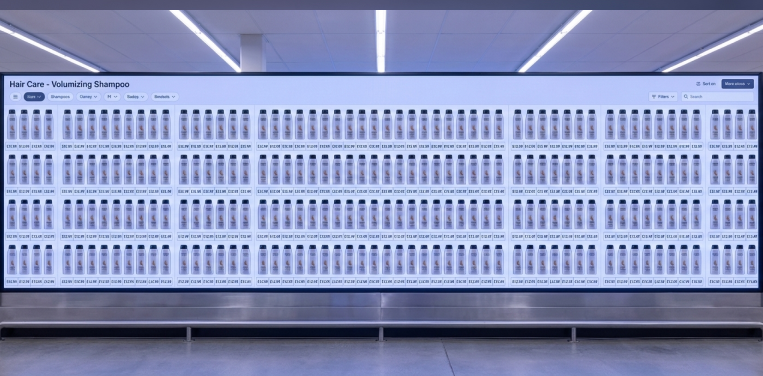
Many legacy pricing systems operate on simplified assumptions. If a competitor lowers price, match it. If sales slow, discount. If margins compress, increase volume. While these rules feel logical, they ignore one critical variable: customer behavior.
Not all products respond to price changes the same way. Some items are highly price sensitive, while others are resilient due to brand strength, convenience, or habitual purchasing. Treating all SKUs as equally elastic leads to unnecessary discounts and missed margin opportunities.
Traditional pricing tools also rely heavily on averages. Category-level assumptions replace SKU-level understanding. As assortments grow and channels multiply, this lack of granularity becomes expensive.
Modern Pricing Software for Retail must move beyond static rules and toward intelligence that reflects how customers actually behave. Elasticity provides that missing link.
What Elasticity Really Means in Retail Pricing
Elasticity measures how demand changes in response to price changes. It answers a simple but powerful question: will adjusting price actually change customer behavior.
In retail, elasticity is rarely uniform. Two products in the same category may behave completely differently. A private-label staple may be highly price sensitive, while a premium branded equivalent may show little response to price changes.
Modern Pricing AI in Retail models elasticity at the SKU and product-cluster level. Instead of assuming behavior, it learns from historical pricing actions, sales response, and contextual signals. This allows pricing decisions to reflect reality rather than habit.
For Pricing Software for Retail, elasticity becomes the foundation of smarter, margin-focused decisions.
Why SKU-Level Elasticity Is Critical
Category-level pricing hides risk. SKU-level elasticity exposes it.
When elasticity is modeled at the individual product level, retailers gain clarity into three critical areas. First, they can identify which products genuinely require discounts to drive demand. Second, they can see which products perform equally well at full price. Third, they can uncover opportunities for small price increases that customers will tolerate.
Hypersonix Pricing AI continuously evaluates elasticity using actual demand behavior. This enables retailers to move away from blanket promotions and toward precision pricing that protects margin without sacrificing competitiveness.
SKU-level elasticity is what allows Pricing Software for Retail to scale intelligence across thousands of products without relying on guesswork.

How Pricing AI Uses Elasticity to Prevent Unnecessary Discounts
One of the most powerful margin-protective capabilities of Pricing AI is knowing when not to act.
In many retail environments, competitor price drops create internal pressure to respond immediately. Without elasticity insight, pricing teams often discount out of caution rather than necessity.
Elasticity modeling changes this dynamic. If demand for a product remains stable despite competitor discounts, Pricing AI can confidently recommend holding price. This is not inaction. It is a deliberate, evidence-based margin decision.
Over time, avoiding unnecessary discounts has a compounding effect. Baseline margins stabilize, promotions regain effectiveness, and pricing discipline improves across the organization.
This is a defining advantage of modern Pricing Software for Retail.
Elasticity-Driven Price Increases Without Demand Loss
Elasticity is not only about preventing discounts. It also reveals where margin growth is possible.
Many retailers underestimate how resilient demand can be for certain products. Pricing AI often identifies SKUs where small price increases have little or no impact on volume. These opportunities are rarely visible through manual analysis or rule-based systems.
Hypersonix Pricing AI highlights these opportunities continuously. When applied across large assortments, even minor price increases generate meaningful margin lift without disrupting customer experience.
This approach shifts pricing from episodic changes to continuous optimization, a key capability of modern Pricing Software for Retail.
The Role of Competitive Context in Elasticity Decisions
Elasticity alone is not enough. Price decisions must also consider competitive relevance.
A competitor discount only matters if customers view the product as comparable and are willing to switch. Without accurate competitive context, elasticity signals can be misinterpreted.
This is where Competitor AI complements Pricing AI. By ensuring accurate product matching and filtering irrelevant competitor activity, Pricing AI evaluates elasticity against meaningful competitive signals rather than noise.
Together, these capabilities allow Pricing Software for Retail to protect margin while remaining competitive where it truly matters.
Explainable Elasticity Builds Organizational Confidence
Pricing teams often hesitate to trust AI recommendations without understanding the reasoning behind them. This is especially true when recommendations suggest holding price or increasing it.
Explainable Pricing AI solves this challenge. Teams can see how elasticity influenced the recommendation, what demand impact is expected, and how margin will change.
This transparency aligns pricing, merchandising, and finance teams around shared logic rather than instinct. Decisions move faster because they are easier to defend.
Explainability is essential for turning elasticity from an abstract concept into an operational advantage.
From Reactive Pricing to Margin Discipline
Elasticity-driven pricing introduces discipline into retail pricing operations. Instead of reacting to every competitor move or sales fluctuation, retailers focus on decisions that truly influence demand.
Over time, this reduces promotional dependency, stabilizes pricing, and strengthens customer trust. Prices feel consistent and rational rather than erratic.
Modern pricing software for retail must act fast, while intelligently deciding when a price change is truly needed.

Conclusion
Protecting margin in retail depends on understanding customer behavior more deeply than ever before.
SKU-level elasticity modeling powered by Pricing AI in Retail gives modern Pricing Software for Retail the intelligence needed to make confident, precise pricing decisions. It prevents unnecessary discounts, identifies safe price increases, and aligns pricing strategy with real demand behavior.
Hypersonix Pricing AI enables retailers to move beyond rule-based pricing toward disciplined, margin-focused decision making. In a market defined by transparency and volatility, elasticity is no longer optional. It is the foundation of sustainable retail profitability.
The future of pricing belongs to retailers who understand when price truly matters and act with precision when it does.




Ready to Let AI Agents Work for Your Margins?
Leading brands are already growing profits on autopilot. Join them.


Trusted by 1000+ leading retail brands