Apparel pricing is built on relationships. A premium jacket should sit above an entry-level jacket. A new-season dress should usually hold a different price position from last season’s clearance style. A core black color may deserve stronger price protection than a seasonal colorway. A limited collection may need a different pricing path than a replenishment basic. A private label item may need to maintain a clear value gap against national brands or premium alternatives.
These relationships form the price ladder.
A price ladder helps customers understand value across the assortment. It shows the difference between good, better, and best. It supports brand positioning. It protects margin. It gives merchandising, planning, ecommerce, and finance teams a shared structure for pricing decisions.
But apparel price ladders are easy to break.
A markdown on one color can make another color look overpriced. A discount on last season’s item can pull pressure onto the current collection. A competitor promotion on a similar-looking style can trigger a price cut that compresses the gap between tiers. A size-specific inventory issue can lead to a full-style markdown. A repeated set of small price changes can gradually weaken the category’s architecture.
This is why apparel retailers need to protect price ladders across seasons, colors, and collections.
Hypersonix helps apparel teams bring more discipline to these decisions by connecting cleaner competitor intelligence, expected demand impact, inventory and forecasting context, product-role rules, and business guardrails. Competitor AI helps validate whether competitor offers are truly comparable. Pricing AI uses historical sales and pricing patterns to support targeted recommendations, disciplined holds, and expected demand impact. Guardrails such as margin floors, movement limits, meaningful gap thresholds, price holds, category-specific rules, and exception-based review help prevent markdown decisions from breaking category architecture.
The goal is not to avoid markdowns. Apparel markdowns are necessary. The goal is to make sure each markdown fits the product’s role, lifecycle stage, inventory position, and place in the price ladder.
What a Price Ladder Means in Apparel
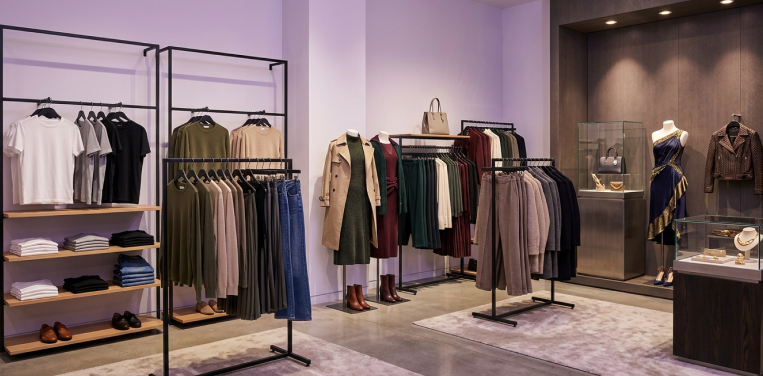
A price ladder is the structure that defines how products relate to each other by value, quality, season, brand, collection, and customer expectation.
In apparel, price ladders can exist across many dimensions:
- good, better, and best tiers
- entry, core, premium, and luxury products
- private label and national brands
- basics and fashion items
- current season and past season
- core colors and seasonal colors
- full-price collections and clearance assortments
- hero products and long-tail styles
- standard fits and specialized fits
- single items and coordinated sets
A well-managed price ladder helps customers understand why one product costs more than another. It also helps retailers protect margin where customers are willing to pay more, while still offering value where the category strategy requires it.
When the ladder is clear, pricing decisions feel intentional.
When the ladder breaks, customers may see confusing price relationships. A premium item may sit too close to an entry product. A current-season style may appear overpriced because a similar previous-season item was marked down too aggressively. A private label item may lose its value gap. A slow-moving color may pull the full style into markdown too early.
The result is not only margin loss. It is category confusion.
How Markdown Decisions Break Price Ladders
Markdown decisions often begin with a specific problem.
A color is underperforming. A size curve is broken. A competitor has promoted a similar product. A seasonal item is not selling through. Inventory is building in one channel. A new collection is launching soon, and older product needs to move.
Each of these issues may justify action.
The risk comes when the action is applied too broadly or without considering the surrounding assortment. A markdown intended to solve one problem can create several new ones.
For example, if one color of a sweater is overstocked, reducing the entire style may damage margin on colors that are selling well. If last season’s jacket is marked down too deeply, it may make the new-season version harder to sell at full price. If a mid-tier product is reduced too aggressively, it may compress the gap between entry and premium tiers. If a private label dress is moved too close to a national brand, the value relationship becomes unclear.
Apparel pricing teams need to understand not only the SKU in front of them, but also the ladder around it.
Seasons Change the Meaning of a Price
Seasonality is central to apparel pricing.
A markdown early in the season sends a different signal from a markdown near the end of the season. Early reductions can weaken full-price selling potential and train customers to wait. Late-season reductions may be necessary to clear inventory and prepare for the next collection.
The same price move can be right or wrong depending on timing.
A 15 percent reduction on a coat before the season has fully developed may be premature if weather has not yet arrived. The same reduction later in the season may be appropriate if inventory is above plan and demand is softening. A dress that appears slow in early spring may still have strong selling potential as events and warmer weather approach. A swimwear markdown too early may give away margin before peak demand.
Hypersonix helps teams evaluate pricing decisions with inventory and forecasting context so they can understand whether pressure is temporary, seasonal, or structural. Pricing AI supports expected demand impact using historical sales and pricing patterns, helping teams determine whether a markdown is likely to pay back or whether a price hold is more appropriate.
Protecting the price ladder requires knowing where the product sits in the season before changing price.
Current Collections Need Protection From Past-Season Discounts
Past-season markdowns are often necessary, but they can distort current-season pricing.
When a previous-season style is still visible next to a new collection, customers may compare them directly. If the older style is discounted too aggressively, it can make the current collection look expensive even when the new product has stronger design, updated materials, improved fit, or current relevance.
This is especially common in categories such as outerwear, dresses, denim, footwear, activewear, and seasonal accessories.
The pricing team needs to manage the relationship between old and new.
That does not mean avoiding clearance. It means making sure clearance logic does not damage the price architecture of the new season. The older product may need separate placement, a controlled markdown path, or different promotional treatment. The current product may need a hold if demand is healthy and the comparison is not truly equivalent.
Hypersonix Competitor AI helps validate whether similar-looking products are truly comparable, while guardrails help teams avoid unnecessary movement when a discounted item does not represent the right benchmark.
A past-season markdown should clear inventory without rewriting the value of the current collection.
Colors Should Not Always Move Together
Color performance is rarely uniform in apparel.
A black jacket may sell steadily while a bright seasonal color slows. A neutral dress may hold demand while a trend-driven print underperforms. A core denim wash may sell across the season while a limited wash needs earlier action. A sneaker colorway may lag while the same style in white or black remains strong.
If pricing teams mark down all colors together, they may give away margin unnecessarily.
The better approach is to evaluate color-level performance in context. Some colors may need a targeted promotion or markdown. Others may deserve a hold. Some may require review because the issue is availability, size curve, imagery, or placement rather than price.
Color-level decisions should consider:
- sell-through by color
- inventory exposure
- size availability
- seasonality
- product role
- demand forecast
- competitor relevance
- margin impact
- relationship to other colors in the same style
Hypersonix helps connect inventory and forecasting context with pricing recommendations so teams can separate broad style pressure from color-specific issues.
This helps protect the ladder by avoiding unnecessary markdowns on products that still support full-price selling.
Size Availability Can Distort Pricing Decisions
Broken size curves are another common cause of pricing mistakes.
A product may appear to be underperforming because only fringe sizes remain. In that case, the pricing issue is not the same as broad demand softness. The correct action may be a size-specific clearance strategy, a review of product visibility, or an inventory investigation, rather than a full-style markdown.
Likewise, if core sizes are selling well but outer sizes are building, marking down the entire style can reduce margin on demand that still exists.
Pricing teams should distinguish between:
- full-size availability
- broken size curves
- isolated overstock by size
- channel-specific size imbalance
- regional size differences
- inventory that cannot support future demand
Hypersonix helps teams use inventory and forecasting context to understand whether the product needs a price move, a hold, a review, or an investigation.
Protecting price ladders requires avoiding broad markdowns when the real issue is size availability.
Competitor Comparisons Can Break Architecture If They Are Wrong
Apparel competitor comparisons are often difficult.
A competitor may promote a similar-looking item, but the product may differ by fabric, fit, construction, season, collection, color, size availability, brand position, or promotional terms. A dress may have a similar silhouette but different material quality. A jacket may look comparable but be last season’s clearance item. A sweater may appear cheaper but have a different fabric blend or weight.
If pricing teams react to these comparisons without validation, they can break the price ladder.
A premium item may be reduced because it is compared to a lower-quality alternative. A new collection item may be marked down because a competitor is clearing an older version. A private label product may move because of a non-equivalent national brand promotion.
Hypersonix Competitor AI helps improve product matching and relevance filtering so teams can compare true-equivalent offers. Competitor monitoring can be configured on daily, weekly, or monthly cycles depending on category volatility and business needs.
The key is to treat competitor data as a decision input, not an automatic trigger.
Private Label Apparel Needs Clear Value Gaps
Private label apparel often plays a critical role in margin and differentiation.
Some private label products offer opening price-point value. Others are designed as premium own-brand collections. Some compete directly with national brands, while others create exclusive assortment distinction.
Because private label plays different roles, markdowns must be managed carefully.
If a private label product is priced too close to a national brand, customers may question the value. If it is reduced too aggressively, the retailer may give away margin and weaken its own-brand positioning. If markdowns happen too frequently, the customer may learn to wait for discounts.
Private label price ladders should account for:
- intended gap to national brands
- quality tier
- product role
- collection strategy
- margin contribution
- inventory exposure
- seasonality
- customer demand patterns
Hypersonix Pricing AI supports targeted recommendations using historical sales and pricing patterns. Business guardrails help protect margin floors, movement limits, meaningful thresholds, and price holds so private label architecture is not disrupted by isolated pricing pressure.

Premium and Core Items Need Different Hold Discipline
Not all apparel products should have the same markdown path.
Core basics may have steady demand and longer selling windows. Premium items may require stronger price protection to preserve perceived value. Fashion items may have shorter lifecycles and need faster action when demand misses plan. Seasonal products may require more aggressive review as the selling window closes.
Price holds should vary by product role.
A premium coat with healthy demand and manageable inventory may deserve a hold even if a competitor is promoting a similar-looking product. A core denim item may hold because demand is stable and the product is not lifecycle-constrained. A seasonal fashion item with soft demand and high inventory may require review or markdown.
Hypersonix supports product-role and category-specific guardrails so teams can apply different decision logic across the assortment.
This helps protect price ladders because not every product is pushed through the same markdown process.
Movement Limits Prevent Ladder Compression
Frequent small price changes can compress price ladders over time.
A mid-tier item moves down slightly. A premium item follows because the gap becomes too wide. An entry item moves again because it now looks too close to the mid-tier item. Over several cycles, the entire category can shift downward.
This is price ladder erosion.
Movement limits help prevent repeated small reductions from gradually weakening the architecture. They can restrict how often a product moves, how far it moves, or when another reduction requires review.
In apparel, movement limits are especially useful across:
- early-season styles
- premium products
- private label collections
- current-season assortments
- hero items
- products with repeated competitor-triggered recommendations
Hypersonix supports movement controls as part of broader business guardrails. When a product has already changed price recently, the next recommendation can be reviewed more carefully or routed toward a hold if expected demand impact is limited.
The goal is not to block necessary markdowns. It is to prevent uncontrolled drift.
Meaningful Gap Thresholds Protect Against Overreaction
Not every price gap matters.
A small competitor difference may not influence demand if the product has stronger brand appeal, better fit, better availability, or stronger merchandising. A larger gap may matter if the product is highly comparable and price-sensitive. A gap may be irrelevant if the competitor item is from a different season, weaker quality, limited sizing, or a short-term promotion.
Meaningful gap thresholds help teams avoid reacting to differences that are too small or too weak to justify a price move.
For apparel, thresholds should reflect:
- product role
- seasonality
- category price sensitivity
- competitor relevance
- match confidence
- inventory exposure
- margin impact
- price ladder position
Hypersonix supports meaningful gap thresholds as part of its guardrail framework. This helps retailers determine whether a competitor price difference should lead to a move, hold, review, or investigation.
By filtering noise, teams protect the ladder from unnecessary movement.
Expected Demand Impact Helps Decide Whether a Markdown Pays Back
A markdown should not be approved only because a product is behind plan or a competitor is cheaper.
The decision should consider whether the expected demand impact justifies the margin given up. Some apparel products respond strongly to price changes. Others do not. A customer may buy based on fit, color, style, brand, event timing, or availability. A markdown may not generate enough incremental volume to offset the margin loss.
Hypersonix Pricing AI uses historical sales and pricing patterns to support expected demand impact at the SKU or product-cluster level. This helps pricing teams evaluate whether a price move is likely to create value or simply weaken margin.
Expected demand impact becomes especially important when a markdown would affect a broader price ladder.
Before moving price, teams should ask:
- Will this markdown create enough demand to justify the margin trade-off?
- Will it compress the gap to another tier?
- Will it make a current collection look overpriced?
- Will it affect private label or premium positioning?
- Will it create pressure for further reductions?
If the expected demand impact is limited, a disciplined hold may protect more value.
Inventory and Forecasting Context Keep Decisions Precise
Inventory pressure is one of the biggest reasons apparel teams mark down.
But inventory pressure needs diagnosis.
A product may have high inventory overall but healthy sell-through in core sizes. A color may be overstocked while the rest of the style performs well. A collection may look slow before a weather shift or seasonal event. A channel may have excess inventory due to allocation, not demand weakness.
Hypersonix helps connect pricing, inventory, and forecasting context so teams can determine whether the right action is a style-level markdown, color-level promotion, size-level review, price hold, or investigation.
This helps protect price ladders because teams avoid broad markdowns when a narrower action would solve the problem.
The more precise the pricing action, the less damage it does to category architecture.
Exception Workflows Help Teams Protect the Ladder
Apparel teams manage large assortments with many styles, colors, sizes, collections, and lifecycle stages. Manual review of every pricing signal is not practical.
Exception-driven workflows help focus attention on the decisions that matter most.
A pricing exception can be routed into several paths:
Move
A move may be appropriate when the product match is reliable, expected demand impact supports action, inventory risk is material, lifecycle stage supports markdown, and the recommendation fits within guardrails.
Hold
A hold may be appropriate when the product is early in season, the competitor signal is weak, inventory risk is manageable, demand is expected to recover, or the markdown would damage the price ladder.
Review
A review may be needed when the item has meaningful business exposure, the product match is uncertain, inventory pressure is uneven, or the price move could disrupt tier relationships.
Investigate
An investigation may be needed when the issue involves product matching, size availability, allocation, content visibility, forecasting, promotion setup, or execution rather than base pricing.
This structure helps teams avoid treating every issue as a markdown problem.
Price Execution Monitoring Protects the Approved Architecture
Even when pricing decisions are well-governed, execution can still create problems.
A markdown may be approved for one color but applied to the full style. A temporary promotion may remain active too long. A price may update online but not in stores. A product may not return to the intended price after an event. A new collection may inherit the wrong price relationship from a past-season item.
Execution errors can break price ladders just as easily as bad recommendations.
Hypersonix price execution monitoring helps verify that approved pricing actions were implemented as intended. This helps teams identify delayed, missed, inconsistent, or incorrect execution after approval.
For apparel retailers, execution monitoring is especially important because style, color, size, channel, and season create many opportunities for misalignment.
The approved pricing architecture only works if the executed price reflects it.
Monitoring Competitors at the Right Cadence
Apparel retailers need competitive visibility, but they should not chase every visible promotion.
Competitor monitoring can be configured on daily, weekly, or monthly cycles depending on business needs, category volatility, and product role. High-velocity or promotion-heavy categories may need closer review. Premium, core, or differentiated products may require a more disciplined cadence.
The purpose of monitoring is not constant reaction.
It is to identify which competitor movements are valid, relevant, and meaningful enough to affect pricing decisions.
Daily reviews may focus on urgent high-impact exceptions, major competitor moves, inventory risk, or margin breaches. Weekly reviews may evaluate category trends, repeated holds, markdown outcomes, competitor relevance, and price ladder health. Monthly reviews may refine guardrails, product roles, thresholds, competitor sets, and lifecycle assumptions.
This cadence helps retailers stay informed without allowing every competitor signal to disrupt the category structure.
How Hypersonix Helps Apparel Retailers Protect Price Ladders
Hypersonix helps apparel retailers manage pricing decisions with greater discipline across seasons, colors, and collections.
Competitor AI improves product matching and relevance filtering across style, fabric, fit, color, size, season, collection, promotion, and seller conditions. Pricing AI uses historical sales and pricing patterns to support expected demand impact and targeted recommendations. Inventory and forecasting context helps teams understand whether pressure is tied to demand softness, seasonal timing, stock exposure, size availability, color performance, or allocation issues.
Business guardrails help teams apply margin floors, movement limits, meaningful gap thresholds, price holds, category-specific rules, product-role constraints, and exception-based review. Explainable workflows help pricing, merchandising, ecommerce, and finance understand whether the right decision is to move, hold, review, or investigate. Price execution monitoring helps verify that approved actions were carried out correctly.
Together, these capabilities help apparel teams:
- protect good, better, best category architecture
- avoid broad markdowns caused by isolated color or size issues
- prevent past-season clearance from weakening current collections
- maintain private label and premium value relationships
- validate competitor offers before reacting
- use expected demand impact before approving reductions
- apply movement limits to prevent ladder compression
- make price holds visible and defensible
- route high-risk exceptions for review
- verify approved price actions after execution
The result is a more controlled pricing process that supports sell-through, margin protection, and category clarity.
Conclusion
Apparel price ladders do not break all at once.
They weaken through small decisions: a markdown applied too broadly, a competitor comparison that was not equivalent, a seasonal item moved too early, a past-season discount that pressures a current collection, or repeated small reductions that compress the gap between tiers.
Hypersonix helps apparel retailers protect category architecture with cleaner competitor intelligence, expected demand impact, inventory and forecasting context, business guardrails, explainable workflows, and price execution monitoring.





Ready to Let AI Agents Work for Your Margins?
Leading brands are already growing profits on autopilot. Join them.


Trusted by 1000+ leading retail brands