Grocery shoppers notice prices quickly. They see the price of milk, eggs, cereal, snacks, coffee, beverages, detergent, paper goods, and pantry staples. They compare offers across stores, apps, circulars, and delivery platforms. For grocers, those comparisons matter because visible price gaps can influence price perception, basket behavior, and competitive confidence.
But in grocery, the headline price does not always tell the truth.
A competitor may appear cheaper on a pack of yogurt, but the pack count may be smaller. A cereal box may show a lower price, but the weight may differ. A beverage multipack may be promoted at a lower shelf price, but the unit price may be higher. A bonus pack may temporarily change the value equation. A buy-more offer may look like an undercut but only apply when the shopper purchases multiple units.
If grocery pricing teams react only to the headline price, they can make the wrong decision.
They may cut price when they are not truly undercut. They may miss a real competitive gap hidden behind a higher headline price. They may weaken margin on products that were already competitive on a unit basis. Across high-volume grocery categories, these mistakes can add up quickly.
This is why unit price accuracy matters more than headline price in grocery competitive tracking.
Hypersonix helps grocery retailers improve pricing discipline by connecting cleaner competitor intelligence, product matching, relevance filtering, expected demand impact, inventory and forecasting context, and business guardrails. Competitor AI helps validate whether competitor products and offers are truly comparable across pack sizes, multipacks, variants, promotions, and seller conditions. Pricing AI uses historical sales and pricing patterns to support targeted recommendations, disciplined holds, and expected demand impact. Guardrails such as margin floors, movement limits, meaningful gap thresholds, and price holds help teams avoid unnecessary price cuts when headline price gaps are misleading.
The goal is not to ignore competitor pricing. It is to compare the right value before making a pricing decision.

Headline Price Can Create a False Sense of Urgency
Headline price is what teams see first.
A competitor lists a 12-pack of sparkling water at $4.99. Another grocer promotes a box of cereal at $3.79. A marketplace or delivery listing shows a lower price for paper towels. A weekly ad highlights a lower price on coffee, snacks, or detergent.
The visible price gap can feel urgent.
But the lower headline price may not be a true undercut. The competitor’s product may have fewer ounces, fewer units, a different package count, a temporary bonus size, a loyalty condition, or a promotion that changes the effective comparison.
For example, a retailer may sell a 20-ounce product for $4.99 while a competitor sells a 16-ounce product for $4.49. On headline price alone, the competitor appears cheaper. On unit price, the retailer may be stronger. If the pricing team reduces price without normalizing the comparison, it gives away margin for no competitive gain.
Grocery pricing decisions should not begin and end with the shelf price. They should begin with whether the unit economics are truly comparable.
Why Unit Price Accuracy Matters in Grocery
Unit price helps answer the question shoppers are often trying to understand: how much value am I getting for what I pay?
In grocery, products are sold in many formats. The same category can include different weights, counts, sizes, packs, bundles, and promotional structures. Without unit normalization, competitive tracking can produce misleading signals.
Unit price accuracy matters because it helps teams compare:
- price per ounce
- price per pound
- price per liter
- price per count
- price per serving
- price per roll
- price per sheet
- price per load
- price per unit in a multipack
These comparisons are especially important in categories where package variation is common, such as snacks, beverages, cereal, coffee, pet food, household essentials, paper goods, frozen foods, health and beauty, and cleaning products.
A lower headline price may not mean better value. A higher headline price may still be competitive if the package is larger or includes more units.
Hypersonix Competitor AI helps improve product matching and relevance filtering so teams can evaluate competitor offers more accurately before deciding whether to move, hold, review, or investigate.
Pack Sizes Can Make Competitor Gaps Look Bigger Than They Are
Pack-size differences are one of the most common causes of false undercuts.
A 10-ounce bag of chips should not be benchmarked directly against an 8-ounce bag. A 48-count coffee pod box should not be compared to a 36-count box without unit normalization. A 100-fluid-ounce detergent bottle should not be treated the same as an 88-fluid-ounce bottle. A 12-pack beverage case should not be compared to an 8-pack on headline price alone.
When pack sizes differ, the headline price often exaggerates or hides the real gap.
A competitor may look cheaper because the product is smaller. The retailer may look more expensive because it is selling a larger format. In other cases, a competitor’s higher headline price may actually offer a lower unit price because the pack is larger.
Pricing teams need to distinguish between a true competitive price gap and a package-size difference.
Hypersonix helps grocery teams compare products more accurately by improving matching across pack sizes, variants, and offer details. When the pack-size relationship is unclear, the exception can be routed for review rather than triggering an unnecessary price move.
Multipacks Require More Than Simple Price Matching
Multipacks can distort grocery competitive tracking because customers are comparing both total spend and unit value.
A 6-pack, 8-pack, 12-pack, and 24-pack may all exist in the same category. Each may serve a different shopper mission. A family stock-up pack may not be directly comparable to a single-use or trial-size pack. A warehouse-style multipack may have a lower unit price but a higher basket commitment.
If pricing teams compare only headline prices, they may misread the offer.
For example, a competitor may sell a 12-pack of beverages for $6.99 while the retailer sells an 8-pack for $5.49. The competitor has a higher headline price but may offer a lower unit price. Or a competitor may sell a smaller multipack for less, creating the appearance of a price advantage that does not hold on a per-unit basis.
The pricing decision depends on whether the products serve the same use case and whether the unit economics are comparable.
Multipack comparisons should consider:
- pack count
- item size within the pack
- total volume or total count
- price per unit
- shopper mission
- promotion mechanics
- availability and channel
- whether the pack is a regular item or a temporary offer
Hypersonix Competitor AI helps filter misleading comparisons so grocery teams can focus on true-equivalent offers and meaningful gaps.
Bonus Packs Can Temporarily Change the Value Equation
Bonus packs create another challenge.
A competitor may offer “20 percent more free,” a temporary larger size, a limited pack count, or an added unit at the same price. These offers may create a real temporary value advantage, but they do not always represent a lasting everyday price change.
If a retailer reacts by lowering the base price, it may respond too permanently to a temporary pack change.
Bonus packs should be interpreted differently from standard price cuts. They may be manufacturer-funded, seasonal, limited in quantity, or tied to a specific promotion. The right response may be a temporary promotion, a hold, a review of pack-level competitiveness, or no action if the expected demand impact is limited.
Pricing teams should ask:
- Is the bonus pack temporary or part of the regular assortment?
- Is the unit value materially better?
- Is the offer broadly available or limited?
- Is the competitor a relevant benchmark?
- Is the category price-sensitive enough for the bonus value to change demand?
- Would a base price change create unnecessary margin loss?
Hypersonix helps teams interpret whether competitor signals are temporary, equivalent, and meaningful before pricing action is taken.
Loyalty Offers and Conditional Discounts Can Distort Unit Price
Grocery promotions often include conditions.
A competitor may show a lower price that requires a loyalty card, digital coupon, minimum purchase, subscription, or buy-more structure. The displayed headline price may not apply to every shopper or every purchase occasion.
This creates a risk when pricing teams treat conditional offers as the everyday benchmark.
A “buy 2 for $6” offer is not the same as a $3 everyday price if the shopper must purchase two units. A loyalty-only price may not represent the shelf price for all customers. A digital coupon may be temporary and limited. A subscription or delivery-platform offer may not reflect the in-store competitive set.
Unit price accuracy should include the conditions that affect the comparison.
The right workflow should distinguish between:
- everyday shelf price
- loyalty price
- digital coupon price
- buy-more offer
- temporary promotional price
- delivery or marketplace price
- subscription price
- bonus-pack value
Hypersonix Competitor AI helps improve offer-level interpretation so pricing teams can avoid turning temporary or conditional offers into unnecessary base price reductions.
Private Label Requires Extra Unit-Price Discipline
Private label grocery products often compete against both national brands and other retailers’ private labels.
These comparisons can be difficult because package sizes, quality tiers, formulations, and positioning may differ. A private label cereal may be compared against a national brand box with a different weight. A private label detergent may have a different number of loads. A private label snack may differ in ounces, pack count, or product quality.
If unit price is not accurate, private label pricing can move in the wrong direction.
A retailer may reduce a private label price because a competitor appears cheaper, even though the competitor pack is smaller. Or the retailer may miss a real gap because the competitor’s higher headline price actually offers better unit value.
Private label pricing should protect both margin and value architecture. The goal is not always to be the cheapest headline price. The goal is to maintain the right value relationship against national brands, competitor private labels, and the retailer’s own category strategy.
Hypersonix Pricing AI supports targeted recommendations using historical sales and pricing patterns, while guardrails help maintain margin floors, movement limits, meaningful thresholds, and price holds. This helps teams avoid disrupting private label architecture because of misleading unit comparisons.
Unit Price Accuracy Protects Price Image
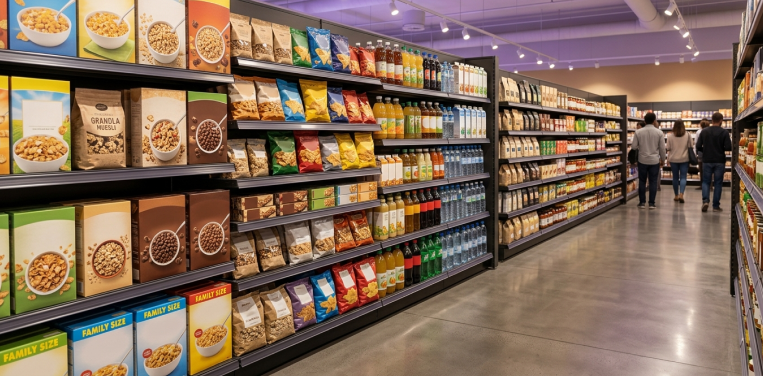
Grocery price image is shaped by visible items, but visibility can be misleading when package sizes differ.
A shopper may notice that a competitor’s item appears cheaper. But if the retailer offers a larger pack or better unit value, the headline comparison does not tell the full story. Pricing teams need to know whether the product is actually less competitive or simply being compared incorrectly.
This matters for key value items and high-velocity categories.
A false undercut on a visible staple can pressure teams into unnecessary reductions. A real unit-price disadvantage on a price-image product may deserve attention even if the headline price looks close. The difference matters because shoppers may compare based on shelf labels, digital product pages, circulars, or unit pricing displays.
Unit-price accuracy helps teams protect price image more intelligently.
Rather than matching every lower headline price, grocers can prioritize validated gaps where the unit price comparison is reliable, the competitor is relevant, and expected demand impact supports action.
Expected Demand Impact Should Guide the Response
Even when a unit-price gap is real, a price change is not always the right decision.
Some grocery products are highly price-sensitive. Others are driven by brand loyalty, convenience, dietary preference, availability, habit, or household routine. A unit-price gap may matter more in commodity categories and less in differentiated or premium categories.
Hypersonix Pricing AI uses historical sales and pricing patterns to support expected demand impact at the SKU or product-cluster level. This helps teams evaluate whether a price move is likely to generate enough incremental demand to justify the margin trade-off.
A price move should be prioritized when:
- the product match is reliable
- the unit-price comparison is accurate
- the competitor is relevant
- the gap is meaningful
- expected demand impact supports action
- inventory or category role adds urgency
- the recommendation fits within guardrails
When those conditions are not met, a price hold may protect more value than a reduction.
Guardrails Prevent False Undercuts From Becoming Margin Leakage
Unit-price errors can create margin leakage when they trigger unnecessary price cuts.
This risk is higher in grocery because high-volume products can magnify small mistakes. A few cents or a small percentage change across thousands of units can have a meaningful financial impact.
Guardrails help prevent false undercuts from becoming price moves.
Hypersonix supports guardrails such as:
- margin floors
- movement limits
- meaningful gap thresholds
- price holds
- category-specific rules
- product-role constraints
- exception-based review
A meaningful gap threshold can prevent action when the unit-price difference is too small. A margin floor can block recommendations that would erode profitability. A movement limit can reduce repeated small cuts that create base price drift. A price hold can protect margin when the headline gap is caused by pack size, multipack structure, or a temporary bonus pack.
These guardrails make competitive pricing more controlled and defensible.
Price Holds Should Explain the Unit-Price Logic
A price hold is often the right decision when the headline price looks worse but the unit price tells a different story.
But that hold needs to be explainable.
Pricing, merchandising, ecommerce, and finance teams should be able to see why no price change is recommended. The explanation should show that the competitor signal was evaluated and that the retailer is not truly undercut on a comparable basis.
An explainable hold may show:
- the competitor pack is smaller
- the competitor offer has fewer units
- the competitor bonus pack is temporary
- the competitor price is conditional or loyalty-only
- the unit-price gap is below threshold
- the match is uncertain and needs review
- expected demand impact is limited
- the move would breach margin or movement guardrails
- inventory does not justify action
Hypersonix supports explainable recommendations and exception-driven workflows so teams can treat holds as deliberate pricing decisions.
This is especially important in grocery, where teams are often pressured to react quickly to visible competitor prices.
When Unit-Price Differences Should Trigger Action
Unit-price accuracy does not mean grocers should ignore competitor gaps.
It means they should act when the gap is real and meaningful.
A pricing action may be appropriate when:
- the product and pack are true equivalents
- the competitor is relevant
- the unit-price gap is material
- the offer is not simply a temporary or conditional promotion
- the product is important to price image or demand
- expected demand impact supports action
- inventory or category strategy adds urgency
- the recommendation fits within guardrails
In these cases, a targeted price move or promotion may be justified.
The key is that the decision is based on normalized value, not surface-level price.
When Review Is Better Than Action
Some grocery comparisons are too ambiguous for an immediate move or hold.
A review may be needed when the product appears similar but the pack size, total ounces, unit count, bonus quantity, or offer condition is unclear. This is especially common in categories with frequent packaging changes, seasonal bonus packs, multipacks, and retailer-specific formats.
A review may be appropriate when:
- package weight or count is missing
- the competitor offer appears to include bonus quantity
- the promotion terms are unclear
- the match confidence is uncertain
- the product is high-volume or high-margin
- the unit-price gap is large but difficult to validate
- the recommendation approaches a margin floor or movement limit
Hypersonix exception-driven workflows help route ambiguous cases for review or investigation instead of turning them into automatic price changes.
This helps teams protect both competitiveness and margin.
Monitoring Competitors at the Right Cadence
Grocery categories vary in how often they need competitive review.
Competitor monitoring can be configured on daily, weekly, or monthly cycles depending on business needs, category volatility, and product role. Highly visible staples or promotional categories may require more frequent review. Stable or lower-impact categories may not need the same cadence.
The purpose of monitoring is not to chase every headline price.
It is to identify which competitor movements are valid, comparable, relevant, and meaningful.
Daily reviews may focus on high-velocity staples, key value items, major promotions, margin exceptions, and urgent inventory risks. Weekly reviews can evaluate category trends, private label positioning, repeated holds, recommendation outcomes, and pack-size issues. Monthly reviews can refine competitor sets, thresholds, product-role logic, and matching rules.
This structured cadence helps grocers stay competitive without reacting to every misleading headline price.
Price Execution Monitoring Helps Close the Loop
Even when the pricing decision is right, execution still matters.
A price may be approved but not applied. A temporary promotion may remain active too long. A price may reach one channel but not another. A unit-price update may not align with the product’s actual pack size. A base price may not restore after a promotional response.
These execution errors can create customer confusion and margin leakage.
Hypersonix price execution monitoring helps verify that approved pricing actions were implemented as intended. This is especially important in grocery, where temporary promotions, pack changes, and high-volume SKUs can create execution complexity.
A pricing decision only creates value when it reaches the market correctly.
How Hypersonix Helps Grocers Improve Unit-Price Competitive Tracking
Hypersonix helps grocery retailers move from headline price comparisons to more accurate unit-price intelligence.
Competitor AI improves product matching and relevance filtering across pack sizes, multipacks, variants, bonus packs, promotions, and seller conditions. Pricing AI uses historical sales and pricing patterns to support expected demand impact and targeted recommendations. Inventory and forecasting context helps teams understand whether pressure is tied to demand, stock exposure, seasonality, or category role.
Business guardrails help teams apply margin floors, movement limits, meaningful gap thresholds, price holds, category-specific rules, product-role constraints, and exception-based review. Explainable workflows help teams decide whether a product should move, hold, review, or investigate. Price execution monitoring helps verify that approved pricing actions were implemented correctly.
Together, these capabilities help grocery teams:
- avoid false undercuts caused by pack-size differences
- compare multipacks and unit economics more accurately
- interpret bonus packs and conditional offers with the right context
- protect private label value architecture
- prioritize true unit-price gaps on key value items
- use expected demand impact before approving reductions
- hold price when the headline gap is misleading
- route uncertain comparisons for review
- reduce unnecessary margin leakage from bad comparisons
- verify approved price actions after execution
The result is a more precise competitive pricing process that protects margin while supporting price-image discipline.
Conclusion
In grocery competitive tracking, headline price can be misleading.
A competitor may appear cheaper because the pack is smaller, the count is different, the offer is conditional, or a bonus pack temporarily changes unit value. If pricing teams react without normalizing for unit price, they may cut prices unnecessarily and weaken margin without improving competitiveness.
Hypersonix helps grocery retailers improve unit-price accuracy with cleaner competitor intelligence, product matching, expected demand impact, inventory and forecasting context, business guardrails, explainable workflows, and price execution monitoring.
The strongest grocery pricing teams do not ask only, “Who has the lower shelf price?”
They ask, “Who has the better comparable unit value, and is the gap meaningful enough to act on?”
That is how grocers avoid false undercuts and make competitive pricing decisions with greater confidence.





Ready to Let AI Agents Work for Your Margins?
Leading brands are already growing profits on autopilot. Join them.


Trusted by 1000+ leading retail brands