Grocery pricing teams face a difficult balance. They need to protect price image on the products shoppers notice most, but they also need to avoid unnecessary discounting across the rest of the basket. A retailer may “win” on a handful of visible items, yet still lose margin if that competitive response spreads too broadly across the assortment.
This is one of the most common pricing challenges in grocery.
A competitor may lower the price on milk, eggs, bread, bananas, cereal, or a popular household staple. The pricing team sees the gap and reacts. That reaction may be justified for a key value item because shoppers remember those prices and use them to form an impression of overall value. But when the same reaction expands to less visible products, private-label items, premium products, long-tail SKUs, or categories where shoppers are less price-sensitive, margin can leak quickly.
The problem is not competitor tracking itself.
The problem is treating every competitor signal as equally important.
Modern Competitor Analysis Software for Retail, Competitor Analysis Software for Ecommerce, Pricing Software for Retail, and Pricing Software for Ecommerce should help teams understand when a competitor price deserves action, when it requires review, and when the smarter decision is to hold price.
Hypersonix supports this through Competitor AI and Pricing AI. Competitor AI helps teams monitor competitor prices on daily, weekly, or monthly cadences, improve product matching, filter relevant signals, and evaluate meaningful price gaps. Pricing AI helps teams apply margin floors, price movement limits, price holds, product-role rules, exception-based review, and explainable workflows.
The goal is not to ignore competitors.
The goal is to compete where it matters and protect margin everywhere else.

Price Image Is Not the Same as Matching Every Price
Price image matters in grocery.
Shoppers often remember the prices of a small set of frequently purchased, highly visible products. These items shape how customers perceive whether a grocer is expensive, fair, or competitive. That is why key value items receive so much attention.
But price image does not require matching every competitor price across the entire assortment.
A retailer may need to stay sharp on the products shoppers notice most. At the same time, it may be able to hold price on products where the competitor gap is small, the match is weak, demand is stable, or the product plays a different role in the basket.
This distinction is critical.
If a grocery team responds to every competitor price gap as if it were a price-image threat, the business may give away margin on products that do not meaningfully influence customer perception.
That is where Competitor Analysis Software for Retail and Pricing Software for Retail need to work together. Competitor intelligence should identify where the market is moving. Pricing intelligence should help determine whether the retailer should move, hold, or review.
Winning price image should not mean losing margin discipline.
Why Grocery Teams Lose Margin Even When They Look Competitive
Grocery teams can appear highly competitive and still lose profit.
This happens when price reductions are applied too broadly. A team may protect price image on visible staples, but then continue reducing prices on adjacent products, low-visibility items, products with weak competitor matches, or SKUs where the customer response does not justify the margin loss.
The retailer may win the headline comparison, but weaken profitability across the basket.
This can happen when:
- competitor gaps are treated as automatic price cuts
- pack size and unit comparisons are not accurate
- temporary competitor promotions influence base price decisions
- key value item logic is applied to too many products
- margin floors are not enforced consistently
- price holds are not used when reductions are not justified
- product-role rules are too broad or missing
- pricing teams lack explainability behind recommendations
Modern Pricing Software for Ecommerce should help prevent this by giving teams a governed workflow for pricing decisions. Not every cheaper competitor price should trigger a move. Some signals should lead to review. Others should support holding price.
The Few Items Shoppers Remember Deserve Different Rules
In grocery, some products carry more price perception weight than others.
These are often high-frequency, high-awareness items that shoppers buy repeatedly or use as reference points. They may include fresh staples, pantry essentials, household basics, or popular branded products.
These items may deserve tighter competitor monitoring and more sensitive price gap thresholds.
But that does not mean every product deserves the same response.
A premium specialty product, a private-label alternative, a seasonal item, a niche product, or a long-tail SKU may not need to follow the same pricing logic as a key value item. Applying the same rule everywhere can create unnecessary discounting.
Hypersonix Pricing AI supports product-role rules, which help teams define different pricing logic for different types of products. A key value item may have a tighter competitive threshold. A margin-building product may have stronger margin protection. A private-label product may need different comparison logic. A long-tail SKU may not require action unless the business impact is meaningful.
This is why Pricing Software for Retail should support product-level decisioning rather than broad category-level reactions.
Grocery pricing is not one rule across the store. It is different rules for different product roles.
Competitor AI Helps Identify Which Signals Are Worth Attention
Competitor data can generate a lot of noise.
A competitor may be cheaper on one item today, equal tomorrow, and promotional next week. A marketplace listing may show a low price but be out of stock. A competing grocer may offer a temporary bundle or loyalty-only price. A product may appear comparable, but the pack size, weight, brand, variant, or unit price may tell a different story.
A pricing team does not need more noise.
It needs cleaner signals.
Hypersonix Competitor AI helps teams monitor competitor prices on daily, weekly, or monthly cadences based on business needs, category volatility, and product role. It also supports product matching, relevance filtering, and meaningful price gap analysis.
This allows grocery teams to focus on competitor signals that are more likely to matter.
For Competitor Analysis Software for Ecommerce, this is especially important because ecommerce price visibility can create pressure to react quickly. But speed without relevance can lead to margin loss.
The right competitor intelligence should help teams understand whether a gap is real, relevant, and meaningful before any pricing action is considered.
Product Matching Prevents False Price Gaps
Product matching is one of the most important foundations of grocery competitor intelligence.
A competitor may look cheaper, but the comparison may not be equivalent. In grocery, small differences can change the meaning of a price gap.
A product may differ by:
- pack size
- unit measure
- brand
- flavor
- variant
- formulation
- organic versus conventional
- fresh versus frozen
- single item versus multipack
- loyalty price versus base price
- promotional offer versus everyday price
If these differences are not accounted for, grocery teams may respond to false price gaps.
A false gap can create unnecessary markdowns and margin leakage. It can also distort price image strategy by making teams believe they are uncompetitive when the comparison is not valid.
Hypersonix Competitor AI supports product matching and relevance filtering to help teams evaluate competitor signals more accurately. Stronger matching helps retailers avoid reacting to weak comparisons.
Modern Competitor Analysis Software for Retail should not simply show where a competitor is cheaper. It should help teams understand whether the comparison is strong enough to influence pricing.
Meaningful Gaps Matter More Than Small Differences
Not every competitor price gap matters.
A competitor may be slightly cheaper, but the difference may not be large enough to change shopper behavior. The retailer may have stronger availability, better service, better freshness, better store experience, stronger loyalty benefits, or better brand trust.
A small gap on a low-visibility item may not deserve action. A larger gap on a high-visibility key value item may deserve review. The decision depends on product role, customer sensitivity, margin impact, and match quality.
Hypersonix supports meaningful gap thresholds that help teams focus on price differences that are large enough to matter.
This is essential in grocery because a high volume of competitor data can lead to overreaction. If every small price gap becomes a price cut, margin discipline disappears.
Competitor Analysis Software for Ecommerce should help teams separate meaningful competitive pressure from routine market noise.
A small gap may support a hold.
A meaningful gap may require review.
A relevant and material gap on a key value item may justify action.
Pricing AI Helps Teams Know When Not to Match
Competitor AI identifies market signals.
Pricing AI helps decide what to do with them.
A competitor may be cheaper, but the right response is not always a price cut. Pricing AI can help evaluate whether a recommendation fits margin floors, price movement limits, product-role rules, and business guardrails.
Hypersonix Pricing AI supports price holds, which are especially important when a competitor signal does not justify action.
A price hold may be appropriate when:
- the competitor match is weak
- the price gap is not meaningful
- the product is not a key value item
- the item is already near a margin floor
- the product has stable demand
- the product has recently moved price
- the competitor offer appears temporary
- the expected business impact is unclear
In these cases, not matching a competitor can be the more profitable decision.
Modern Pricing Software for Retail should help teams defend a price hold with explainable logic. It should show why a product does not need to move, even when a competitor appears cheaper.
Price Holds Protect the Rest of the Basket
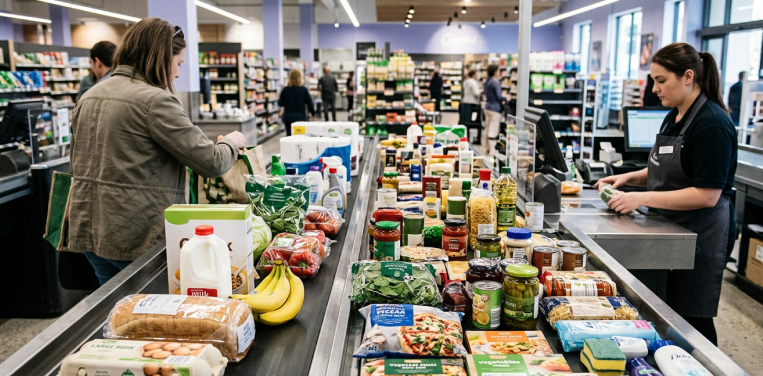
Grocery pricing teams often focus on the products that shape price image, but margin is earned across the full basket.
If a retailer discounts too broadly, the gains from winning visible items can be offset by margin loss elsewhere.
Price holds help protect the rest of the basket.
A hold can preserve margin on products where the competitor signal is weak, the gap is not meaningful, or the product does not strongly influence price perception. It can also protect premium products, private-label items, and long-tail SKUs from unnecessary competitive reactions.
Hypersonix Pricing AI supports price holds as part of broader pricing workflows and business guardrails. This helps teams treat a hold as a deliberate pricing decision rather than a failure to act.
For Pricing Software for Ecommerce, this is important because online pricing transparency can create pressure to move too often. Price holds help teams stay disciplined.
The strongest grocery pricing strategy does not match everything.
It matches where it matters and holds where it should.
Margin Floors Prevent Price Image From Becoming Margin Leakage
Price image matters, but it cannot come at any cost.
A retailer may want to stay competitive on a visible item, but if matching a competitor pushes the product below acceptable margin, the decision needs review. Sometimes the retailer may accept lower margin on a strategic item. Other times, the better decision may be a smaller price move, a hold, or further review.
Margin floors help protect profitability.
Hypersonix Pricing AI supports margin floors as part of business guardrails. These floors help ensure that pricing recommendations do not create unnecessary margin leakage.
When combined with Competitor AI, margin floors help teams evaluate whether a competitor response is financially acceptable.
For Pricing Software for Retail, this is a critical balance. Price image can help attract shoppers, but uncontrolled matching can weaken the economics of the full basket.
A good pricing workflow should not only ask, “Are we competitive?”
It should also ask, “Are we still profitable?”
Product-Role Rules Keep Key Value Items From Taking Over the Entire Assortment
One of the biggest grocery pricing risks is allowing key value item logic to spread too widely.
A product may deserve aggressive competitor monitoring because it influences price perception. But if the same approach is applied across too many products, the retailer can over-discount the assortment.
Product-role rules prevent this.
Hypersonix Pricing AI supports product-role rules so teams can treat products differently based on their role in the business. A key value item can follow one set of guardrails. A margin builder can follow another. A premium item can have stronger price protection. A long-tail SKU can avoid unnecessary movement unless a signal is truly meaningful.
This supports smarter pricing decisions across the full grocery assortment.
Modern Pricing Software for Ecommerce should help teams avoid one-size-fits-all pricing logic. A product’s role should shape how competitor signals are interpreted and whether a price move is justified.
Price Movement Limits Help Avoid Slow Margin Erosion
Even when price cuts are small, they can add up.
A product may be reduced slightly to respond to one competitor gap, then reduced again after another review, then adjusted again after a promotion. Each change may look reasonable in isolation, but together they can create price drift and margin erosion.
Price movement limits help control this risk.
Hypersonix Pricing AI supports price movement limits that help define how far prices can move within a governed workflow. If a recommendation exceeds acceptable movement boundaries, it can be routed for review.
This is especially useful in grocery because large assortments and frequent price activity can make cumulative movement difficult to manage manually.
Pricing Software for Retail should help teams understand not only whether a product should move, but also how much movement is appropriate.
Margin discipline depends on controlling repeated small reductions.
Exception-Based Review Keeps Human Judgment in the Workflow
Some competitor signals should not be acted on automatically.
They should be reviewed.
Exception-based review is important when the product is strategic, the competitor match is uncertain, the price gap is large, the recommendation approaches a margin floor, or the pricing decision affects a key value item.
Hypersonix Pricing AI supports exception-based review workflows that help pricing, category, ecommerce, and finance teams evaluate sensitive decisions with appropriate oversight.
A product may need review when:
- the competitor match is uncertain
- the product is a key value item
- the recommended price approaches a margin floor
- the price movement exceeds approved limits
- the competitor offer appears temporary
- the product has strategic basket importance
- the recommendation conflicts with product-role rules
This helps grocery teams stay responsive without giving up control.
For Competitor Analysis Software for Retail, action is not the only valuable outcome. Review is also valuable when the decision needs judgment.
Explainability Helps Teams Defend Not Matching
Choosing not to match a competitor can be difficult.
Internal teams may ask why the retailer is not responding. A category manager may worry about price image. Ecommerce teams may see a visible gap online. Leadership may ask whether the retailer is falling behind.
This is why explainability matters.
Hypersonix supports explainable workflows that help teams understand why a recommendation was made. If the recommendation is to hold price, the system can provide context such as weak match quality, small gap size, margin risk, product role, or movement limits.
Explainability gives teams confidence to avoid unnecessary reductions.
Modern Pricing Software for Ecommerce should help pricing teams defend disciplined decisions, not just generate new prices.
Not matching a competitor can be the right decision when the reasoning is clear.
Daily, Weekly, or Monthly Cadence Helps Avoid Constant Chasing
Competitor tracking cadence should reflect business needs.
Some grocery products need closer visibility because they are high-volume, highly visible, or strategically important. Others may only need weekly or monthly review because they are less volatile or less influential to price perception.
Hypersonix Competitor AI supports competitor tracking on daily, weekly, or monthly cadences based on product role, category volatility, and business needs.
This matters because competitor intelligence should not create constant chasing. It should support disciplined decision-making.
A key value item may need closer tracking. A long-tail product may not. A premium item may require review only when a meaningful signal appears. A private-label product may need different logic than a national brand.
Modern Competitor Analysis Software for Ecommerce should support the right cadence, not encourage teams to react to every market movement.
How Hypersonix Helps Grocery Teams Compete Without Over-Discounting
Hypersonix helps grocery teams connect competitor intelligence with governed pricing decisions.
Hypersonix Competitor AI can help support:
- competitor tracking on daily, weekly, or monthly cadences
- product matching
- competitor relevance filtering
- meaningful price gap analysis
- competitor-aware pricing decisions
Hypersonix Pricing AI can help support:
- product-level pricing recommendations
- margin floors
- price movement limits
- price holds
- product-role rules
- meaningful gap thresholds
- exception-based review
- explainable workflows
Together, these capabilities help teams decide whether a competitor signal should result in a price move, a price hold, or further review.
This is exactly what grocery teams need when managing price image. They need to compete on the few items shoppers remember without allowing that pressure to discount the rest of the assortment.
What Retailers Should Look for in Pricing and Competitor Intelligence Software
Retailers evaluating Competitor Analysis Software for Retail, Competitor Analysis Software for Ecommerce, Pricing Software for Retail, or Pricing Software for Ecommerce should look for tools that support disciplined decision-making.
The software should not simply surface lower competitor prices or push broad price cuts. It should help teams understand whether the competitor signal is valid, relevant, meaningful, and financially sound.
Important capabilities include:
- competitor tracking on daily, weekly, or monthly cadences
- product matching
- competitor relevance filtering
- meaningful price gap analysis
- product-level pricing recommendations
- margin floors
- price movement limits
- price holds
- product-role rules
- exception-based review
- explainable workflows
These capabilities help teams avoid the margin trap of reacting to every competitor price while still protecting price image where it matters most.
The goal is disciplined competitor-aware pricing.
Not blanket price matching.
Conclusion
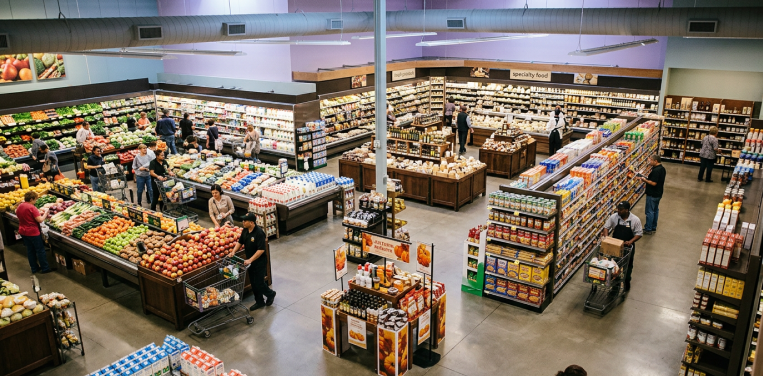
Grocery retailers can win price image and still lose margin.
That happens when the logic used for a few highly visible items spreads across too much of the assortment. Competing on the products shoppers remember is important, but discounting products that do not need to move can quietly erode profitability.
Modern Competitor Analysis Software for Retail and Competitor Analysis Software for Ecommerce should help teams identify which competitor signals are accurate, relevant, and meaningful. Modern Pricing Software for Retail and Pricing Software for Ecommerce should help teams decide whether to move, hold, or review based on margin floors, price movement limits, price holds, product-role rules, exception-based review, and explainable workflows.
Hypersonix supports this approach through Competitor AI and Pricing AI. Competitor AI helps teams track market movement on daily, weekly, or monthly cadences, improve product matching, filter relevant signals, and evaluate meaningful gaps. Pricing AI helps teams govern decisions with margin protection, price discipline, and explainability.
The strongest grocery pricing teams do not match every competitor price.
They know which products shape price image, which gaps matter, which signals deserve review, and when holding price is the smarter decision.
Add a decision framework for matchingReduce repeated product capability lists



Ready to Let AI Agents Work for Your Margins?
Leading brands are already growing profits on autopilot. Join them.


Trusted by 1000+ leading retail brands