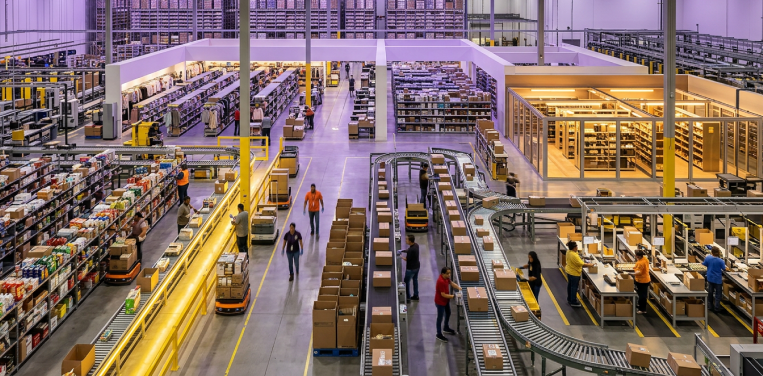
Retail assortments are getting larger, more complex, and harder to manage with manual pricing processes.
A retailer may be managing thousands or millions of products across categories, channels, stores, regions, marketplaces, and customer-facing touchpoints. Each product can have its own demand pattern, inventory position, competitive exposure, margin target, lifecycle stage, promotion history, and price sensitivity. As assortments grow, the number of pricing decisions grows with them.
That creates a major challenge.
Retail pricing teams need to move with enough speed to stay competitive, but they also need enough control to protect margin, prevent unnecessary price movement, and avoid decisions that weaken category strategy. Without guardrails, pricing can become too reactive. A minor competitor gap triggers a reduction. A temporary promotion becomes a base price change. A product moves too often. A price falls below an acceptable margin level. A recommendation is approved without enough expected demand impact. A high-risk exception is missed because teams are overwhelmed by alert volume.
Guardrails help prevent that.
Retail pricing guardrails create the rules and boundaries that help teams make more disciplined decisions across growing assortments. They help define when a price should move, when it should hold, when an exception needs review, and when a signal should be investigated before action. Margin floors, movement limits, meaningful gap thresholds, price holds, and exception-based review all play an important role in helping retailers scale pricing decisions without losing control.
Hypersonix supports this disciplined pricing approach by connecting competitor intelligence, product matching, pricing, inventory, forecasting, business guardrails, explainable workflows, and price execution monitoring. Competitor AI helps validate whether competitor signals are truly comparable and relevant. Pricing AI uses historical sales and pricing patterns to support expected demand impact, targeted recommendations, and disciplined holds. Inventory and forecasting context helps teams understand whether pressure is tied to stock exposure, demand softness, seasonality, lifecycle stage, or operational issues.
The goal is not to make pricing rigid. It is to make pricing more controlled, explainable, and aligned with business strategy as assortments scale.

Larger Assortments Create More Pricing Risk
Assortment growth creates opportunity. More products can help retailers serve more customer needs, expand categories, increase basket size, improve selection, and compete across more segments.
But every additional product also adds pricing complexity.
A larger assortment means more products to monitor, more price points to maintain, more competitor comparisons to validate, more inventory conditions to review, more promotions to manage, and more exceptions to prioritize. A pricing team that could manually review a smaller assortment may quickly become overwhelmed when the product count expands.
That is where risk enters the process.
Pricing risks increase when:
- teams rely on manual spreadsheets across large assortments
- competitor signals are reviewed without match confidence
- every visible price gap appears urgent
- price changes are made without expected demand impact
- promotions influence base price decisions
- margin rules are applied inconsistently
- products move too often
- price holds are not documented or defended
- exceptions are not routed to the right review path
- approved pricing actions are not monitored after execution
These risks do not always appear immediately. They often build through small pricing decisions repeated across the assortment.
One unnecessary reduction may not look material. Hundreds of small reductions can create meaningful margin leakage. One weak competitor match may not matter. Many weak matches can train teams to overreact. One temporary promotional response may seem reasonable. Repeated responses can lower the pricing baseline across a category.
Guardrails help retailers manage these risks before they compound.
Guardrails Turn Pricing Strategy Into Daily Control
A pricing strategy is only useful if it can be applied consistently.
Retailers may have clear goals at the leadership level: protect margin, stay competitive on key items, preserve premium positioning, maintain private label value architecture, clear seasonal inventory, and reduce unnecessary markdowns. But those goals need to be translated into everyday pricing decisions.
Guardrails make that possible.
They convert pricing strategy into decision logic that can be applied across products, categories, and channels. Instead of relying only on manual judgment for every SKU, teams can use guardrails to define acceptable ranges, review triggers, hold conditions, and escalation rules.
For example:
- A margin floor can prevent a recommendation from falling below an approved profitability level.
- A movement limit can stop a product from changing price too often or by too much.
- A meaningful gap threshold can prevent reactions to small competitor differences that are unlikely to affect demand.
- A price hold can protect value when action is not justified.
- Exception-based review can route uncertain or high-risk cases to the right team before execution.
These guardrails do not remove human judgment. They focus it.
They help teams spend less time debating low-impact signals and more time reviewing exceptions that carry meaningful business exposure.
Hypersonix supports guardrails as part of a broader pricing workflow, helping retailers make decisions that are more consistent, explainable, and aligned with category and margin goals.
Margin Floors Protect Profitability
A margin floor is one of the most important pricing guardrails.
It helps prevent a price recommendation from reducing profitability below an acceptable level. This is especially important as assortments grow because teams cannot manually inspect every recommended move with the same level of detail.
Without margin floors, pricing teams may approve reductions that protect competitive position in the short term but weaken profitability over time. A product may be lowered to match a competitor without considering cost changes, shipping costs, fulfillment pressure, promotion overlap, or product role. A markdown may clear inventory but give away more margin than necessary. A temporary response may become a long-term margin problem.
Margin floors help pricing teams ask a better question before action:
Is this move still profitable enough to support the business objective?
That does not mean every recommendation above a margin floor should be accepted or every recommendation below it should be rejected automatically. It means the margin floor creates a clear control point. If a price move approaches or breaches the boundary, the decision can be routed for review.
Margin floors are especially useful for:
- high-volume SKUs where small margin changes create large impact
- products with rising costs
- private label items that support margin contribution
- premium products where price integrity matters
- products already affected by promotion or markdown activity
- categories with frequent competitor pressure
Hypersonix helps retailers incorporate margin guardrails into pricing workflows so teams can make targeted pricing decisions while protecting profitability.
Movement Limits Prevent Price Drift
Price movement can be healthy when it is deliberate and supported by business context.
But when products move too often, pricing discipline can weaken.
Repeated small reductions can create price drift. A product moves down slightly because of a competitor gap. Then it moves again because of a temporary promotion. Then another reduction is made because demand appears soft. Over time, the price moves away from its intended position without a clear strategic decision.
Movement limits help prevent that.
A movement limit can control how frequently a product changes price, how large a change can be, or whether a product needs review after multiple moves within a defined period. This is particularly important for large assortments where repeated micro-adjustments can be difficult to monitor manually.
Movement limits help retailers identify questions such as:
- Has this product changed price too often?
- Is the product being pulled down by temporary market noise?
- Did previous price moves create enough demand impact?
- Is another reduction justified?
- Should the product hold instead of moving again?
- Is the issue actually inventory, forecasting, promotion setup, or competitor matching?
These limits are not designed to block necessary action. They are designed to prevent unmanaged price drift.
Hypersonix Pricing AI supports expected demand impact using historical sales and pricing patterns, helping teams evaluate whether another move is likely to pay back. When a product has already moved recently, a hold or review may be more valuable than another reduction.
Meaningful Gap Thresholds Filter Competitor Noise
Competitor data can create a large number of pricing alerts.
A competitor is 1 percent lower. A marketplace seller lists a product at a slightly reduced price. A weekly promotion creates a temporary price gap. A similar item appears cheaper, but the pack size, condition, seller terms, or bundle structure may differ.
Without meaningful gap thresholds, every small difference can look like a pricing problem.
A meaningful gap threshold helps retailers define when a competitor price difference is large enough to deserve attention. It prevents teams from overreacting to minor differences that are unlikely to influence demand or change customer behavior.
Thresholds should vary by product role and category.
A key value item may require a tighter threshold because it affects price image. A premium differentiated product may tolerate a wider gap because customers may value brand, service, quality, availability, or trust. A clearance item may follow markdown rules based on lifecycle and inventory exposure. A long-tail item may not deserve action unless revenue or margin exposure is meaningful.
Meaningful gap thresholds help teams ask:
- Is the gap large enough to matter?
- Is the competitor offer truly equivalent?
- Is the seller relevant?
- Is the offer temporary or conditional?
- Is the product price-sensitive?
- Would a move create enough expected demand impact?
- Should the item move, hold, review, or investigate?
Hypersonix Competitor AI helps improve product matching and relevance filtering, while Pricing AI supports expected demand impact. Together, these capabilities help retailers avoid reacting to competitor noise and focus on gaps that are valid, relevant, and meaningful.
Price Holds Protect Value When Action Is Not Justified
Not every pricing recommendation should lead to a price change.
Sometimes the most profitable decision is to hold.
A price hold can protect margin when demand is stable, inventory risk is manageable, the competitor signal is weak, or expected demand impact from a reduction is limited. Holding price may also be appropriate when a product has already moved recently, the recommendation would breach a guardrail, or the retailer’s offer is stronger because of availability, service, trust, or product quality.
The challenge is that holds are often less visible than moves.
When a price changes, teams can see the action. When a price holds, it may look like nothing happened unless the reasoning is documented. This can create pressure to act even when action is not justified.
A disciplined hold should be explainable.
It may show:
- competitor product is not truly equivalent
- seller is not a relevant benchmark
- price gap is below a meaningful threshold
- demand remains stable
- inventory does not justify a reduction
- expected demand impact is limited
- product has already moved recently
- recommendation would breach margin or movement guardrails
Hypersonix supports explainable recommendations and disciplined holds so teams can treat restraint as a measurable pricing decision.
This matters because avoiding an unnecessary price cut can protect as much value as approving the right move.
Exception-Based Review Focuses Teams on High-Impact Decisions
As assortments grow, pricing teams cannot review every product manually.
They need workflows that identify which exceptions deserve attention and route them to the right decision path.
Exception-based review helps separate routine recommendations from high-risk or high-impact cases. Instead of treating every alert as equally urgent, teams can prioritize exceptions based on margin exposure, revenue impact, inventory risk, competitor relevance, match confidence, expected demand impact, and guardrail status.
A product may need review when:
- recommendation approaches a margin floor
- product has moved too frequently
- competitor match confidence is uncertain
- seller relevance is unclear
- price gap is large but temporary
- inventory exposure is meaningful
- expected demand impact is mixed
- product plays a strategic category role
- action may affect price architecture
- execution risk is high
Exception-based review gives teams a clear way to decide what should move, hold, review, or investigate.
Move
A move may be appropriate when the signal is valid, expected demand impact supports action, inventory or margin exposure adds urgency, and the recommendation fits within guardrails.
Hold
A hold may be appropriate when demand is healthy, inventory risk is manageable, the competitor signal is weak, or the margin trade-off does not justify action.
Review
A review may be needed when the recommendation approaches a guardrail, carries meaningful business exposure, or requires cross-functional judgment.
Investigate
An investigation may be needed when the issue involves product matching, data quality, inventory allocation, forecasting, promotion setup, or execution rather than pricing strategy.
Hypersonix supports exception-driven workflows that help teams focus human judgment where it matters most.

Guardrails Should Reflect Product Role
A growing assortment contains products with different jobs.
Some products are traffic drivers. Some protect price image. Some are margin builders. Some are premium anchors. Some are private label items. Some are seasonal. Some are clearance products. Some are long-tail products that support assortment completeness. Some are core replenishment items.
The same pricing rule should not apply to every product.
A key value item may need tighter competitor gap thresholds. A premium product may need stronger hold logic. A private label item may need rules that protect value architecture against national brands. A clearance item may need inventory and lifecycle-driven markdown rules. A long-tail item may require lower review frequency unless exposure is meaningful.
Product-role guardrails help teams apply pricing logic more intelligently.
They help define:
- which products deserve closer competitive monitoring
- which products need stronger margin protection
- which products can tolerate wider price gaps
- which products need lifecycle-based markdown logic
- which products should require review before price changes
- which products should be protected from frequent movement
Hypersonix supports product-role rules and category-specific logic as part of broader pricing guardrails. This helps retailers avoid one-size-fits-all pricing across complex assortments.
Guardrails Help Teams Avoid Competitor Overreaction
Competitor pressure is one of the main reasons retailers need guardrails.
A lower competitor price can feel urgent, especially on visible products. But reacting too quickly can create unnecessary margin loss.
A competitor price may not be meaningful if:
- product match is weak
- pack size, model, variant, or bundle differs
- seller is not relevant
- offer is temporary or conditional
- price gap is below a meaningful threshold
- availability is limited
- expected demand impact is low
Hypersonix Competitor AI helps improve product matching and relevance filtering so teams can compare true-equivalent offers and focus on relevant competitor signals. Competitor monitoring can be configured on daily, weekly, or monthly cycles depending on business needs, category volatility, and product role.
Guardrails then help determine whether a competitor signal should result in action.
A valid, meaningful competitor gap on a high-impact product may deserve a move. A weak or temporary signal may deserve a hold. An uncertain match may require review or investigation.
This discipline helps retailers stay competitive without letting every competitor movement reset their price floor.
Guardrails Help Prevent Promotion and Markdown Leakage
Promotions and markdowns are important retail tools, but they can create margin leakage if they are not controlled.
A promotion may lift sales but discount products that would have sold without support. A markdown may clear inventory but go deeper than necessary. A temporary promotional price may become the new base price. A product may remain discounted after the event ends. A broad campaign may weaken profitability on products that did not need demand support.
Guardrails help retailers manage these risks.
A margin floor can prevent overly deep reductions. A movement limit can flag products that have been marked down too often. A meaningful gap threshold can prevent temporary competitor promotions from driving base price changes. A price hold can protect products where demand remains healthy. Exception-based review can route high-risk promotions or markdowns for approval.
Hypersonix helps connect promotion, pricing, inventory, and forecasting context so teams can understand whether a promotion or markdown is solving the right problem.
This is important because not every inventory or demand issue should become a discount.
Explainability Makes Guardrails Easier to Trust
Guardrails are most effective when teams understand why they exist and how they influence decisions.
If guardrails feel like black-box restrictions, teams may override them too often or lose trust in the workflow. But when guardrails are explainable, they help teams align around business logic.
An explainable pricing recommendation should show:
- what changed
- why the product was flagged
- which competitor signal was considered
- whether the product match is reliable
- what expected demand impact suggests
- how inventory and forecasting context affect the decision
- which guardrails apply
- whether the recommended path is move, hold, review, or investigate
This is especially important when a guardrail results in a hold or review.
Pricing, merchandising, ecommerce, inventory, and finance teams may each view the same signal differently. Explainability helps them understand why a recommendation was constrained, why a hold is defensible, or why an exception needs review.
Hypersonix supports explainable workflows so teams can trust the decision logic and apply guardrails consistently.
Price Execution Monitoring Extends Guardrails Beyond Approval
Pricing guardrails should not end when a recommendation is approved.
Execution matters.
A price may be approved but not applied. A markdown may update in one channel but not another. A temporary promotion may remain active too long. A price may be applied to the wrong SKU, pack, size, variant, location, or channel. A product may not return to its intended price after a promotional period.
These execution issues can undermine even the best pricing guardrails.
Hypersonix price execution monitoring helps verify that approved pricing actions were implemented as intended. This helps teams identify missed, delayed, inconsistent, or incorrect price changes after approval.
Execution monitoring is especially important as assortments grow because more products and channels create more opportunities for errors.
A controlled pricing workflow should include guardrails before approval and verification after execution.
Measuring Whether Guardrails Are Working
Guardrails should be evaluated over time.
The goal is not to block price changes. The goal is to improve pricing quality, protect margin, and focus teams on the decisions that matter most.
Retailers should ask:
- Which guardrails prevented unnecessary margin loss?
- Which price holds protected profit without hurting demand?
- Which movement limits caught early signs of price drift?
- Which meaningful gap thresholds filtered low-impact competitor noise?
- Which exceptions required review, and what was the outcome?
- Which recommendations were overridden, and why?
- Which approved actions failed execution?
- Which categories need tighter or more flexible rules?
- Which products are still moving too often?
- Which guardrails should be adjusted based on decision outcomes?
These questions help retailers refine guardrails based on actual business learning.
A strong guardrail framework is not static. It should evolve with category strategy, demand patterns, competitive dynamics, margin goals, and product roles.
How Hypersonix Helps Retailers Scale Pricing Guardrails
Hypersonix helps retailers apply pricing guardrails across growing assortments with more consistency and context.
Competitor AI improves product matching and relevance filtering so teams can avoid reacting to weak, non-equivalent, or irrelevant competitor signals. Pricing AI uses historical sales and pricing patterns to support expected demand impact, targeted recommendations, disciplined holds, and margin-aware decision-making. Inventory and forecasting context helps teams understand whether pressure is tied to demand softness, stock exposure, lifecycle stage, seasonality, or operational factors.
Business guardrails help teams apply margin floors, movement limits, meaningful gap thresholds, price holds, product-role rules, category-specific logic, and exception-based review. Explainable workflows help pricing, merchandising, ecommerce, inventory, finance, and operations teams understand whether the right decision is to move, hold, review, or investigate. Price execution monitoring helps verify that approved pricing actions were implemented correctly.
Together, these capabilities help retailers:
- protect profitability with margin floors
- prevent unmanaged price drift with movement limits
- filter competitor noise with meaningful gap thresholds
- make price holds visible and defensible
- route high-risk or uncertain cases for review
- connect inventory and forecasting context to pricing decisions
- validate competitor signals before changing price
- use expected demand impact before approving reductions
- align pricing decisions with product role and category strategy
- verify approved actions after execution
The result is a more controlled pricing operating model that helps retailers scale pricing decisions without sacrificing margin discipline.
Conclusion
As assortments grow, pricing becomes harder to manage manually.
More products create more competitor signals, inventory conditions, promotions, margin risks, and pricing exceptions. Without guardrails, teams can become reactive, cutting prices too quickly, moving products too often, responding to weak competitor signals, and allowing small decisions to compound into margin leakage.
Retail pricing needs guardrails because growth requires both speed and control.
Margin floors protect profitability. Movement limits prevent price drift. Meaningful gap thresholds filter competitor noise. Price holds protect value when action is not justified. Exception-based review focuses teams on high-impact or uncertain decisions.
Hypersonix helps retailers apply these guardrails with cleaner competitor intelligence, expected demand impact, inventory and forecasting context, explainable workflows, and price execution monitoring.





Ready to Let AI Agents Work for Your Margins?
Leading brands are already growing profits on autopilot. Join them.


Trusted by 1000+ leading retail brands