Pricing software for eCommerce has become essential as competition intensifies and price visibility increases. Retailers operate in markets where competitors change prices daily, marketplaces introduce new sellers constantly, and customers compare options instantly. To keep up, many brands rely on pricing tools that track competitors and adjust prices accordingly.
Yet despite widespread adoption, many retailers still struggle with margin erosion, unstable pricing, and inconsistent performance. The root cause is not a lack of automation or speed. It is the absence of competitive context.
When pricing software for eCommerce reacts to competitor prices without understanding relevance or demand impact, it creates more problems than it solves. Price matching becomes mechanical. Discounts multiply. Margins shrink quietly. Over time, pricing loses discipline and credibility.
True pricing intelligence does not start with matching competitors. It starts with understanding whether a competitor move actually matters. This is where context, powered by Pricing AI and Competitor AI, becomes the difference between reactive pricing and profitable strategy.
Before exploring how context changes outcomes, it is important to understand why price matching without intelligence fails so consistently.
The Illusion of Safety in Price Matching
For many retailers, price matching feels like a safe choice. If competitors lower prices, matching seems like the fastest way to protect demand and avoid losing customers. Traditional pricing software for eCommerce reinforces this instinct by triggering alerts or rules whenever competitor prices change.
The problem is that price matching assumes every competitor move influences customer behavior equally. In reality, most competitive activity does not meaningfully affect demand.
Some competitors run short-term promotions to clear inventory. Others discount niche bundles that are not directly comparable. Marketplaces often surface sellers with limited stock or lower service levels. Yet rule-based pricing systems treat all of these signals the same way.
As a result, retailers match prices that customers never noticed or never cared about. The outcome is unnecessary price movement and margin loss without demand protection.
Price matching without context creates the illusion of control while quietly weakening profitability.
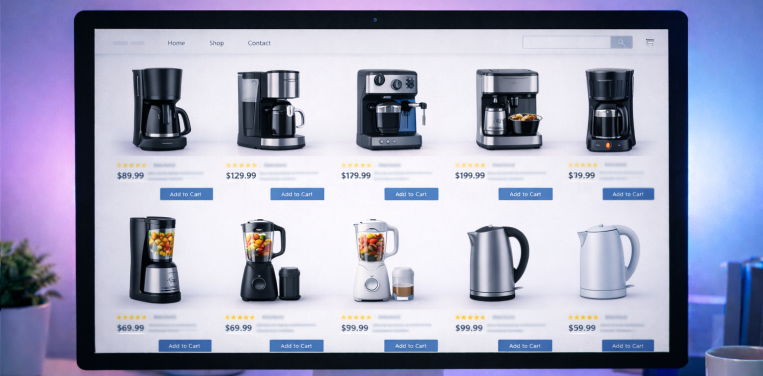
Why Demand Context Is Missing From Most Pricing Systems
Many pricing tools focus almost entirely on competitor price tracking. They answer the question of what changed, but not why it matters.
Demand context requires understanding how customers respond to price changes. Some products are highly price sensitive. Others are not. Some categories depend heavily on brand trust, availability, or convenience. Others are more substitutable.
Without demand context, pricing software for eCommerce cannot distinguish between high-risk and low-risk situations. Every competitor price drop looks urgent. Every alert feels actionable. Pricing teams react out of caution rather than evidence.
This reactive behavior compounds over time. Small, unnecessary price changes accumulate across hundreds or thousands of SKUs. Margins erode gradually, often without triggering immediate concern.
Pricing AI introduces demand context by modeling elasticity at the SKU and product cluster level. It helps retailers understand when price changes actually influence buying behavior and when holding price is the smarter choice.
Without this layer, pricing decisions remain incomplete.
The Cost of Ignoring Competitive Relevance
Competitive context is not just about demand. It is also about relevance.
Not all competitors pose the same threat. A temporary discount from a low-volume seller does not carry the same weight as a sustained price shift from a market leader. A promotion on a non-equivalent product does not signal true competitive pressure.
Most pricing software for eCommerce lacks the ability to evaluate competitive relevance. Basic scraping tools collect prices but do not interpret intent, duration, or comparability.
This leads to three costly outcomes.
First, pricing teams chase noise. Alerts multiply, and teams spend time reacting to changes that have no impact on customers.
Second, pricing confidence erodes. When prices move frequently without clear logic, internal stakeholders lose trust in the system.
Third, customers experience unstable pricing. Frequent, unexplained changes weaken price credibility and encourage deal-seeking behavior.
Competitor AI addresses this problem by filtering competitive activity based on relevance rather than volume.

How Competitor AI Adds Essential Context
Competitor AI transforms raw competitive data into structured intelligence. Instead of flagging every price change, it evaluates which changes are meaningful.
Accurate product matching is a critical foundation. Many false signals originate from poor comparisons. Two products may appear similar but differ in size, specifications, bundles, or perceived value. Treating them as equivalent creates misleading alerts.
Competitor AI uses advanced matching techniques to identify true equivalents and valid substitutes. This ensures that pricing software for eCommerce reacts only to competitors that genuinely influence customer choice.
Beyond matching, Competitor AI evaluates behavior patterns. It analyzes how long a price change lasts, how frequently it occurs, and whether it aligns with historical trends. This helps distinguish temporary promotions from structural shifts.
By adding relevance and intent, competitor monitoring becomes actionable instead of overwhelming.

Pricing AI Turns Context Into Better Decisions
Competitive context alone is not enough. Retailers also need guidance on how to respond.
Pricing AI uses elasticity modeling to evaluate the likely impact of a price change on demand and margin. It answers a critical question that reactive systems cannot: will changing price actually improve performance?
If elasticity signals show that demand is insensitive to a competitor discount, Pricing AI can recommend holding price. This protects margin while maintaining competitiveness.
If elasticity indicates real demand risk, Pricing AI can suggest targeted adjustments rather than blanket matching. This precision helps retailers respond proportionately instead of defensively.
Together, Pricing AI and Competitor AI shift pricing software for eCommerce from reaction to interpretation. Prices move based on evidence, not fear.
Why Explainability Matters in Context-Driven Pricing
One reason many teams continue to rely on reactive pricing is organizational pressure. When competitors drop prices, stakeholders expect immediate action.
Explainable AI helps change this dynamic. When pricing recommendations are transparent, teams can see why holding price is justified or why a specific adjustment is recommended.
Pricing managers gain visibility into the competitive trigger, the relevance assessment, and the elasticity signal behind each recommendation. Finance teams understand the margin impact. Merchandising teams see how decisions align with category strategy.
This shared understanding builds trust and enables restraint. Pricing becomes a disciplined process rather than an emotional response.
Moving From Price Matching to Pricing Strategy
Pricing software for eCommerce fails when it reduces pricing to a mechanical exercise. Matching competitors without understanding demand or relevance turns automation into a liability.
Context-driven pricing redefines success. Retailers move from chasing every competitor move to competing selectively. They protect the margin where demand allows and respond decisively where it matters.
Over time, this approach stabilizes pricing, strengthens customer trust, and improves profitability.
Conclusion
Pricing software for eCommerce usually fails because it lacks context. Without understanding demand sensitivity and competitive relevance, price matching becomes an expensive habit that quietly erodes margin and credibility.
Hypersonix Pricing AI and Competitor AI provide the context modern retailers need. By combining accurate product matching, relevance filtering, and elasticity-driven decision making, they help brands move beyond reactive pricing toward confident, profitable strategy.






Ready to Let AI Agents Work for Your Margins?
Leading brands are already growing profits on autopilot. Join them.


Trusted by 1000+ leading retail brands