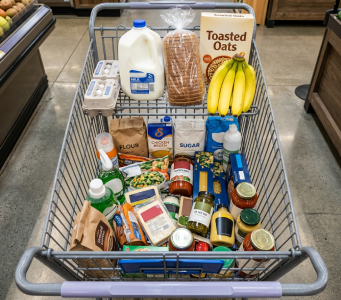
Grocery pricing looks simple from the outside. Shoppers compare the price of milk, eggs, bread, produce, snacks, and household basics, then decide whether a store feels affordable.
Inside the business, the pricing challenge is much more complex.
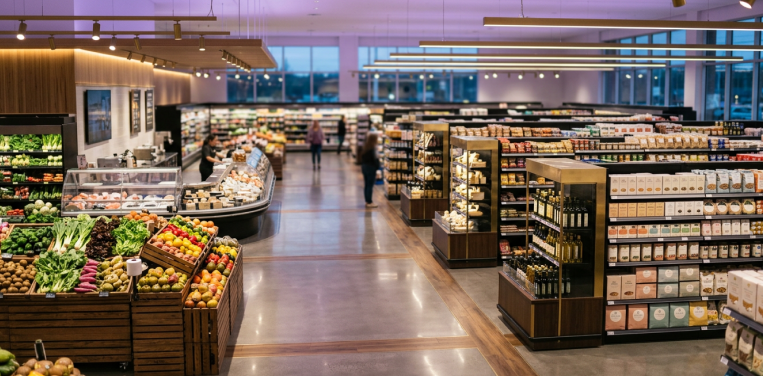
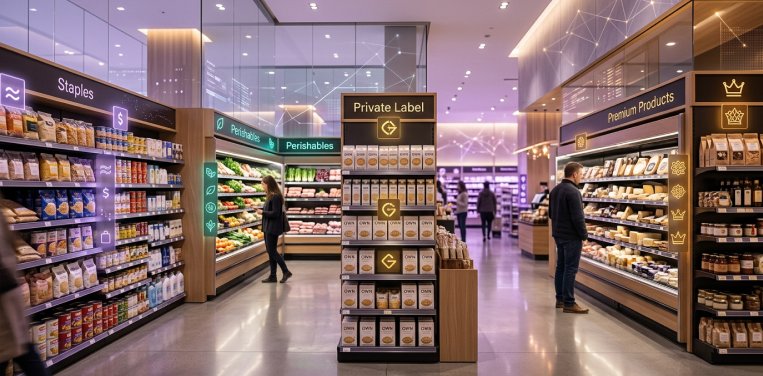
Not every grocery product should follow the same pricing rule. Staples influence price perception. Perishables carry freshness and shrink risk. Premium items protect margin, differentiation, and brand value. A uniform pricing strategy across all three can create the wrong outcome quickly.
If staples are held too tightly, shoppers may perceive the retailer as expensive. If perishables are protected too aggressively, inventory can age and shrink can rise. If premium items are discounted too easily, margin and value perception can weaken. The same margin floor, movement limit, or competitor response rule cannot work equally well across these product roles.
This is why grocery retailers need guardrails that reflect product role.
Hypersonix helps grocery teams apply more disciplined pricing decisions by connecting competitor context, expected demand impact, inventory and forecasting signals, and business guardrails. Competitor AI improves product matching and relevance filtering so teams do not react to misleading competitive signals. Pricing AI uses historical sales and pricing patterns to support targeted recommendations, disciplined holds, and controlled movement. Guardrails such as margin floors, movement limits, meaningful gap thresholds, and price holds help retailers protect margin without losing competitiveness.
The goal is not to create more rules for the sake of control. It is to make pricing decisions fit the role each product plays in the grocery basket.
Why One Guardrail Strategy Fails in Grocery
A single pricing rule across the full grocery assortment usually breaks somewhere.
A 3 percent competitor gap might matter on a high-visibility staple but mean very little for a premium imported item. A strict margin floor may protect profit on shelf-stable goods but create problems for perishables when demand softens and the selling window narrows. A movement limit may stop unnecessary price drift on pantry basics but may need to be more flexible for seasonal produce or fresh meat.
Grocery assortments are too diverse for one-size-fits-all control.
Strong pricing governance needs to reflect differences in:
- shopper price sensitivity
- product visibility
- inventory risk
- freshness and shelf life
- margin contribution
- category strategy
- competitive relevance
- lifecycle and seasonality
Modern grocery pricing is not just about knowing the right price. It is about knowing which controls should apply before a price is moved, held, reviewed, or investigated.
Staples Need Guardrails That Protect Price Image
Staples are the products shoppers remember.
Milk, eggs, bread, rice, flour, butter, bananas, pasta, and other everyday essentials often shape a customer’s perception of whether a store is fairly priced. These items may not always deliver the strongest margin, but they influence trust and repeat visits.
For staples, guardrails should support price credibility while preventing margin leakage.
That does not mean matching every competitor price. A competitor may appear cheaper because of a temporary promotion, loyalty offer, pack-size difference, or store-specific ad. Reacting to every visible gap can lower the price floor unnecessarily.
For staples, useful guardrails may include:
- tighter meaningful gap thresholds for high-visibility products
- margin floors that reflect the role of staples in price perception
- movement limits to prevent repeated small cuts from resetting the base price
- price holds when competitor offers are temporary or not equivalent
- review workflows for key value items that affect shopper trust
Hypersonix Competitor AI helps validate whether the competing offer is truly equivalent and relevant. Competitor monitoring can be configured on daily, weekly, or monthly cycles depending on category volatility and business needs.
When the competitive signal is reliable and the product is important to price image, a targeted move may be appropriate. When the signal is weak, temporary, or non-equivalent, a disciplined hold can protect margin without damaging customer perception.
Perishables Need Guardrails That Reflect Freshness Risk
Perishables operate under a different clock.
Produce, meat, seafood, bakery, deli, dairy, and prepared foods are affected by freshness, shelf life, weather, demand volatility, and shrink risk. Waiting too long to respond can create waste. Acting too aggressively can destroy margin before it is necessary.
For perishables, guardrails need to balance margin protection with sell-through risk.
A high inventory signal does not automatically mean the base price is wrong. It may reflect weather, timing, supply variation, a forecast miss, or a short-term demand dip. In some cases, a targeted promotion is better than a permanent base price cut. In other cases, holding price may be appropriate because demand is expected to recover.
Perishable guardrails may include:
- margin floors that account for shrink risk and remaining selling window
- movement limits that allow controlled action without creating unnecessary price drift
- inventory-based review triggers tied to demand and freshness context
- price holds when demand is resilient or inventory pressure is manageable
- exception workflows for items approaching lifecycle or freshness risk
Hypersonix brings inventory and forecasting context into pricing decisions so teams can assess whether pressure is temporary, structural, or operational. Pricing AI supports expected demand impact using historical sales and pricing patterns, helping teams understand whether a price move is likely to improve sell-through enough to justify the margin trade-off.
Perishable pricing cannot be managed only with competitor gaps. It needs time-sensitive guardrails that reflect product condition, demand outlook, and inventory exposure.
Premium Items Need Guardrails That Protect Value
Premium grocery items play a different role from staples and perishables.
Organic products, specialty foods, imported goods, premium beverages, artisanal items, and higher-end private label lines often depend on perceived value, quality, and differentiation. Customers may compare prices, but they are also buying trust, product attributes, brand value, or a specific experience.
For premium items, unnecessary price cuts can create long-term damage.
A retailer may see a competitor discount and feel pressure to respond. But if the competitor offer is temporary, non-equivalent, or from a less relevant seller, matching the price can erode margin without increasing demand materially. It can also train shoppers to expect discounts on products where value perception matters.
Premium item guardrails should emphasize restraint.
They may include:
- stronger margin floors
- stricter movement limits
- wider meaningful gap thresholds when customer substitution is lower
- price holds when expected demand impact is limited
- review requirements for moves that could weaken premium positioning
- category or product-role rules that protect price architecture
Hypersonix Pricing AI helps evaluate whether historical sales and pricing patterns suggest demand is likely to respond to a lower price. If the expected demand impact is weak, a price hold may be more profitable than a reduction.
For premium grocery, the goal is not to ignore competition. It is to respond only when the pressure is relevant, equivalent, and likely to affect customer choice.
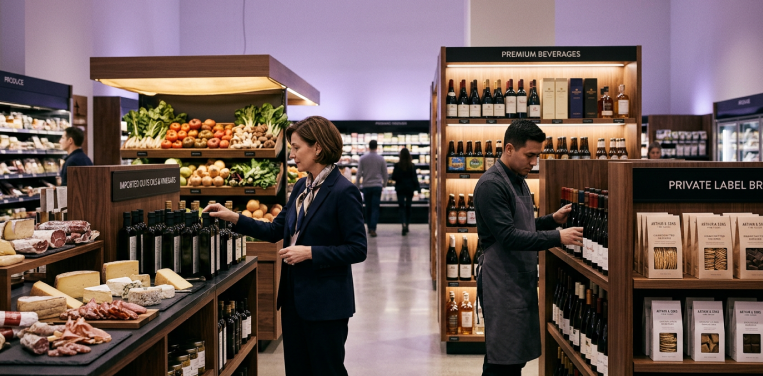
Private Label Products Need Their Own Architecture Controls
Private label is often a critical grocery margin and differentiation lever.
Some private label items compete directly with national brands. Others are value-focused entry products. Premium private label lines may compete on quality and exclusivity. Because private label plays multiple roles, guardrails need to reflect the intended price architecture.
A private label item should not be priced only by looking at the cheapest competitor equivalent. It also needs to maintain the right relationship to national brands, adjacent private label tiers, pack sizes, and category strategy.
Guardrails for private label may include:
- rules that preserve intended gaps to national brands
- margin floors that reflect private label profitability targets
- movement limits to prevent repeated small reductions
- review triggers when private label and national brand price relationships become too narrow or too wide
- price holds when competitor comparisons are not truly equivalent
Hypersonix supports product-role and category-aware decisioning so pricing teams can avoid breaking the logic customers expect within a category.
For private label, the question is not only “Are we competitive?” It is also “Are we protecting the architecture that makes private label valuable?”
Meaningful Gap Thresholds Should Vary by Product Role
Not every competitor price gap deserves a response.
A small gap on a highly visible staple may matter. The same gap on a premium specialty item may not. A larger gap on a perishable item may deserve review only if inventory and demand conditions support action.
Meaningful gap thresholds help teams avoid reacting to differences that are too small to influence demand or price perception.
For staples, thresholds may be tighter because shoppers notice them more frequently. For premium items, thresholds may be wider because demand may be less sensitive to minor differences. For perishables, thresholds should be interpreted alongside inventory, freshness, and forecast context.
This is where guardrails become more than simple rules. They become decision filters.
Hypersonix helps teams use competitive context, expected demand impact, and product-role logic to decide whether a gap is meaningful enough to review or act on.
Movement Limits Prevent Price Drift Across High-Velocity SKUs
Grocery pricing often involves frequent changes. Without movement limits, small reactions can compound into long-term margin leakage.
A competitor promotion leads to a small cut. The price is not fully restored. Another competitive signal appears. The next move starts from the lower baseline. Over several cycles, the base price drifts downward.
Movement limits help control this pattern.
They can restrict the size or frequency of price changes over a defined period, identify products that have moved too often, and route higher-risk recommendations for review.
This is especially important for high-velocity staples because small price changes can have large financial impact. It also matters for premium items, where repeated cuts can weaken value perception. For perishables, movement limits may need more flexibility, but they still help prevent uncontrolled markdown behavior.
Hypersonix supports movement controls as part of a broader guardrail framework so teams can move when needed without letting frequent reactions reset the category baseline.
Margin Floors Need to Reflect Product Economics
Margin floors are essential, but they should not be identical across all grocery products.
Staples may operate with tighter margin expectations because they influence price image. Premium products may require stronger floors because they contribute disproportionately to profitability. Perishables may require margin logic that accounts for shrink risk, remaining selling window, and sell-through urgency.
A rigid margin floor across the full assortment can create poor decisions.
It may block necessary action on perishable inventory risk. It may allow too much discounting on premium items. It may fail to distinguish between products that drive traffic and products that protect profit.
Hypersonix helps retailers apply margin guardrails in context. Pricing teams can evaluate whether a recommendation fits within acceptable profitability, product-role logic, and category strategy before the decision moves forward.
The purpose of a margin floor is not just to stop price reductions. It is to ensure that every price decision respects the economics of the product role.
Price Holds Should Be Visible and Explainable
A price hold is one of the most important guardrails in grocery pricing.
Holding price can be the right decision when the competitor offer is temporary, the product match is weak, the gap is not meaningful, demand is resilient, inventory pressure is manageable, or a price cut would not pay back.
But holds are often harder to defend than moves.
A visible competitor undercut can create internal pressure. Teams may worry that doing nothing looks passive. The answer is to make holds explainable.
An effective hold should show why no price change is recommended:
- the competitor offer is not equivalent
- the seller or competitor is not relevant
- the offer is temporary or conditional
- the gap is below threshold
- expected demand impact is limited
- the move would breach margin goals
- recent changes already created pricing movement
- inventory does not justify action
Hypersonix supports explainable recommendations and exception-driven workflows so holds can be treated as deliberate pricing decisions, not ignored alerts.
Guardrails Help Teams Choose Move, Hold, Review, or Investigate
Product-role guardrails should lead to a clear decision path.
A grocery pricing exception should not remain as a vague alert. It should be routed toward the right next step.
Move
A move may be appropriate when the competitive signal is reliable, the expected demand impact is meaningful, the product role supports action, and the recommendation fits within margin and movement guardrails.
Hold
A hold may be appropriate when the gap is weak, temporary, non-equivalent, or unlikely to produce enough demand to justify the margin loss.
Review
A review may be needed when business impact is meaningful but the product match, competitor relevance, inventory condition, or margin trade-off needs validation.
Investigate
An investigation may be needed when the issue appears to be related to data quality, product matching, forecasting, replenishment, or execution rather than pricing strategy.
This decision structure helps grocery teams manage complexity without manually reviewing every SKU in the same way.
A Practical Guardrail Model for Grocery Retailers
A strong grocery guardrail model begins by classifying products by role.
Staples and key value items require closer attention to price image and competitor relevance. Perishables require stronger inventory, freshness, and forecast context. Premium items need stronger value and margin protection. Private labels require architecture rules that preserve the relationship to national brands and other tiers.
Once product roles are defined, teams can apply different controls.
For staples, the model may emphasize competitive relevance, tighter gap thresholds, and review of high-visibility items.
For perishables, the model may emphasize inventory exposure, remaining selling window, forecast outlook, and controlled promotional action.
For premium items, the model may emphasize margin floors, price holds, and wider thresholds before acting.
For private labels, the model may emphasize price architecture, margin contribution, and controlled gaps to national brands.
This gives pricing teams a more practical way to manage high-velocity categories without losing control.
How Hypersonix Supports Product-Role Guardrails
Hypersonix helps grocery retailers build pricing workflows that reflect how products actually behave.
Competitor AI improves product matching and relevance filtering so competitive signals are cleaner and less likely to trigger false undercuts. Pricing AI uses historical sales and pricing patterns to support expected demand impact and targeted recommendations at the SKU or product-cluster level. Inventory and forecasting context help teams understand when perishables or high-stock items require attention.
Business guardrails help teams apply margin floors, movement limits, meaningful gap thresholds, price holds, category-specific rules, and exception-based review. Explainable workflows help pricing, merchandising, ecommerce, and finance understand why the recommended action is to move, hold, review, or investigate.
Together, these capabilities help grocery teams:
- protect price image on staples
- manage freshness and shrink risk on perishables
- preserve margin and value perception on premium items
- maintain private label price architecture
- avoid reacting to non-equivalent competitor offers
- prevent base price drift from repeated small reactions
- route exceptions to the right decision path
- reduce manual review across large grocery assortments
The goal is not to make pricing more complicated. It is to make pricing control more relevant to the way grocery categories actually operate.
Measuring Whether Guardrails Are Working
Guardrails should be reviewed over time.
A retailer should know whether its controls are improving decision quality or creating unnecessary friction. That means measuring both pricing actions and pricing restraint.
Useful questions include:
- Did targeted moves improve demand or protect price perception?
- Did holds protect margin without materially reducing volume?
- Did movement limits prevent base price drift?
- Did margin floors block unprofitable recommendations?
- Did perishable actions reduce shrink or improve sell-through?
- Did private label rules preserve the intended category architecture?
- Did premium item guardrails prevent unnecessary discounting?
- Which overrides happened repeatedly, and why?
These questions help refine guardrails by product role.
Strong pricing governance is not static. It improves as teams learn where action pays back, where holds work, and where rules need adjustment.
Conclusion
Grocery retailers should not apply the same guardrails to staples, perishables, premium items, and private labels.
Each product role carries different pricing risks. Staples influence price perception. Perishables face freshness and shrink pressure. Premium items protect margin and value. Private labels require careful architecture against national brands and internal tiers.
Hypersonix helps grocery teams manage these differences with cleaner competitor intelligence, expected demand impact, inventory and forecasting context, explainable recommendations, and business guardrails.
By applying margin floors, movement limits, meaningful gap thresholds, and price holds by product role, retailers can compete where it matters, act when pressure is real, and protect value where a price cut is not justified.
In grocery pricing, discipline is not about treating every SKU the same. It is about knowing which rules each product deserves.



Ready to Let AI Agents Work for Your Margins?
Leading brands are already growing profits on autopilot. Join them.


Trusted by 1000+ leading retail brands