Competitive pricing only works when the comparison is correct.
That sounds obvious, but in retail and ecommerce, product comparisons are rarely as simple as matching a name and checking a price. A competitor may appear cheaper because the item is a different pack size, a different color or size variant, an older model, a bundle, a refurbished version, or a seller-specific offer with different terms.
When those differences are missed, retailers see false undercuts.
The result is predictable. Pricing teams react to the wrong signal, lower prices unnecessarily, and create margin leakage without improving conversion. Over time, repeated reactions can reset the base price, weaken price integrity, and train the organization to treat every lower competitor price as urgent.
This is why accurate product matching is the foundation of competitive pricing. Before a retailer decides whether to move, hold, review, or investigate a price, it needs confidence that the competing offer is truly equivalent and relevant.
Hypersonix Competitor AI helps improve this foundation by using AI-powered product matching, product-attribute understanding, and relevance filtering to identify comparable offers more accurately. Competitor monitoring can then be configured on daily, weekly, or monthly cycles based on category volatility and business needs.
The goal is not to collect the largest possible volume of competitor prices. It is to create competitive intelligence that pricing teams can trust.
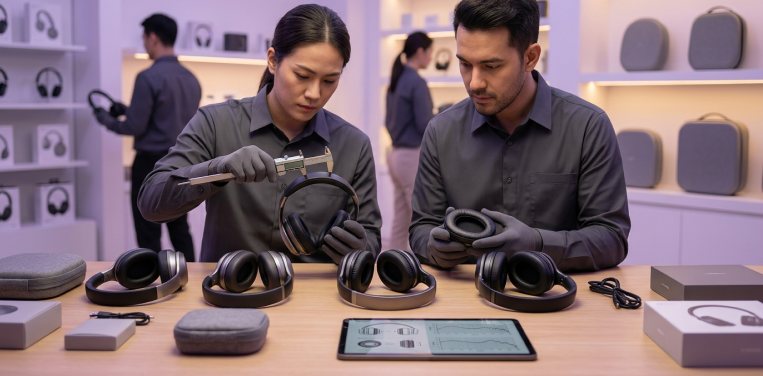
Why Product Matching Errors Are So Expensive
A product-matching error may look small, but the pricing impact can be significant.
Suppose a competitor appears to be 8 percent cheaper. The pricing team reacts and reduces the price to close the gap. Later, the team discovers that the competitor offer was for a smaller pack, an older generation, or a limited variant.
The price cut was based on a comparison that should never have influenced the decision.
That mistake affects more than one transaction. It can reduce margin across every unit sold at the new price. It may also create a lower internal reference point for future decisions. If the retailer reacts again from that reduced baseline, the original matching error starts a chain of price drift.
Across thousands of SKUs, even a small percentage of poor matches can create a large financial impact.
Accurate matching is therefore not a technical detail. It is a margin-protection capability.
Product Names Are Not Enough
Retailers often start with product titles because they are easy to collect and compare. But product titles are inconsistent.
The same product may be described differently across websites. One retailer may lead with the brand. Another may emphasize size, color, capacity, model number, or usage. Marketplace sellers may use shortened or promotional titles. Some listings include complete specifications, while others omit important details.
Two titles can look similar while representing different products. Two titles can also look very different while representing the same item.
This is why simple keyword matching is not enough.
A reliable matching process needs to evaluate product attributes, category context, identifiers, specifications, pack details, variant information, and offer structure. It also needs to understand which differences make an item non-equivalent for the pricing decision.
Hypersonix Competitor AI helps evaluate these signals together rather than relying on a single text field.
Variant Mismatches Create False Price Pressure
Variants are one of the most common causes of false undercuts.
In apparel, the lowest competitor price may apply only to one color or a limited size range. In beauty, a lower price may be tied to a different shade, formulation, or product size. In electronics, a competitor listing may have a different storage capacity, generation, or configuration.
If the pricing system treats the lowest variant price as representative of the full product family, it can create an inaccurate benchmark.
Consider an apparel retailer comparing a current-season jacket in a full size range against a competitor’s remaining stock in one color and two less popular sizes. The competitor price may be lower because the offer is effectively a clearance event. Matching that price across the retailer’s full assortment would be unnecessary and damaging.
Accurate product matching should identify the specific variant being compared and preserve the differences that matter.
This allows pricing teams to distinguish a genuine competitive gap from a limited or non-equivalent offer.
Pack Sizes and Multipacks Distort Headline Prices
Pack size is another major source of benchmarking error.
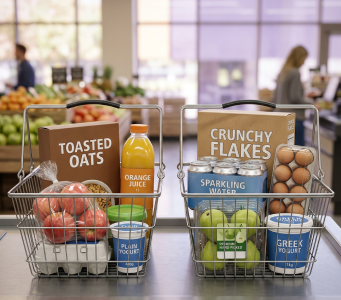
A competitor may show a lower headline price because the pack contains fewer units. A multipack may appear more expensive overall but offer a lower unit price. Starter kits, refill packs, and bonus packs can also create confusing comparisons.
These issues are common in grocery, healthcare, household goods, personal care, and beauty.
A pricing team that compares only the total price can miss the true economics of the offer. But comparing only unit price can also be misleading if the products serve different buying occasions or if pack structure affects customer choice.
The correct comparison depends on the category and business context.
Hypersonix Competitor AI helps improve match quality by using product attributes and pack information to identify whether offers are genuinely comparable. This reduces the chance that a smaller pack or promotional multipack is treated as a direct undercut.
Bundles Change the Real Value of an Offer
Bundles make competitive pricing more complex because the headline price does not tell the full story.
A competitor may sell a core product with accessories, refills, services, gifts, or complementary items. Another retailer may sell the core product by itself. The two offers may share a primary product name, but they are not equivalent.
This is common in electronics, beauty, healthcare, home goods, and seasonal retail.
For example, a beauty set may include the full-size product plus a travel-size item or gift. An electronics bundle may include a device, case, cable, or subscription. A healthcare offer may combine the core product with accessories or replacement parts.
If a retailer matches the bundle price without accounting for the added value, it may reduce its price unnecessarily. The reverse can also happen, where a bundle appears more expensive even though it offers stronger overall value.
Accurate product matching must identify bundle structure and distinguish the core item from the complete offer.
This is an important part of moving from price tracking to true offer comparison.

Configurations Matter in Electronics and Complex Categories
Configuration errors are especially costly in electronics and other specification-heavy categories.
Two laptops may share the same product family but differ in processor, memory, storage, screen size, graphics capability, or model year. Two appliances may differ in capacity, finish, energy rating, or included features. Two healthcare accessories may support different device versions.
A lower price may reflect a lower specification rather than stronger competitiveness.
When configuration details are ignored, pricing teams can end up benchmarking premium products against lower-value alternatives. That creates false urgency and encourages unnecessary discounting.
Hypersonix Competitor AI helps evaluate specification-level attributes to improve the quality of these comparisons. The objective is to identify true equivalents and separate them from products that are merely similar.
This is particularly important in ecommerce, where search results often compress complex products into a name, image, and headline price.
Seller and Offer Conditions Also Affect Relevance
Even when the product match is correct, the offer may not be equally relevant.
A lower price from a marketplace seller may include different shipping terms, return conditions, warranty coverage, product condition, or fulfillment reliability. A membership-only price may not be available to every shopper. A refurbished item should not be treated as equivalent to a new item. A promotion may be limited to a specific region or quantity.
These factors influence whether customers see the offer as a true alternative.
This is why accurate matching and relevance filtering need to work together.
Hypersonix Competitor AI helps retailers focus on offers from sellers and competitors that actually matter for the category and customer context. A visible price is not automatically a valid benchmark.
The right question is not simply, “Is this the same product?” It is also, “Is this offer relevant enough to influence the pricing decision?”
Product Matching Should Produce Confidence, Not Just a Link
A useful product-matching system should do more than connect one listing to another.
Pricing teams need confidence in the match.
That means understanding whether the match is strong, whether important attributes align, and whether any differences need review. Low-confidence or ambiguous matches should not automatically drive pricing decisions. They should enter an exception workflow where the team can validate the comparison.
This is where AI-supported matching improves the operating model.
Rather than forcing teams to manually review every competitor listing, the system can help prioritize which matches are reliable and which ones require attention. Strong matches can support ongoing competitive analysis. Questionable matches can be routed for review or investigation.
This reduces manual effort while keeping human judgment available for ambiguous cases.
How Hypersonix AI Improves Product Matching
Hypersonix Competitor AI is designed to improve the quality of competitive data before it reaches the pricing workflow.
It supports AI-powered matching by evaluating available product information across attributes, descriptions, identifiers, variants, pack structures, bundles, and configurations. It also helps filter irrelevant competitor and seller signals so teams can focus on comparisons that matter.
In practice, this helps retailers:
- identify true-equivalent products more consistently
- reduce false matches caused by similar product names
- distinguish variants, sizes, packs, and configurations
- recognize bundle differences and offer conditions
- prioritize credible competitor and seller references
- identify uncertain matches that need review
- create cleaner inputs for downstream pricing decisions
Competitor monitoring can run on a daily, weekly, or monthly cadence depending on category volatility and business needs. This gives teams a structured view of the market without encouraging constant reaction to every visible change.
Better Matches Lead to Better Price Holds
Accurate product matching does not only improve price-change decisions. It also improves price holds.
A retailer may see a lower competitor price and feel pressure to react. But if the competitor item is a different configuration, pack, variant, or bundle, the right decision may be to hold.
Without reliable matching, that hold can be difficult to defend. With clear product and offer context, the team can explain why the lower price does not represent true competitive pressure.
This is important because many margin losses come from reacting to gaps that were never meaningful.
A disciplined hold protects profitability, maintains price integrity, and prevents a temporary or non-equivalent offer from resetting the retailer’s base price.
Cleaner Competitive Inputs Improve Pricing AI Decisions
Competitive pricing recommendations are only as strong as the inputs behind them.
If a pricing system receives inaccurate competitor matches, even a sophisticated recommendation process can produce the wrong result. Bad inputs create bad decisions, especially when competitor price is given significant weight.
Hypersonix Competitor AI helps improve the competitive input. Hypersonix Pricing AI can then use cleaner context alongside historical sales and pricing patterns to support expected demand impact analysis and targeted recommendations.
This allows teams to evaluate whether a price change is likely to create enough demand to justify the margin trade-off.
The combined process is more disciplined:
First, validate that the competitive comparison is accurate and relevant.
Then, evaluate whether a price move, hold, review, or investigation is appropriate.
That sequence matters. Matching should come before pricing action.
A Practical Operating Model for Product-Match Quality
Retailers can strengthen competitive pricing by making product-match quality part of the operating process.
A practical model includes four steps.
1. Validate equivalence
Confirm that the product attributes, variant, pack, configuration, and offer structure align closely enough for the pricing decision.
2. Assess relevance
Determine whether the competitor, seller, and offer conditions are meaningful for the category and customer.
3. Use confidence-based workflows
Allow high-confidence matches to support routine monitoring. Route uncertain or conflicting matches for review.
4. Review quality on a cadence
Evaluate competitor sets, match performance, recurring errors, and category-specific rules on a daily, weekly, or monthly rhythm based on business needs.
This creates a feedback loop that improves the quality of competitive intelligence over time.
What Retailers Gain From Accurate Product Matching
When product matching improves, several parts of the pricing process become more effective.
Teams spend less time validating screenshots and questionable listings. False undercut alerts decrease. Pricing reviews become more focused. Price holds become easier to defend. Competitor sets become more relevant. Recommendations are grounded in better data.
Most importantly, the business avoids unnecessary price cuts.
Accurate product matching helps retailers compete where the pressure is real and protect margin where the comparison is misleading.
It turns competitor monitoring from a volume exercise into a decision-quality capability.

Conclusion
Competitive pricing begins with a simple requirement: compare the right products.
Variants, packs, bundles, configurations, seller terms, and promotional conditions can all make two offers look comparable when they are not. When retailers react to those false comparisons, they create unnecessary price cuts, base price drift, and margin leakage.
Hypersonix Competitor AI helps improve this foundation through AI-powered product matching and relevance filtering. It helps teams identify true equivalents, distinguish important product and offer differences, and focus on competitors that actually matter.
With monitoring configured on daily, weekly, or monthly cycles, retailers can maintain a cleaner view of the market and support more disciplined pricing decisions.
Accurate product matching is not just the first step in competitive pricing. It is the step that determines whether every decision that follows is grounded in reality.






Ready to Let AI Agents Work for Your Margins?
Leading brands are already growing profits on autopilot. Join them.


Trusted by 1000+ leading retail brands