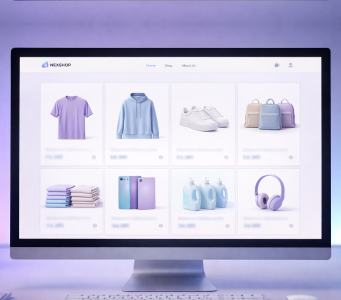
Pricing decisions in eCommerce are increasingly automated, but accuracy has not always kept pace with speed. Many retailers invest in pricing software for eCommerce to stay competitive, assuming that faster reactions to competitor prices alone will protect revenue and market share. Yet beneath the surface, a costly problem often goes unnoticed: inaccurate product matching.
When pricing software compares the wrong products, every downstream decision becomes flawed. Prices are adjusted based on false competitive signals, margins erode unnecessarily, and teams lose confidence in their pricing systems. The impact is rarely dramatic in a single moment. Instead, it accumulates quietly through small, repeated misjudgments that compound over time.
Accurate product matching is not a technical detail. It is the foundation of effective pricing strategy. Without it, even the most advanced pricing software for eCommerce becomes a source of risk rather than advantage. This is why Hypersonix places product matching at the core of its Competitor AI and Pricing AI, ensuring that pricing decisions are grounded in reality rather than assumptions.
Before exploring how accurate matching changes outcomes, it is important to understand how false matches occur and why they are so damaging.
Why Product Matching Is a Critical Weak Point in eCommerce Pricing
Most pricing software for eCommerce relies on competitor data feeds and automated comparisons. On the surface, this seems straightforward. Identify the same product sold by a competitor and compare prices. In practice, it is far more complex.
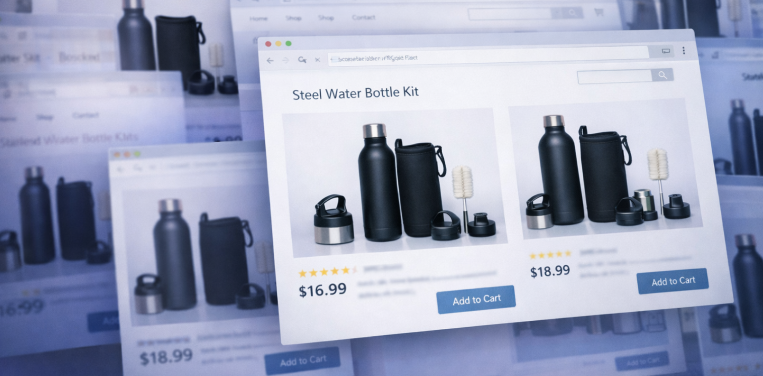
Products that appear similar often differ in subtle but meaningful ways. Size, specifications, materials, bundles, warranty terms, and brand perception all influence how customers evaluate value. A laptop with different memory, a beauty product with a smaller volume, or a bundle that includes accessories should not be treated as direct equivalents.
Traditional pricing systems frequently rely on keyword matching or basic identifiers. These methods fail to capture nuance. As a result, non-equivalent products are treated as direct competitors, and pricing decisions are made on flawed comparisons.
When inaccurate matches drive pricing actions, the consequences extend far beyond a single SKU.
How False Product Matches Lead to Margin Erosion
False product matching creates a chain reaction that quietly erodes margin.
First, pricing software for eCommerce identifies a competitor price drop based on an incorrect match. The system flags the change as a threat, triggering a price response.
Second, Pricing AI or rule-based logic recommends lowering price to remain competitive. Because the match is inaccurate, the retailer responds to a price point that customers would never have considered comparable.
Third, the price reduction fails to generate incremental demand. Customers were not comparing the products in the first place. Volume remains flat, but margin declines.
This scenario repeats across dozens or hundreds of SKUs. Each individual decision seems minor. Together, they create significant profit leakage.
Retailers often assume that margin erosion is the cost of competition. In reality, much of it is self inflicted, driven by pricing software for eCommerce that reacts to the wrong signals.
Competitive Misreads and Strategic Drift
Inaccurate product matching does more than reduce margin. It distorts competitive understanding.
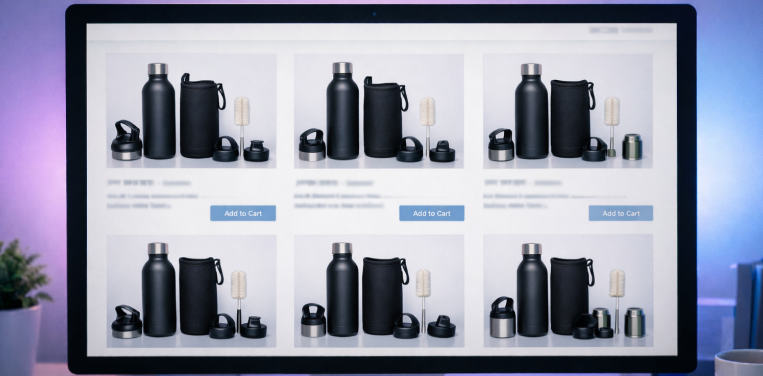
When pricing teams see constant alerts triggered by false matches, they develop a skewed perception of the market. It appears as though competitors are constantly undercutting, even when they are not. This fuels a defensive mindset where holding price feels risky and discounting feels safe.
Over time, strategy drifts. Retailers begin to compete on price alone, even in categories where differentiation matters. Brand strength, service quality, and convenience are undervalued because pricing decisions are driven by noisy, unreliable data.
Pricing software for eCommerce should help retailers understand where competition truly exists. Without accurate product matching, it does the opposite. It amplifies noise and weakens strategic clarity.
Why Traditional Matching Approaches Fall Short
Many pricing platforms attempt to improve matching by adding more rules or manual overrides. These approaches rarely scale.
Manual matching is time consuming and quickly becomes outdated as assortments change. Rule-based matching cannot adapt to new bundles, seasonal variations, or subtle specification differences. Both methods struggle to keep pace with the speed of modern eCommerce.
As assortments grow and marketplaces evolve, the gap between reality and pricing logic widens. Pricing software for eCommerce becomes increasingly reactive, adjusting prices based on stale or inaccurate comparisons.
This is where AI-driven product matching becomes essential.
How Hypersonix Competitor AI Fixes Product Matching at the Source
Hypersonix Competitor AI approaches product matching as an intelligence problem, not a rules problem.
Instead of relying on surface-level similarities, the system evaluates products using multiple signals. It analyzes attributes, descriptions, specifications, and contextual cues to determine whether two products are truly comparable. This allows it to distinguish between exact equivalents, valid substitutes, and irrelevant items.
For example, a bundled product with accessories is not treated as equivalent to a standalone SKU. A lower specification version is not matched as a direct competitor. Temporary marketplace listings with limited inventory are filtered out when they do not represent meaningful competition.
By establishing accurate product relationships, Hypersonix ensures that pricing software for eCommerce operates on clean, trustworthy competitive data.
This precision dramatically reduces false alerts and unnecessary price movements.
Pricing AI Depends on Matching Accuracy
Even the most advanced Pricing AI cannot overcome bad inputs. Elasticity modeling, demand analysis, and recommendation logic all depend on accurate competitive context.
When product matching is correct, Pricing AI can evaluate whether a competitor move actually influences customer behavior. It can distinguish between situations where holding price is safe and where action is required.
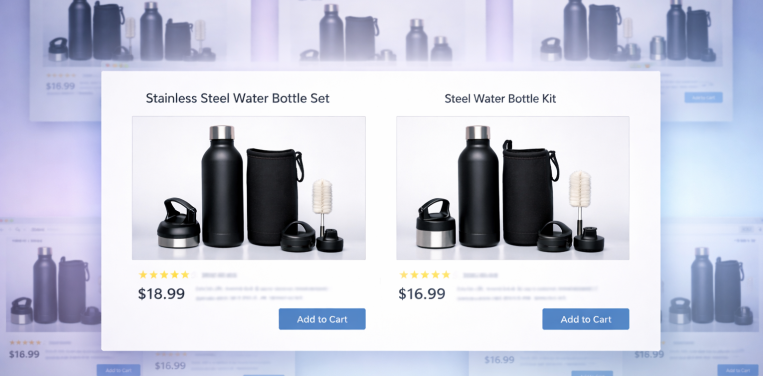
When matching is wrong, elasticity signals are misinterpreted. The system may assume demand risk where none exists or miss genuine threats because they are hidden by noise.
Accurate product matching is what allows Pricing AI to fulfill its purpose. It transforms pricing software for eCommerce from a reactive engine into a disciplined decision support system.
The Hidden Organizational Cost of False Matches
The damage caused by inaccurate product matching is not limited to financial metrics. It also affects teams.
Pricing managers lose trust in alerts that frequently lead to poor outcomes. Merchants spend time investigating false signals instead of optimizing strategy. Leadership questions the value of pricing technology when results are inconsistent.
Eventually, teams override the system or fall back on intuition. Automation is undermined, and decision making becomes fragmented.
Accurate product matching restores confidence. When alerts are meaningful and recommendations align with results, teams engage with pricing software for eCommerce instead of fighting it.
Explainable Matching Builds Trust and Adoption
Hypersonix enhances trust further by making product matching transparent.
Pricing teams can see why products are considered equivalent or not. They understand which attributes matter and how competitive relevance is determined. This visibility reduces friction and accelerates adoption across pricing, merchandising, and finance teams.
Explainability ensures that pricing software for eCommerce is not a black box. It becomes a shared source of truth that aligns stakeholders around data driven decisions.
Conclusion
The cost of inaccurate product matching in pricing software for eCommerce is far higher than most retailers realize. False matches drive unnecessary price cuts, distort competitive understanding, and erode margin quietly but consistently.
Hypersonix Competitor AI solves this problem by identifying true product equivalence and filtering out irrelevant noise. Hypersonix Pricing AI builds on this foundation, ensuring that pricing decisions are guided by real competitive risk and genuine customer behavior.
Retailers who invest in accurate matching protect margin, regain strategic clarity, and restore confidence in their pricing systems. Those who ignore it continue to pay a hidden cost on every mispriced SKU.