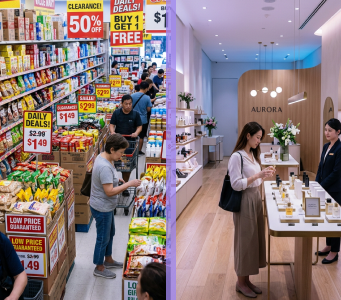
Apparel retail operates on a clock. New collections launch, trends peak, demand shifts, and inventory ages. Unlike many other retail categories, apparel pricing is deeply tied to product lifecycle. Yet many retailers still treat pricing primarily as a promotional tool rather than a lifecycle strategy.
When sell-through slows, discounts follow. When end of season approaches, markdowns accelerate. Over time, this reactive model trains customers to wait for promotions and compresses margins across collections.
Modern Pricing Software for Retail must evolve beyond promotion management. It must optimize prices across the entire product lifecycle, balancing seasonality, elasticity variance, and inventory position.
With Pricing AI and Competitor AI, platforms like Hypersonix enable apparel retailers to move from markdown driven pricing to lifecycle optimization grounded in demand behavior and competitive relevance.
Before exploring how lifecycle pricing works, it is important to understand why promotion driven strategies fall short.
The Limits of Promotion Driven Apparel Pricing
Promotions have long been central to apparel retail. Seasonal sales, clearance events, and flash discounts are expected by customers and planned into merchandising calendars.
However, relying heavily on promotions creates structural challenges.
First, it reduces full price realization. When customers anticipate markdowns, they delay purchases.
Second, it compresses lifecycle margin. Early and broad discounting erodes profitability even when demand may not require it.
Third, it masks elasticity differences. Not all products in a collection respond the same way to price changes, yet promotions are often applied broadly.
Traditional pricing systems focus on executing planned promotions and managing markdown cadence. They do not continuously evaluate whether a price change is truly needed at each stage of the lifecycle.
Pricing Software for Retail must instead evaluate how demand evolves from launch to clearance.

Understanding Apparel Lifecycle Stages
Apparel products typically move through four key lifecycle stages:

At launch, demand uncertainty is high but full price potential is greatest. During growth and peak, sell-through is strongest. In decline, inventory pressure increases and markdowns become more common.
Elasticity varies significantly across these stages.
At launch, certain items may show low elasticity because early adopters prioritize style and novelty over small price differences. During peak demand, price sensitivity may remain moderate if inventory is limited. In decline, elasticity may increase as customers expect discounts.
Treating these stages uniformly leads to unnecessary early discounting or delayed markdowns that harm sell-through.
Modern Pricing Software for Retail must adapt pricing dynamically as lifecycle and elasticity signals evolve.
Elasticity Variance Across Styles and Segments
Elasticity in apparel is rarely uniform even within the same season.
Core basics may behave differently from trend driven items. Premium branded pieces may show lower price sensitivity than private label alternatives. Regional preferences may influence responsiveness to price changes.
Pricing AI models elasticity at the SKU and product cluster level using real demand data. Instead of assuming that all seasonal items require the same discount cadence, it evaluates how each product responds to pricing over time.
This allows retailers to identify:
Products that can sustain full price longer
Items that require earlier intervention
Styles that respond strongly to modest markdowns
Products where discount depth has diminishing returns
By understanding elasticity variance, Pricing Software for Retail shifts from calendar driven pricing to evidence based lifecycle optimization.

Avoiding Premature Markdown Acceleration
One of the most expensive mistakes in apparel retail is premature markdown acceleration.
When sell-through slows slightly, pricing teams often escalate discounts to stimulate demand. However, in many cases demand would have stabilized without deeper reductions.
Elasticity signals provide clarity.
If demand response to prior price adjustments has been minimal, additional markdown depth may not drive incremental volume. In such cases, holding price or applying smaller adjustments protects margin while maintaining perceived value.
Pricing AI enables disciplined markdown management by grounding decisions in expected demand response rather than fear of inventory buildup.
Integrating Competitive Context Without Overreacting
Apparel markets are highly competitive. Online retailers adjust prices frequently. Flash sales create urgency. Marketplace sellers introduce pricing variability.
However, not every competitor move warrants action.
Competitor AI ensures accurate product matching and evaluates relevance. It distinguishes comparable styles from loosely similar items. It identifies temporary promotional spikes versus sustained pricing shifts.
By filtering competitive noise, Pricing Software for Retail avoids unnecessary matching that disrupts lifecycle pricing strategy.
Lifecycle optimization requires balancing competitive awareness with internal demand signals. Overreacting to every competitor markdown can accelerate margin erosion prematurely.
Optimizing Full Price Realization
Full price realization is the foundation of apparel profitability.
Pricing AI helps retailers maximize full price sell-through by identifying products that exhibit low elasticity during early lifecycle stages. These items can sustain pricing discipline longer, improving gross margin without harming volume.
At the same time, it identifies high elasticity items where small early adjustments can accelerate sell-through before inventory pressure builds.
This nuanced approach reduces reliance on large end of season clearance events.
Instead of relying on dramatic markdowns to clear inventory, retailers apply measured, data driven adjustments throughout the lifecycle.
Managing Seasonality with Continuous Intelligence
Seasonality adds another layer of complexity. Weather shifts, fashion trends, and consumer sentiment influence demand unpredictably.
Pricing Software for Retail must continuously evaluate how seasonal patterns affect elasticity.
For example, outerwear may show low elasticity at the beginning of a cold season but become highly elastic as the season ends. Swimwear may behave differently depending on regional climate.
Pricing AI adapts to these changes by learning from real demand signals rather than relying solely on historical calendar assumptions.
This enables pricing decisions that reflect current conditions rather than rigid seasonal templates.
Explainable Lifecycle Pricing Builds Alignment
Lifecycle pricing decisions affect merchandising, planning, and finance teams. Without transparency, pricing adjustments can create internal tension.
Explainable Pricing AI provides clarity on why certain products are held at full price longer and why others receive targeted markdowns.
Teams can see elasticity trends, competitive context, and expected margin impact. This builds confidence in data driven decisions and reduces reliance on instinct.
Modern Pricing Software for Retail must support both intelligence and transparency to operate effectively across complex apparel organizations.
From Promotion Cycles to Lifecycle Optimization
Apparel retail will always involve promotions. But promotions should support lifecycle strategy, not replace it.
Pricing Software for Retail powered by Pricing AI and Competitor AI enables retailers to:
Optimize pricing at launch
Sustain full price where elasticity allows
Apply targeted markdowns based on demand signals
Avoid premature discount acceleration
Protect margin throughout the product lifecycle
By shifting from reactive promotion management to continuous lifecycle optimization, apparel retailers can improve profitability while maintaining competitiveness.

Conclusion
Apparel pricing cannot rely solely on promotional calendars. Seasonality and elasticity variance demand a more intelligent approach.
Modern Pricing Software for Retail must understand how demand evolves across the product lifecycle and how elasticity changes over time. By combining SKU level elasticity modeling with competitive relevance filtering, retailers can optimize pricing from launch to clearance.
Platforms like Hypersonix enable apparel retailers to move beyond blanket promotions toward disciplined, lifecycle driven pricing decisions.
In a category defined by seasonality and style shifts, the advantage belongs to retailers who optimize prices continuously rather than discount reflexively.