Base price drift is one of the most expensive problems in grocery, and it rarely looks dramatic. It shows up as small “reasonable” reactions that add up. A competitor runs a weekend deal, so you shave a few cents. A marketplace listing looks cheaper, so you close the gap. A category manager wants internal price consistency, so adjacent items move too.
None of these changes looks like a big decision. But over weeks and quarters, the everyday price baseline quietly slides down. Margin leakage becomes structural, not seasonal, and recovering price becomes harder than taking it in the first place.
Modern Competitor Analysis Software for Retail, Competitor Analysis Software for Ecommerce, Pricing Software for Retail, and Pricing Software for Ecommerce helps grocery teams stop this drift without becoming uncompetitive. Competitor AI cleans competitive signals through true-equivalent matching and relevance filtering so teams do not react to misleading comparisons. Pricing AI supports disciplined decisions, including when to hold price, and applies guardrails so “small reactions” do not turn into permanent base price erosion.
Before outlining how to prevent drift, it helps to understand how it forms and why it is so hard to reverse.

What Base Price Drift Looks Like in Grocery
Base price drift is rarely a single markdown. It is repeated micro-adjustments that become the new normal.
A grocery team reacts to competitor signals, promotions, and internal pressure with small changes. Those changes often spread through the assortment as teams try to keep price-per-unit stories coherent and maintain expected relationships between sizes, brands, and tiers.
Over time, three things happen:
- Everyday pricing becomes anchored to promotional lows
- Internal price floors get reset downward
- The retailer becomes dependent on deeper discounts to generate the same lift
That is how base price drift turns into a margin problem that persists even after the promotion season ends.
Why Grocery Teams React Even When They Should Hold
Most grocery reactions are driven by urgency, not analysis.
Shoppers do remember a small set of staples, and leadership cares about price image. When a competitor appears cheaper, teams want to close the gap quickly to avoid looking overpriced. In ecommerce, this pressure is even higher because shoppers can sort by price instantly and competitor screenshots circulate fast internally.
But many of those competitor signals are not structural. They may be a short-term promotion, a different pack size, a multipack, or an offer with conditions. Reacting to those signals as if they represent the new market baseline is the fastest path to drift.
This is why Competitor Analysis Software for Ecommerce and Competitor Analysis Software for Retail must do more than collect competitor prices. It must help teams interpret what is real pressure versus noise.
The Competitive Data Problem That Creates Drift
Base price drift is often triggered by competitive misreads that repeat daily.
The most common sources are:
- Pack size and multipack differences that create false undercuts
- Short-term promos that look like permanent market moves
- Loyalty or conditional pricing that changes the effective offer
- Irrelevant sellers or competitor sets that do not reflect the true market
If competitive tracking treats every visible low price as comparable, it generates constant pressure to “keep up.” Teams then make a string of small base price changes that never get rolled back.
This is why competitive signal quality is a margin control issue, not just a data hygiene issue.
How Competitor AI Helps Stop Promo Noise From Resetting Base Price
Competitor AI helps reduce drift by improving the accuracy and relevance of competitor inputs before they influence decisions.
It supports true-equivalent comparisons through accurate product matching so pack size, quantity, and similar-looking variants do not distort competitive gaps. It also supports relevance filtering so teams focus on the competitor moves that matter for their category and market, instead of reacting to every visible low price.
Competitor monitoring can be configured on daily, weekly, or monthly refresh cycles depending on category volatility and business needs.
When competitive inputs are cleaner, many “must react” moments disappear. That alone reduces the volume of small base price cuts that accumulate into drift.
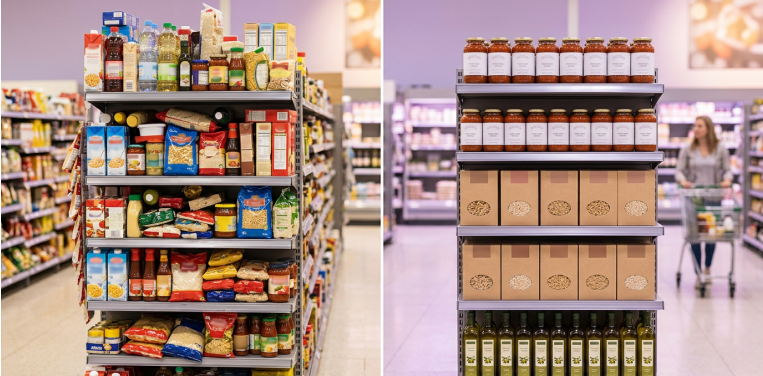
Why Disciplined Holds Are the Most Underused Grocery Lever
The strongest defense against base price drift is not faster reaction. It is disciplined holds.
Many grocery items outside the most visible set have stable demand. They are purchased out of routine, preference, or basket behavior. Small competitive gaps on these items often do not change customer choice, especially when shoppers are not actively comparing them.
If teams keep lowering these prices because of noisy competitive signals, they are funding competitiveness with margin that does not need to be spent. Disciplined holds protect profitability and keep the everyday baseline from sliding.
How Pricing AI Prevents “Small Reactions” From Becoming Permanent
Pricing AI supports grocery pricing discipline by grounding decisions in expected demand response using historical sales and pricing patterns. That helps teams decide where a price change is likely to shift demand and where a hold is the smarter move.
Pricing AI also supports guardrails that prevent drift, such as:
- Margin floors that protect profitability even during competitive periods
- Movement limits that prevent repeated reductions from becoming the new baseline
- Meaningful gap thresholds that stop teams from chasing trivial differences
- Rules that separate everyday pricing posture from promotional response
This is where Pricing Software for Retail and Pricing Software for Ecommerce becomes a control system. It makes “do nothing” a valid, defensible decision when the data suggests the move will not pay back.
The Base Price Drift Pattern You Can Break With One Operating Change
Most drift happens because teams review pricing in bulk, under time pressure, and with noisy inputs.
A better operating model is to work exceptions and audit drift intentionally.
A practical rhythm looks like this:
- Use Competitor AI to validate competitor gaps and filter out pack-size distortion and promo noise
- Route only meaningful gaps into the decision queue
- Use Pricing AI to evaluate expected demand impact and recommend hold versus move
- Apply guardrails automatically so actions stay within approved limits
- Review drift weekly by identifying SKUs with repeated small drops and assessing whether those moves were justified
This creates discipline without slowing teams down and keeps base price from slipping quietly.
From Tactical Reactions to Sustainable Grocery Pricing
Retailers do not lose margin because they respond to competition. They lose margin because repeated small responses become permanent base price reductions.
Competitor Analysis Software for Retail, Competitor Analysis Software for Ecommerce, Pricing Software for Retail, and Pricing Software for Ecommerce supported by Competitor AI and Pricing AI enables grocery teams to:
- Separate promotional noise from meaningful competitive pressure
- Improve comparability through true-equivalent matching and relevance filtering
- Hold price with confidence on items where demand response does not justify a cut
- Use guardrails that prevent repeated reductions from resetting the baseline
- Maintain competitiveness where it matters without sacrificing margin everywhere else
This approach transforms base price management from reactive adjustments into controlled discipline.

Conclusion
Base price drift in grocery is rarely caused by one big markdown. It is caused by many small reactions that feel safe in the moment and expensive over time. Promotions, pack-size distortion, and noisy competitor signals push teams to make base price changes that are hard to recover later.
Modern Competitor Analysis Software for Retail and Competitor Analysis Software for Ecommerce helps teams avoid misreads by improving true-equivalent matching and relevance filtering. Pricing Software for Retail and Pricing Software for Ecommerce then prevents gradual margin leakage through disciplined holds and guardrails that keep small reactions from becoming permanent.
Hypersonix helps grocery retailers compete with control, protecting both price image and profitability without letting the everyday baseline quietly slide downward.






Ready to Let AI Agents Work for Your Margins?
Leading brands are already growing profits on autopilot. Join them.


Trusted by 1000+ leading retail brands