Electronics retail is one of the most transparent markets in modern commerce. Customers can compare prices across retailers in seconds, and marketplaces, aggregators, and search shopping results make those comparisons unavoidable. The moment a shopper sees a laptop, TV, or smartphone, they can instantly validate whether the price is competitive.
That transparency creates intense pressure for electronics retailers to chase competitor moves. Price changes happen frequently, and promotions shift quickly across channels. Many teams respond by matching price drops broadly, running category-wide discounts, or relying on rigid rules that react to competitor pricing without context.
The challenge is that electronics also carries razor-thin margin structures, vendor funding constraints, and complex assortment dynamics. If pricing becomes a constant reaction loop, margin collapse is not a possibility, it becomes a pattern.
Modern Pricing Software for Retail helps electronics retailers compete in transparent markets without falling into destructive price matching. By combining competitor intelligence, elasticity modeling, and micro-optimization across the assortment, Pricing AI and Competitor AI support faster, more disciplined decisions that protect profitability while staying competitive.
Before exploring the approach, it helps to understand why electronics pricing fails when retailers treat every competitor move as equally important.
Electronics Pricing Operates in a High Velocity Environment
Electronics assortments move fast. New models launch, older models depreciate, and promotions rotate weekly, sometimes daily. Price is a primary decision factor for many shoppers, especially on highly comparable products such as TVs, gaming consoles, and popular laptop configurations.
At the same time, not every product behaves the same way. Some SKUs are headline drivers where competitiveness matters most. Others are attachment items, bundles, or differentiated configurations where availability, financing, warranty, and service play a larger role than a small price delta.
In electronics, speed matters, but discipline matters more. Pricing Software for Retail must support rapid action without turning speed into panic discounting.
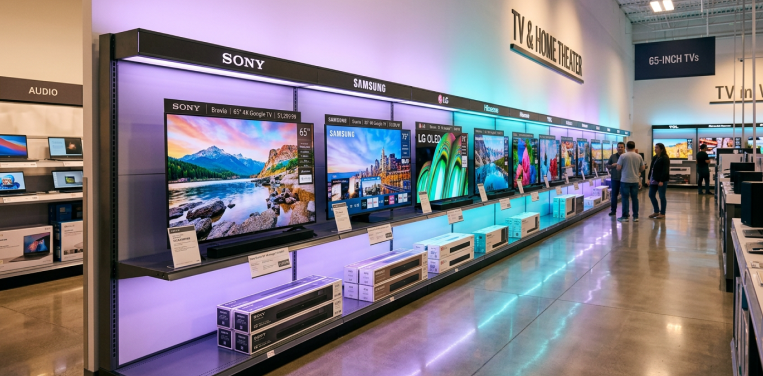
Transparent Markets Create a Trap: Broad Matching
The easiest response to transparency is broad matching. When competitors drop price, a retailer drops price. When a marketplace runs a promotion, the retailer mirrors it. When aggregators show a lower price elsewhere, teams scramble to close the gap.
This approach is tempting because it feels safe. It reduces the fear of losing the sale at the last moment. But broad matching carries hidden costs that add up quickly.
A small reduction on a high volume electronics SKU can erase margin in a day. A larger reduction across an entire category can destroy profitability for a week. Over time, a retailer trains customers to wait for discounts and reinforces the perception that prices should always be negotiated downward.
Pricing Software for Retail must help teams avoid this trap by identifying when competitive alignment is truly required and when it is unnecessary.
Fast Competitor Moves Often Include Noise
Competitor pricing in electronics is not always a clean signal. Price changes can appear dramatic but reflect conditions that do not translate into real competitive pressure.
A competitor may be clearing inventory on an older generation model. A marketplace seller may be running a short-term discount on limited stock. A bundle may include accessories or warranty coverage that changes the effective price. A promotion may require membership or financing terms that make it less comparable than it looks in a search result.
When pricing systems react without filtering, they treat every signal as structural. That is how margin collapses. The retailer responds to noise as if it is a true market shift.
Competitor AI helps reduce this risk by improving product matching accuracy and by separating meaningful competitor moves from temporary or irrelevant activity.
Micro-Optimization Is the Real Advantage in Electronics
Electronics pricing is not won through a single sweeping discount. It is won through thousands of small decisions made consistently across the assortment.
Micro-optimization means adjusting the right products by the right amount for the right reason. It is the opposite of blanket discounting. Instead of dropping an entire category because one hero SKU became more competitive elsewhere, micro-optimization targets only the SKUs where price changes are likely to influence demand.
This matters because electronics assortments include multiple roles at once. Some products drive traffic and visibility. Some products drive profit. Some products protect vendor relationships and funding compliance. Some products exist to complete baskets and increase overall order value.
Pricing Software for Retail must be able to optimize across these roles rather than treating all SKUs as equal.

How Pricing AI Supports Faster, Disciplined Decisions
Pricing AI analyzes historical sales, pricing behavior, product relationships, and contextual signals to estimate how demand responds to price changes. In electronics, that capability helps retailers distinguish between:
Products that require tight competitive alignment because shoppers compare them heavily
Products where availability, trust, and service matter as much as price
Products that can hold price because small changes do not meaningfully shift conversion
Products where inventory position and lifecycle timing should outweigh competitor moves
Instead of reacting to every competitor change, Pricing AI supports decisioning that is grounded in expected demand impact. That creates speed with control.
For high visibility SKUs where competitiveness matters most, Pricing AI can recommend targeted adjustments to maintain position. For other SKUs, it can recommend holding price to prevent unnecessary margin loss.
This is how Pricing Software for Retail supports high velocity environments without turning them into margin leaks.
Competitor AI Helps You Compete Against the Right Reference Set
In electronics, competitor relevance is not optional. A price comparison is only useful if the product is truly comparable.
Competitor AI strengthens this by improving matching accuracy at the SKU and configuration level. It helps teams avoid comparing a different storage size, a different generation, a different bundle, or a different warranty coverage as if it were the same product.
It also helps teams interpret competitor moves with context. A temporary promotion can be flagged as short-term. A clearance price can be treated differently from a structural price reduction. Limited stock behavior can be separated from broad market pricing.
When Pricing Software for Retail uses clean competitor signals, pricing decisions become less reactive and more precise.
Important note: competitor tracking is designed to be run on daily, weekly, or monthly cadences, depending on business needs.
Guardrails Prevent Margin Collapse While Staying Competitive
Electronics retailers often operate with vendor constraints, minimum advertised price policies, and funding rules tied to promotions. Even when a competitor changes price, retailers may not have full freedom to respond the same way.
Pricing discipline requires guardrails that prevent pricing moves from damaging profitability or violating constraints. Pricing AI supports this by applying rules and thresholds that align with your margin floors, lifecycle stage, and strategic role of each product.
These guardrails matter because margin collapse often happens through repetition. One small discount triggers another. Then another. Then a category starts drifting downward without a clear plan.
Pricing Software for Retail helps teams stop the drift by enforcing decision logic that stays consistent, even when competitor moves feel urgent.
Lifecycle Timing Matters as Much as Competitor Pricing
Electronics has clear lifecycle phases. A product launches and commands premium pricing. It competes aggressively in mid-life. It depreciates rapidly near end-of-life, often tied to replacement cycles.
Competitor price signals look different in each phase. A price cut on a newly launched product may be meaningful and require action. A price cut on a late lifecycle product may reflect clearance and not require matching across the assortment.
Pricing AI helps interpret competitor moves through a lifecycle lens. That prevents the common mistake of matching clearance behavior on products that are still in their profit-driving phase.
Explainable Pricing Keeps Teams Aligned Under Pressure
Electronics pricing decisions often involve merchandisers, marketplace teams, finance leaders, and vendor partners. When prices shift quickly, internal pressure rises.
Explainable Pricing AI supports better alignment by showing why a recommendation exists. It can tie a recommended move to elasticity, competitor relevance, lifecycle stage, and expected demand impact. It can also show why a price hold is the best move, even when a competitor looks cheaper in an aggregator.
This clarity is essential for discipline. Without it, teams default to broad matching because it is easier to justify in the moment.
From Reactive Matching to Micro-Optimization at Scale
Electronics retail will always be transparent and competitor moves will always be fast. The difference between strong performance and margin collapse is whether pricing stays strategic under pressure.
Pricing Software for Retail powered by Pricing AI and Competitor AI enables electronics retailers to:
- Compete on the right high visibility SKUs without discounting the entire category
- Filter competitor noise from promotions, bundles, and clearance behavior
- Use elasticity modeling to decide where price changes will actually shift demand
- Apply micro-optimization across the assortment instead of broad discounting
- Protect margin with guardrails tied to lifecycle, funding, and profitability thresholds
This approach transforms pricing from constant reaction to disciplined, high speed decisioning.

Conclusion
Electronics retail rewards speed, but punishes undisciplined price matching. In transparent markets, it is easy to overreact to competitor moves and slowly erode profitability through repeated discounts.
Modern Pricing Software for Retail helps retailers compete without margin collapse by combining micro-optimization with smarter competitive interpretation. Pricing AI identifies where price changes truly influence demand and where price holds protect profitability. Competitor AI ensures competitive signals are accurate and relevant, so teams respond to real market shifts instead of promotional noise.
Platforms like Hypersonix enable electronics retailers to stay competitive where it matters most, while protecting margin across the broader assortment. In a market defined by transparency and velocity, the winners are the teams that move fast with discipline, not the ones who discount fastest.






Ready to Let AI Agents Work for Your Margins?
Leading brands are already growing profits on autopilot. Join them.


Trusted by 1000+ leading retail brands