In today’s retail environment, competitive pressure does not follow a schedule. Prices change multiple times a day, new assortments appear without warning, and digital storefronts evolve continuously as marketplaces test promotions, bundles, or inventory shifts. Yet many retailers still rely on manual checks, spreadsheet audits, or basic scraping tools to keep track of what their rivals are doing.
The problem is no longer simply about monitoring competitors. It is about the speed, accuracy, and intelligence required to understand competitive signals and respond with confidence. What used to be a weekly task has become a split-second necessity.
This is why retailers are steadily shifting from manual browsing and disconnected tools toward fully autonomous competitor intelligence. With Hypersonix Competitor AI, retailers gain an always-on system that scrapes data across channels, identifies true comparable products through advanced matching, filters noise, and converts unstructured information into strategic, actionable insight.
Before exploring how autonomous competitor intelligence transforms pricing and assortment decisions, it is worth understanding why traditional methods fail to keep up.
Why Manual Competitive Monitoring Can No Longer Support Modern Retail
In the past, retailers could afford to review competitor websites once or twice a week. Competitor catalogs were relatively stable, promotions changed occasionally, and most shoppers did not compare every price before buying.
Those days are long gone.
Today, customers check three to five retailers before making a purchase. Competitors adjust prices daily or even hourly based on marketplace dynamics, stock levels, or vendor funding. Meanwhile, promotions, bundles, shipping terms, and return policies shift constantly in ways that impact perceived value just as much as the price itself.

Manual monitoring fails for three key reasons:
-
-
It is too slow
Even daily checks cannot capture the constant fluctuations of digital retail. When a competitor drops a price at noon, reacting the next morning is often too late. -
It is too shallow
Human teams cannot track thousands of SKUs across multiple websites, marketplaces, and assortments. Important changes slip through the cracks. -
It lacks context
Manual checks show what changed, but not why it matters. Without intelligence, retailers cannot separate insignificant movements from truly strategic signals.
-
The result is a dangerous gap between what retailers believe competitors are doing and what is actually happening in the market. This gap leads to missed opportunities, reactionary price cuts, and decisions based on incomplete information.
To compete effectively, retailers need a system that never sleeps, never overlooks a detail, and never confuses noise with meaningful action.
This is exactly where automated competitor intelligence begins to reshape retail strategy.
Why Always-On Competitor Intelligence Has Become a Strategic Necessity
Retailers today operate in environments defined by speed and transparency. Customers compare prices instantly. Marketplaces push automated adjustments. Suppliers expect data-backed negotiations. Under these conditions, intelligence must be continuous, not periodic.
Always-on competitor intelligence solves the core problems manual monitoring cannot:
It captures changes the moment they occur
Retailers no longer wait hours or days to discover major price shifts or assortment changes.
It reduces human workload and eliminates blind spots
Teams gain a complete market picture without constant manual effort.
It adds intelligence to raw data
Retailers see not only what competitors changed but also how that change affects margin, volume, and brand positioning.
This shift from periodic observation to autonomous insight redefines competitive decision-making. Instead of reacting too late or too often, retailers can evaluate competitor behavior with clarity and move only when it makes financial sense.
Hypersonix Competitor AI delivers this level of visibility using a powerful combination of scraping automation, product matching accuracy, predictive context, and transparent explanations.
How Hypersonix Moves Retailers From Monitoring to Autonomous Competitive Insight
Hypersonix Competitor AI does far more than collect data. It converts competitive activity into strategic guidance using four core capabilities built specifically for retail speed and scale.
-
High-Frequency Competitor Scraping Across All Channels
Hypersonix continuously captures competitors’ prices, promotions, bundles, stock levels, shipping costs, and marketplace updates. This scraping occurs across:
- Direct competitor websites
- Amazon, Walmart, and other marketplaces
- Third-party sellers
- Regional catalogs
- Category-specific eCommerce platforms
Instead of waiting for scheduled reports, retailers see live changes as they occur. This allows teams to spot flash promotions, temporary price drops, and assortment shifts instantly rather than reacting when it is too late.
Continuous scraping also ensures retailers never miss the subtle but meaningful signals that influence customer perception, such as changes to return policies or new value-added bundles.
With Hypersonix, competitive visibility is constant, complete, and immediate.
-
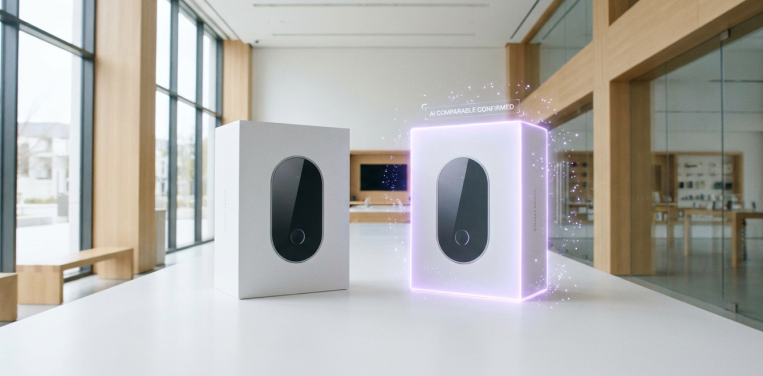
AI-Powered Product Matching That Identifies True Comparables
One of the biggest challenges in competitor tracking is recognizing which products are truly comparable. Retailers often lose margin simply because mismatched items appear cheaper or because basic scraping tools incorrectly pair items based on only a few attributes.
Hypersonix solves this with advanced product matching, using:
- Natural language processing
- Computer vision for image similarity
- Attribute-level comparison
- Bundle deconstruction
- SKU normalization
- Variant mapping
This ensures that retailers compare like with like, not apples with pears.
For example, two televisions might share the same screen size but differ in refresh rate, panel type, or included accessories. Traditional tools flag them as equivalent, leading to unnecessary price cuts. Hypersonix recognizes the real distinctions and prevents damaging overreactions.
With accurate matching, pricing decisions become more rational, more profitable, and more aligned with product value.
-
Autonomous Intelligence That Separates Noise From Signals
One of the most valuable aspects of Hypersonix Competitor AI is its ability to interpret changes, not just report them.
Retailers receive insights such as:
- Whether a price drop is temporary or structural
- Whether a competitor is clearing excess inventory
- Whether a promotion is vendor-funded
- Whether a price increase is due to rising cost of goods
- Whether competition is intensifying in specific categories
This transforms raw data into business-ready intelligence. Instead of reacting to every competitor movement, retailers gain the clarity to act only when the change truly affects demand, market share, or margin.
Autonomy also means the system notifies teams only when an event requires attention, preventing alert fatigue and enabling higher-quality decision-making.
-
Explainable Recommendations That Build Confidence and Alignment
Retailers often hesitate to adopt automated competitive insights because they worry about losing control or visibility. Hypersonix addresses this through explainable AI, which reveals:
- Why a recommendation was generated
- Which competitor moves triggered the alert
- How the change influences revenue and margin
- Whether elasticity supports a pricing response
- Which products or clusters will be affected
With full transparency, teams can trust the system, collaborate more effectively, and adopt insights with confidence rather than suspicion.
This combination of autonomy and explainability creates a competitive intelligence engine that supports both speed and strategic discipline.

From Competitive Parity to Competitive Foresight
Once retailers shift from manual monitoring to automated competitor intelligence, decision-making transforms in three significant ways:
-
-
Faster reactions without sacrificing margin discipline
Retailers stop chasing every price cut and begin responding only when data proves the move will influence demand. -
Better brand positioning
With clear visibility into competitor strategies, retailers maintain stronger price credibility and avoid unnecessary discounting. -
Greater foresight into market trends
Retailers can predict competitor patterns instead of reacting blindly, allowing them to lead rather than follow the market.
-
The result is a more strategic, proactive approach to competition where retailers operate with confidence even in high-velocity categories.
Conclusion: Retailers Need Intelligence That Never Sleeps
Competitive pressure is no longer measured in days or weeks. It is measured in minutes. Manual monitoring cannot keep pace. Basic scraping tools cannot deliver context. Retailers need a system that watches the entire market, understands product equivalence, interprets signals intelligently, and guides decisions with clarity.
Hypersonix Competitor AI delivers exactly that.
By combining continuous scraping, AI-powered product matching, autonomous insight, and explainable intelligence, Hypersonix helps retailers transform competitive noise into focused, strategic action.
In a market where every change matters, always-on competitor intelligence is not simply an advantage. It is a necessity.






Ready to Let AI Agents Work for Your Margins?
Leading brands are already growing profits on autopilot. Join them.


Trusted by 1000+ leading retail brands