In grocery, pricing is not a quarterly or even monthly exercise. It is a weekly battle fought across thousands of SKUs, dozens of categories, and multiple competitive zones that shift every day. Staples such as milk, eggs, and bread face relentless price matching pressure, while discretionary items like snacks, beverages, and household goods move more dynamically as promotions rotate and competitors experiment with new tactics.
Grocery leaders understand this challenge well. The market moves faster than traditional pricing processes can handle, competitors adjust their assortments and prices multiple times per week, and shoppers have full visibility into alternative options across digital and physical channels. The result is a landscape where even a small misstep can erode margin quickly.
This is where Hypersonix Pricing AI and Competitor AI change the outcome. Instead of reacting to incomplete data or scrambling after a competitor move, grocers gain a unified intelligence system that delivers daily competitive insights, SKU-level elasticity, and profitable recommendations for both staple and discretionary categories.
Before exploring how AI shifts the balance of power, it helps to understand why weekly pricing battles are so difficult in grocery retail.
Why Weekly Pricing Decisions Are So Hard to Win
Grocery is different from other retail verticals. It operates at high volume, low margins, and high frequency. Prices matter every day because shoppers compare value constantly across both brick-and-mortar and online channels.
Three factors create the weekly pricing pressure that grocers feel:
-
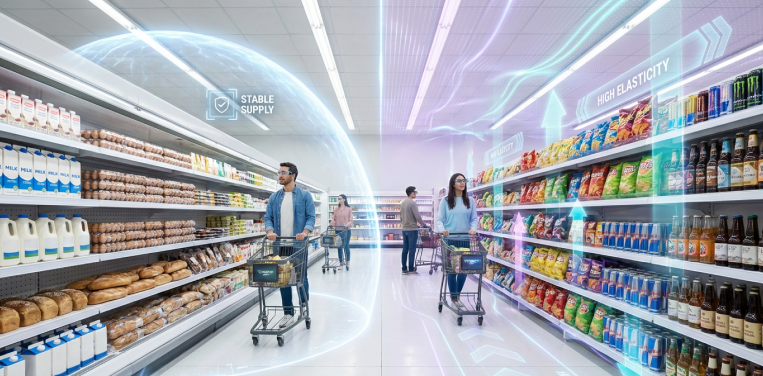
Staples anchor customer value perception
Items like milk, sugar, bananas, cereal, and bread shape shopper trust. Even small price differences influence store choice. Competitors often treat these items as loss leaders, dropping prices aggressively to drive traffic. Grocers who react too slowly lose market share, while those who match too aggressively lose margin.
-
Discretionary categories move faster and are more elastic
Snacks, beverages, confectionery, frozen foods, and household goods often show higher elasticity. Small discounts can lift demand meaningfully, but repeated promotions can also weaken baseline margin. Without a clear view of elasticity, grocers easily overspend on discounts or adjust incorrectly.
-
Weekly circulars and competitors create constant noise
Grocery teams manually monitor dozens of competitor flyers, marketplace listings, and regional price variations. Changes occur daily, but interpreting which ones matter is nearly impossible without an intelligent filter.These pressures put grocery teams on the defensive. They react instead of strategizing. They match prices out of fear instead of understanding demand. And they often sacrifice margin unnecessarily.
This is exactly the gap Hypersonix is designed to close.
Before examining the solution, it is important to see why traditional pricing tools fail to keep up.
Why Traditional Pricing Methods Fall Behind in Grocery
Most grocers still rely on rule-based systems, weekly reviews, or manual competitive comparisons. While these approaches once worked, they cannot keep up with modern grocery dynamics.
Traditional systems struggle because:
-
They are too slow
Weekly audits cannot capture daily changes. By the time an issue is detected, the damage is already done.
-
They treat all competitor moves as equal
If every competitor drop triggers an alert, pricing teams drown in noise. Many moves do not matter, and many items are not true equivalents.
-
They depend on averages instead of elasticity insights
Without elasticity modeling, grocers cannot distinguish between items that genuinely need a price change and items that can sustain value.
-
They lack product understanding
Competitor matching based on keywords often compares the wrong items, creating misleading signals.
In short, traditional methods push grocers to react emotionally instead of acting strategically.
This sets the stage for how AI shifts the competitive advantage.
How Hypersonix Gives Grocers the Advantage in Weekly Price Battles
Hypersonix transforms weekly pricing from a reactive process into a dynamic, intelligence-driven discipline. The system operates continuously, analyzing competitor moves, elasticity patterns, and category behavior to provide actionable recommendations.

Daily Competitive Tracking That Filters Noise From Insight
Grocery markets change daily, but not every change deserves attention. Hypersonix Competitor AI collects competitive data across regional banners, online stores, and marketplaces, then filters out irrelevant or non-equivalent items using AI-powered product matching.
Instead of overwhelming teams with alerts, it highlights only meaningful shifts:
- True equivalent competitor products
- Significant price moves that affect shopper behavior
- Category-level undercutting that may impact value perception
This allows grocers to focus attention where it matters most.
Elasticity Intelligence for Both Staples and Discretionary Goods
Not all grocery products behave the same.
Staples often have low elasticity because shoppers depend on them regardless of price. Discretionary categories often show higher elasticity because shoppers are more responsive to promotions.
Hypersonix Pricing AI models elasticity at SKU and cluster levels. It reveals:
- Where price increases will hold without hurting demand
- Where competitors matter and where they do not
- Which categories require precision and which allow flexibility
- How price changes impact profit, volume, and customer perception
Elasticity becomes the difference between reactive matching and strategic pricing.
Predictive Pricing That Anticipates Competitive Patterns
Grocery competitors do not discount randomly. They follow patterns driven by:
- Seasonality
- Promotional calendars
- Inventory cycles
- Local market intensity
Hypersonix identifies these patterns and predicts competitive moves. This allows grocers to prepare weeks ahead instead of scrambling during weekly flyer launches.
Instead of reacting to competitor promotions, grocers anticipate them.
Explainable AI That Builds Trust in Every Price Decision
Pricing teams need to understand why the AI recommends a certain action. Hypersonix provides clear explanations showing:
- Which competitor shift triggered a recommendation
- How elasticity influences the suggested price
- Expected revenue and margin outcomes
- Category-level reasoning behind the strategy
This transparency eliminates debate and builds confidence across merchandising, pricing, and leadership teams.
Insights turn into decisions faster because everyone understands the “why.”
How Grocers Apply This Intelligence Across Categories
Staples: Protecting Price Image Without Destroying Margin
For staples like eggs, bread, milk, bananas, and sugar, AI identifies where retailers must stay competitive and where small increases are possible.
Grocers maintain value perception while protecting margin.
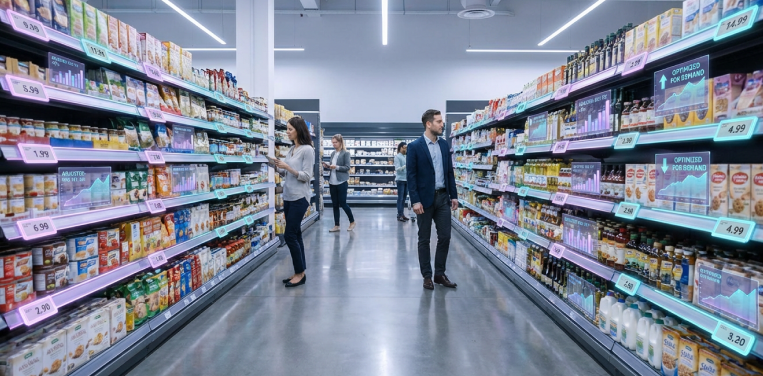
Discretionary Goods: Precision Adjustments for Profit Lift
Elasticity signals help grocers understand which items can support niche premiums and which benefit from small, targeted discounts.
Small adjustments create meaningful profit improvements across:
- Snacks
- Beverages
- Packaged goods
- Household supplies
- Frozen foods
These micro-optimizations accumulate into significant gains.
Conclusion
Grocers battle the market every week, facing intense competition across both staple and discretionary categories. Winning these weekly price battles is not about reacting faster or discounting more aggressively. It is about making smarter, more informed decisions that reflect real customer behavior and competitive context.
Hypersonix Pricing AI and Competitor AI give grocery retailers the intelligence they need to move from reactive firefighting to proactive strategy. With daily competitive tracking, elasticity-driven insights, predictive pricing, and explainable recommendations, grocers gain a powerful advantage.
The future of grocery pricing belongs to those who combine speed with intelligence. Hypersonix ensures every weekly price decision is grounded in clarity, confidence, and profitability.

Related Resources:



Ready to Let AI Agents Work for Your Margins?
Leading brands are already growing profits on autopilot. Join them.


Trusted by 1000+ leading retail brands