Retailers often measure performance from the top down. Store revenue is up. Category sales are stable. Online conversion looks healthy. Units are moving. A promotion delivered lift. Inventory looks acceptable at the aggregate level. From a distance, the business may appear to be performing well.
But retail profitability is not created only at the store or category level.
It is built product by product.
A category can look healthy while several SKUs are losing margin. A store can show revenue growth while best-selling products are becoming less profitable. A promotion can lift sales while quietly discounting products that did not need support. A product can appear slow at the category level, but the real issue may be limited availability, poor variant balance, competitor pressure, or a pricing decision that did not create enough demand impact.
This is why product-level intelligence is critical for retail profitability.
Store-level and category-level reporting show important trends, but they can also hide SKU-level margin leaks, demand shifts, inventory risks, competitor issues, and execution gaps. Retail teams need to understand not only how the business is performing overall, but which products are driving profit, which products are eroding it, and which products deserve attention next.
Hypersonix helps retailers bring this product-level perspective into daily decision-making by connecting competitor intelligence, product matching, pricing, inventory, forecasting, business guardrails, explainable workflows, and price execution monitoring. Competitor AI helps validate whether competitor signals are truly comparable and relevant. Pricing AI uses historical sales and pricing patterns to support expected demand impact, targeted recommendations, and disciplined holds. Inventory and forecasting context helps teams understand whether pressure is tied to stock exposure, demand softness, seasonality, lifecycle stage, or operational issues.
The goal is not simply to see more SKU data. It is to turn product-level signals into better decisions that protect margin and improve growth quality.

Store-Level Performance Can Create False Confidence
Store-level performance is useful because it gives leadership a quick view of overall health.
If sales are up, revenue is growing, and traffic is strong, teams may assume the business is moving in the right direction. But strong aggregate performance can hide product-level problems.
A store may be growing because a small number of products are performing well, while many others are weakening. A category may appear stable because strong products are offsetting underperformers. A promotion may lift total revenue while reducing margin on key items. A best seller may drive volume but contribute less profit than expected after discounts, returns, fulfillment costs, or price changes are considered.
Top-level reporting can answer, “How did the business perform?”
It does not always answer:
- Which products created profitable growth?
- Which products sold more but contributed less margin?
- Which products are showing early demand softness?
- Which products are becoming overstocked?
- Which products are priced too aggressively?
- Which competitor signals actually affected performance?
- Which pricing decisions should be reviewed?
Retail profitability depends on these deeper answers.
Without product-level intelligence, teams may celebrate growth while missing the SKU-level issues that will weaken margin later.
Category-Level Reporting Can Hide SKU-Level Margin Leaks
Category-level performance can also be misleading.
A category may show healthy revenue, but the mix within that category may have shifted toward lower-margin products. A category may meet sales targets because discounted items performed well, while full-margin products slowed. A category may appear competitive overall, but several high-impact SKUs may be priced too low or reacting unnecessarily to weak competitor signals.
Margin leaks often begin at the SKU level.
They may appear when:
- a product is discounted too often
- a price change does not generate enough demand lift
- a competitor signal is misread
- a promotional price stays active too long
- a product moves below a margin floor
- a best seller sells heavily at weak margin
- a category shifts toward lower-margin items
- repeated small reductions create price drift
These issues may not be obvious in category-level reporting because stronger products can mask weaker ones.
Hypersonix Pricing AI helps teams evaluate expected demand impact using historical sales and pricing patterns, so pricing decisions can be assessed at the SKU or product-cluster level. This helps retailers understand whether a price move is likely to create enough incremental demand to justify the margin trade-off.
A category may look healthy, but product-level intelligence reveals whether the profit quality behind that category is improving or deteriorating.
Best Sellers Are Not Always the Most Profitable Products
Retail teams naturally pay attention to best sellers.
High-volume products matter because they influence revenue, traffic, replenishment, price image, and customer experience. But a product that sells a lot is not automatically a strong profit contributor.
A best seller may have weak margin because it is promoted frequently. It may attract demand only when discounted. It may require costly fulfillment. It may be highly exposed to competitor pressure. It may be priced too low relative to demand. It may sell well but create return pressure or stock imbalance.
Product-level intelligence helps teams distinguish between revenue contribution and profit contribution.
A retailer should ask:
- Is this product growing profitably?
- Is it dependent on promotions?
- Is margin stable or declining?
- Has the product moved price too often?
- Is demand strong enough to support a hold?
- Is inventory supporting the current sales rate?
- Are competitor comparisons valid and meaningful?
- Does this product deserve more protection, review, or action?
In some cases, the hidden opportunity is not to discount a best seller more aggressively. It may be to hold price, protect margin, or investigate why the product is driving revenue without enough profit.
Hypersonix helps make price holds visible and explainable when the business case for a reduction is weak. This matters because avoiding an unnecessary price cut on a high-volume product can protect significant margin.
Demand Shifts Often Start at the SKU Level
Demand rarely shifts evenly across a category.
A category may look stable while certain products accelerate and others decline. A color, size, pack, configuration, model, or variant may begin changing before the broader category trend becomes visible. A regional pattern may appear before it shows up in national reporting. A product may slow because of lifecycle stage, inventory constraints, competitor movement, or promotion timing.
SKU-level demand shifts can reveal early opportunities or risks.
A product may deserve attention when:
- demand is rising faster than expected
- sales are slowing despite available inventory
- demand is stable even with competitor undercutting
- previous price reductions did not create meaningful lift
- demand appears promotion-dependent
- demand is shifting toward different variants or pack sizes
- forecasted demand no longer matches inventory position
Hypersonix helps connect pricing, inventory, and forecasting context so teams can understand whether demand pressure is competitive, operational, seasonal, lifecycle-related, or tied to product performance.
This helps retailers avoid treating every sales change as a pricing problem.
A product with declining sales may not need a price cut. It may need review, investigation, inventory rebalancing, product content improvement, or a more targeted promotion. Product-level intelligence helps teams determine which path makes sense.
Inventory Risks Are Often Hidden by Averages
Inventory looks different at the product level.
A category may appear properly stocked while individual products are overstocked, constrained, imbalanced by channel, or exposed to markdown risk. A store or ecommerce channel may show healthy inventory overall, but a high-demand product may be approaching stockout. Another product may have excess inventory that is not visible because aggregate inventory looks acceptable.
Inventory averages can hide several risks:
- excess stock on slow-moving SKUs
- stockouts on high-demand products
- variant-level imbalance
- size or color-level imbalance
- channel-specific overstock
- seasonal products nearing the end of their window
- products with forecasted demand below inventory position
- constrained products where price cuts would not create value
Product-level inventory intelligence helps teams decide whether a product should move, hold, review, or investigate.
A product with excess inventory and soft forecasted demand may need a targeted promotion or markdown. A product with healthy demand and manageable inventory may deserve a hold. A product with constrained inventory may not benefit from a reduction because the retailer cannot support additional demand.
Hypersonix helps connect inventory and forecasting context with pricing decisions so teams can avoid using price cuts to solve the wrong problem.
Competitor Signals Must Be Evaluated at the Product Level
Competitor data can be useful, but only when the comparison is accurate.
A lower competitor price may look like a problem, but the product may not be equivalent. The competitor offer may involve a different size, pack, model, color, bundle, seller condition, delivery term, promotion, or availability status. A seller may not be relevant. The price gap may be too small to influence demand.
At the category level, competitor pressure may look broad. At the product level, only certain signals may deserve action.
Retailers should evaluate:
- match confidence
- product equivalence
- seller relevance
- pack size or unit economics
- model, variant, or configuration differences
- promotion and offer terms
- availability and fulfillment context
- meaningful price gap thresholds
- expected demand impact
Hypersonix Competitor AI helps improve product matching and relevance filtering so teams can compare true-equivalent offers and avoid reacting to weak signals. Competitor monitoring can be configured on daily, weekly, or monthly cycles depending on business needs, category volatility, and product role.
A competitor signal should not automatically trigger a price change. Product-level intelligence helps determine whether the right action is to move, hold, review, or investigate.
Product Role Changes the Right Decision
Not every SKU plays the same role in the business.
Some products are traffic drivers. Some are margin builders. Some support price image. Some are premium anchors. Some are private label items. Some are clearance products. Some are long-tail products that support assortment completeness. Some are seasonal. Some are core replenishment items.
The same signal can require different actions depending on product role.
A small competitor gap on a key value item may deserve attention. The same gap on a premium differentiated product may not. Inventory buildup on a seasonal item near the end of its lifecycle may require action. Inventory buildup on an evergreen product may support a slower review. A private label item may need pricing discipline to protect its value relationship to national brands. A high-margin product may deserve stronger hold logic if demand is stable.
Product-level intelligence helps teams apply the right rules to the right products.
Hypersonix supports business guardrails such as margin floors, movement limits, meaningful gap thresholds, price holds, product-role constraints, category-specific rules, and exception-based review. These controls help retailers avoid applying one pricing logic across the entire assortment.
Profitability improves when product decisions reflect product roles.

Pricing Decisions Need Product-Level Expected Demand Impact
A price change should not be approved only because revenue is down, inventory is building, or a competitor is cheaper.
The key question is whether the price move is likely to generate enough incremental demand to justify the margin given up.
This question must be answered at the SKU or product-cluster level because demand response varies widely across products. Some products are highly price-sensitive. Others are influenced more by brand, availability, fit, trust, service, urgency, seasonality, or habit.
Hypersonix Pricing AI uses historical sales and pricing patterns to support expected demand impact at the SKU or product-cluster level. This helps teams understand whether a price move is likely to create value or simply give away margin.
A price move may be appropriate when:
- the product is demand-sensitive
- the competitor signal is valid
- the gap is meaningful
- inventory or lifecycle context adds urgency
- expected demand impact supports action
- the recommendation fits within guardrails
A hold may be better when:
- demand is stable
- inventory risk is manageable
- the competitor signal is weak
- expected demand impact is limited
- the move would breach margin or movement guardrails
- the product has already moved recently
Product-level intelligence helps retailers make these choices with more confidence.
Price Holds Can Protect Product-Level Profit
A price hold is not a lack of action.
At the product level, a hold can be a high-value decision when a price cut is not justified. Holding price can protect margin when demand remains healthy, inventory is not under pressure, the competitor signal is weak, or expected demand impact is limited.
But holds need to be explainable.
An explainable product-level hold may show:
- the competitor product is not equivalent
- the seller is not relevant
- the gap is below a meaningful threshold
- demand remains stable
- inventory does not justify a reduction
- expected demand impact is limited
- the product plays a margin-protection role
- the move would breach guardrails
- the product has already changed price recently
Hypersonix supports explainable recommendations and disciplined holds so teams can defend restraint with evidence.
This is especially important for high-impact SKUs, where a small unnecessary reduction can create meaningful margin leakage.
Promotions Can Distort Product-Level Profitability
Promotions can create growth signals that look positive at the store or category level.
Orders rise. Revenue increases. Units move. But at the product level, the outcome may be mixed.
Some products may have needed promotion support. Others may have sold at a discount even though they would have sold without it. A broad campaign may lift revenue while weakening margin on products that did not need help. A promotion may clear inventory in one area but train customers to wait for discounts in another.
Product-level intelligence helps retailers evaluate whether promotions improved profit or only increased volume.
Teams should ask:
- Which products actually needed the promotion?
- Which products would likely have sold without discounting?
- Which products improved sell-through enough to justify margin loss?
- Which products became more promotion-dependent?
- Which products should return to a price hold after the event?
- Did the promotion create inventory improvement or only revenue lift?
Hypersonix helps retailers connect promotion, pricing, inventory, and forecasting context so teams can understand whether a promotion is solving the right problem.
A promotion should be judged product by product, not only by total campaign revenue.
Guardrails Prevent SKU-Level Margin Leakage
SKU-level margin leaks often come from small decisions that repeat.
One product is reduced because of a minor competitor gap. Another is discounted because inventory appears high. A temporary promotion becomes a base price change. A product moves too frequently. A reduction falls below an acceptable margin level. A recommendation is approved without enough expected demand impact.
Guardrails help prevent these issues from becoming patterns.
Useful guardrails include:
- margin floors
- movement limits
- meaningful gap thresholds
- price holds
- product-role rules
- category-specific rules
- exception-based review
A margin floor protects profitability. A movement limit helps prevent repeated reductions from becoming price drift. A meaningful gap threshold filters differences unlikely to affect demand. A price hold protects value when action is not justified. Exception-based review routes uncertain or high-risk cases for validation.
Hypersonix supports guardrails as part of a broader pricing workflow, helping retailers make more controlled SKU-level decisions.
This matters because profitability can leak one product at a time.
Exception Workflows Help Teams Focus on the Right SKUs
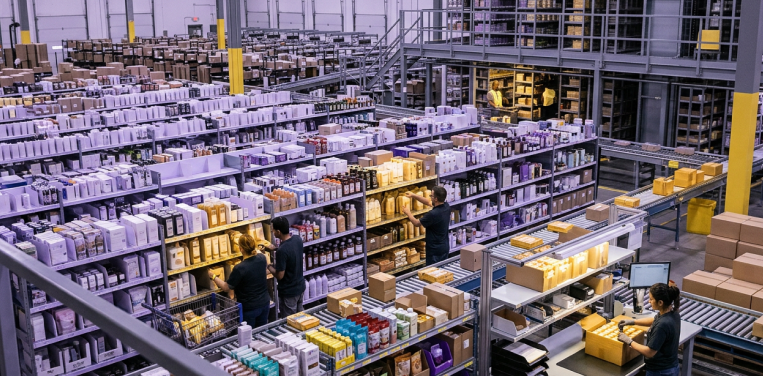
Large retail assortments create too many product-level signals for manual review.
Teams cannot inspect every SKU, competitor gap, inventory change, demand shift, margin issue, and pricing recommendation with the same intensity. They need exception workflows that identify which products deserve attention first.
A product-level exception can be routed into clear decision paths:
Move
A move may be appropriate when the signal is valid, expected demand impact supports action, inventory or margin exposure adds urgency, and the recommendation fits within guardrails.
Hold
A hold may be appropriate when demand is healthy, inventory risk is manageable, the competitor signal is weak, or the margin trade-off does not justify action.
Review
A review may be needed when the product has meaningful business exposure, but the recommendation approaches a guardrail or requires business judgment.
Investigate
An investigation may be needed when the issue involves product matching, data quality, inventory allocation, forecasting, execution, or promotion setup rather than pricing strategy.
Hypersonix supports exception-driven workflows that help teams focus on the SKUs where action is most likely to affect outcomes.
The result is less manual scanning and more focused decision-making.
Price Execution Monitoring Protects Product-Level Decisions
A product-level pricing decision only creates value when it is executed correctly.
A price may be approved but not applied. A markdown may update in one channel but not another. A temporary promotion may remain active too long. A price may be applied to the wrong SKU, pack, size, color, variant, or location. A product may not return to its intended price after an event.
These execution errors can quietly erode profitability.
Hypersonix price execution monitoring helps verify that approved pricing actions were implemented as intended. This helps teams identify missed, delayed, inconsistent, or incorrect price changes after approval.
For product-level profitability, execution monitoring is critical. A well-governed recommendation, hold, markdown, or promotion only matters if the approved decision appears correctly in the market.
Measuring Product-Level Profitability More Effectively
Retail teams should evaluate whether their product-level decisions are improving profitability over time.
Useful questions include:
- Which SKUs contribute the most profit, not just revenue?
- Which best sellers have weakening margins?
- Which products rely too heavily on promotions?
- Which price moves created enough demand impact to pay back?
- Which price holds protected margin without hurting sales?
- Which products are moving price too often?
- Which competitor signals were valid, and which were noise?
- Which inventory exceptions were caught early?
- Which approved price actions failed execution?
- Which guardrails need adjustment?
These questions help retailers learn from product-level outcomes.
Over time, product-level intelligence helps teams understand which signals matter, which actions create value, and which decisions should be handled differently.
How Hypersonix Helps Retailers Build Product-Level Intelligence
Hypersonix helps retailers move beyond store-level and category-level reporting by connecting the signals that shape SKU-level profitability.
Competitor AI improves product matching and relevance filtering so teams can avoid reacting to weak, non-equivalent, or irrelevant competitor signals. Pricing AI uses historical sales and pricing patterns to support expected demand impact, targeted recommendations, disciplined holds, and margin-aware decisions. Inventory and forecasting context helps teams understand whether pressure is tied to stock exposure, demand softness, lifecycle stage, seasonality, or operational issues.
Business guardrails help teams apply margin floors, movement limits, meaningful gap thresholds, price holds, product-role rules, category-specific logic, and exception-based review. Explainable workflows help pricing, merchandising, ecommerce, inventory, and finance teams understand whether the right decision is to move, hold, review, or investigate. Price execution monitoring helps verify that approved pricing actions were implemented correctly.
Together, these capabilities help retailers:
- identify SKU-level margin leaks
- understand product-level demand shifts
- detect inventory risks hidden by category averages
- validate competitor signals before changing price
- use expected demand impact before approving reductions
- protect margin with disciplined guardrails
- make price holds visible and defensible
- prioritize the products that deserve attention first
- reduce manual analysis across complex assortments
- verify approved product-level price actions after execution
The result is a more precise and profitable operating model, where retailers can understand not only how the business is performing, but which products are strengthening or weakening profitability.
Conclusion
Retail profitability is built at the product level.
Store-level and category-level performance are important, but they can hide the SKU-level margin leaks, demand shifts, inventory risks, competitor signals, and execution issues that shape profitability every day.
Retailers need product-level intelligence that helps them understand which products deserve action, which should hold, which need review, and which require investigation.
Hypersonix helps retailers build this intelligence with cleaner competitor data, expected demand impact, inventory and forecasting context, business guardrails, explainable workflows, and price execution monitoring.





Ready to Let AI Agents Work for Your Margins?
Leading brands are already growing profits on autopilot. Join them.


Trusted by 1000+ leading retail brands