Every Shopify store has products that naturally command attention. They are the best sellers, the products featured in campaigns, the items that generate a large share of orders, and the SKUs teams discuss regularly. It makes sense to watch them closely. But while merchants focus on the products already driving the business, hundreds of smaller changes can be happening elsewhere in the catalog. A product may be selling faster than usual. Another may be approaching a low-stock position. Inventory may be accumulating on an item that previously sold consistently. A product's economics may deserve another look. Individually, these changes may not seem important enough to interrupt the day. Over time, however, the products receiving the least attention can create meaningful profit opportunities or emerging risks.
This becomes harder as a Shopify business grows. A merchant with a small catalog may be able to keep a close eye on most products. With hundreds or thousands of SKUs, that is no longer realistic. There are simply too many products and too many signals changing at once.
The answer is not to manually inspect every SKU every morning.
The answer is to know which products deserve attention today.
That is where item-level monitoring becomes valuable. Profit Pulse is designed to evaluate what is happening across a Shopify store and surface individual products that may require attention, allowing merchants to focus on relevant opportunities without manually searching the entire catalog.
Because sometimes the product that matters most tomorrow is not the one getting the most attention today.
Best Sellers Naturally Get the Spotlight
Best sellers are easy to prioritize.
They generate revenue. They move inventory. Customers clearly want them. Any significant change in their performance can have an immediate impact on the business.
So merchants watch them.
They monitor sales.
They make sure inventory is available.
They feature them in promotions.
They discuss them in business reviews.
There is nothing wrong with this approach. High-performing products deserve attention.
The challenge begins when best sellers become the only products receiving meaningful attention.
A Shopify catalog is not static. Every product continues generating signals whether someone is actively watching it or not.
Products outside the top-selling group may begin behaving differently. Their inventory position can change. Their sales can accelerate unexpectedly. Their profitability can require attention.
The fact that a product is not currently a best seller does not mean it is irrelevant to profit.
It may simply mean its opportunity has not become obvious yet.
The Rest of Your Catalog Is Still Changing
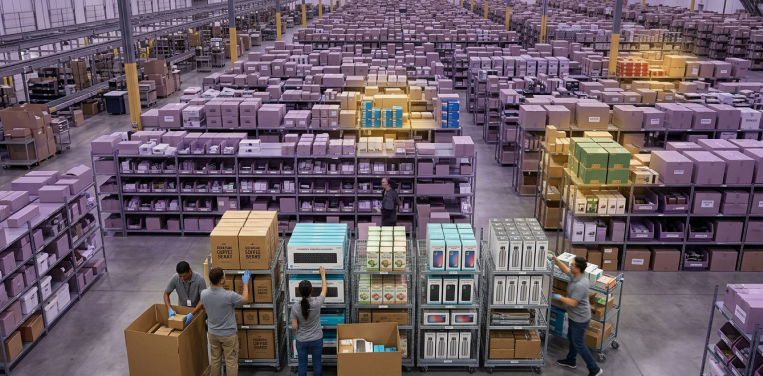
Imagine a Shopify store with 1,000 products.
Perhaps 50 of those products generate most of the team's attention because they are high-volume items or strategically important products.
What happens to the other 950?
They continue selling.
Inventory continues moving.
Their contribution to revenue and profit continues changing.
Some will perform exactly as expected.
Others will not.
And those exceptions are often where important decisions begin.
The problem is scale.
Reviewing every SKU individually would require enormous amounts of time. Even if a team could do it, most products would have nothing particularly important happening on a given day.
That makes manual catalog monitoring inefficient.
Merchants do not need to look at every product equally.
They need a way to find the exceptions that deserve attention.
Small Product-Level Changes Can Become Bigger Business Issues
One of the reasons product-level monitoring matters is that business problems often begin small.
Consider inventory.
A product does not become severely overstocked instantly. Inventory gradually becomes less aligned with recent sales activity.
Similarly, low-stock situations develop as products continue selling and available inventory declines.
If those products are already among the store's most closely monitored items, someone may notice quickly.
But what happens when they are not?
The signal can remain hidden until it becomes large enough to appear in a broader report or create an operational problem.
The same principle applies to unusual sales behavior.
A product that normally generates modest sales could suddenly experience a significant spike. Because it is not a top seller, the merchant may not immediately notice.
But that change could be worth investigating.
Why did demand increase?
What is happening with available inventory?
Does the product deserve more attention?
The earlier a merchant sees that signal, the more useful it can be.
Your Next Important Product May Not Be a Best Seller Yet
There is another reason to look beyond top products.
Product performance changes.
Today's average product can become tomorrow's high performer.
A SKU that historically received little attention may suddenly experience unusual sales activity.
If merchants only monitor their established best sellers, they risk viewing the catalog through yesterday's performance.
That can create a blind spot.
A growing Shopify business needs to understand not only which products are important now, but also which products are becoming important.
That is a fundamentally different question.
A standard best-seller report tells you which products have already generated the most sales.
Item-level monitoring can help bring attention to products whose current behavior deserves investigation, even when those products are not normally at the top of the list.
This is where Profit Pulse's unusual sales spike alerts can become useful. Instead of relying solely on merchants to notice an unexpected change manually, the platform can surface the product as something worth reviewing.
The product does not need to already be a star to earn attention.
Its changing behavior can earn that attention.
Inventory Can Quietly Change a Product's Profit Story
Inventory is another area where overlooked products can influence the health of the business.
Consider an item that sold reasonably well several months ago.
The merchant purchased inventory based on that performance.
Demand then slowed.
Because the product is no longer among the store's leading sellers, the team focuses elsewhere.
Meanwhile, inventory remains.
Capital stays tied up in stock that is not moving as expected.
Nothing dramatic happened.
There was no major failure.
The product simply stopped receiving attention while its situation changed.
Now consider the opposite scenario.
A smaller product begins selling faster than expected. Inventory starts declining, but because the SKU is not part of the merchant's usual high-priority group, nobody notices immediately.
Eventually, the stock position becomes much more urgent.
These are exactly the kinds of conditions where monitoring individual items matters.
Profit Pulse can surface alerts around overstock and low-stock situations, helping merchants identify products that deserve review without requiring them to manually check inventory conditions across the entire catalog.
The goal is not to turn every inventory change into an emergency.
It is to make important exceptions visible.
Profitability Can Hide at the SKU Level
Store-level performance is useful for understanding overall business health.
Profit Pulse provides a performance overview that allows merchants to see important metrics such as revenue, profit, units, transactions, and average order value and compare performance across periods.
But aggregate numbers cannot always tell the complete product story.
A store can perform well overall while individual products require attention.
This is why product-level visibility matters.
A merchant may need to know when a product is priced below cost, for example. At the overall store level, that product may be too small to dramatically change the day's headline numbers.
At the item level, however, it deserves attention.
If it continues selling under unfavorable economics, the effect can accumulate.
This is an important distinction between understanding store health and understanding what needs action.
Merchants need both.
The broader view helps explain how the business is performing.
The product-level view helps identify where individual decisions may be required.

The Goal Is Not to Watch Every Product Yourself
As catalogs grow, manually inspecting every product becomes increasingly unrealistic.
And it is not the best use of a merchant's time.
Most products will not require action today.
A smaller group might.
The challenge is identifying that group.
Profit Pulse approaches this by evaluating alerts at the item level and prioritizing the products that deserve attention.
Rather than presenting every possible signal with equal importance, Top Actions for Today helps bring higher-priority opportunities into the merchant's daily workflow.
This changes the question from:
"How do I monitor my entire catalog?"
to:
"Which products in my catalog need me today?"
That is a much more scalable approach.
The merchant remains responsible for the decision. Profit Pulse helps determine where that decision-making attention should go first.
From Product Monitoring to Prioritized Action
Identifying a product is only the beginning.
Merchants also need to understand why it has been surfaced.
For relevant pricing opportunities, Profit Pulse can present the product's current price alongside a recommended price. The merchant can review the recommendation and decide whether to accept or reject it.
For other conditions, such as low stock, overstock, below-cost products, or unusual sales spikes, the alert can bring the situation to the merchant's attention for review.
Profit Pulse also includes an AI assistant that allows merchants to investigate a specific alert further.
That creates a straightforward workflow:
A product changes.
Profit Pulse identifies a relevant signal.
The opportunity is prioritized.
The merchant investigates the context.
The merchant decides what to do next.
Instead of manually moving product by product through a catalog, merchants can concentrate their attention where it is most useful.
The Products That Deserve Attention Will Change Every Day
One of the most important things to understand about Shopify operations is that priorities are dynamic.
The product that needs attention today may not need attention tomorrow.
A low-stock situation can be addressed.
A pricing recommendation can be reviewed.
An unusual sales spike can be investigated.
Meanwhile, another product may begin showing a completely different signal.
That is why a fixed list of "important products" is not enough.
Best sellers will always deserve attention, but merchants also need visibility into products becoming important because something has changed.
Profit Pulse's daily approach helps support this dynamic workflow.
Instead of assuming yesterday's priorities still matter most, merchants can return to the command center and review the Top Actions surfaced from current store data.
That makes product monitoring less about maintaining a giant checklist and more about responding intelligently to meaningful changes.
Better Catalog Visibility Supports Profitable Growth
Looking beyond best sellers is not about finding more problems.
It is about finding more opportunities to improve the business.
An overlooked product with unusual demand could represent an emerging opportunity.
A low-stock alert could help bring attention to potential missed sales.
An overstock situation could reveal inventory that deserves review.
A pricing recommendation could highlight an opportunity to improve product economics.
A below-cost alert could identify a product that requires immediate consideration.
Each signal is different, but they all contribute to the same objective:
making better decisions across the business.
This is why Profit Pulse should not be viewed simply as a tool for protecting margins.
Its larger purpose is profit optimization and business growth.
By helping merchants understand which individual products deserve attention, Profit Pulse can make the entire catalog more manageable and help businesses find opportunities that might otherwise remain hidden.
Final Thoughts
Your best sellers deserve attention.
But they should not receive all of it.
Across a growing Shopify catalog, products are constantly changing. Some are selling faster. Others are slowing down. Inventory positions are shifting. New pricing opportunities can emerge. Individual products can begin behaving differently even when overall store performance looks healthy.
Trying to manually monitor every SKU is not realistic.
Ignoring everything outside the best-seller list is not the answer either.
Merchants need a smarter middle ground.
Profit Pulse provides that by combining store-level performance visibility with item-level monitoring, prioritized Top Actions, and AI-powered context. Instead of asking merchants to inspect the entire catalog every day, it helps surface the products that deserve their attention.
Because tomorrow's profit is not shaped only by the products already winning today.
Sometimes, the most important opportunity is hiding in a product you were not looking at at all.



.png)

Ready to Let AI Agents Work for Your Margins?
Leading brands are already growing profits on autopilot. Join them.


Trusted by 1000+ leading retail brands