Sporting goods retail operates in a highly competitive environment where product substitution is common. Customers comparing running shoes, fitness trackers, bicycles, or sports apparel often evaluate multiple brands and alternatives before making a purchase. Online marketplaces, brand websites, and specialty retailers make these comparisons even easier.
Because substitution is common, many retailers respond by aggressively matching competitor prices. When a similar product appears at a lower price elsewhere, automatic repricing rules often trigger immediate adjustments.
However, reacting to every competitor move can erode margin quickly. Not all alternatives are truly comparable, and not every price difference influences demand.
Modern Pricing Software for Retail must do more than monitor competitor prices. It must determine which competitors and which substitutes actually influence customer decisions. By combining competitor relevance analysis with elasticity clustering, Pricing AI and Competitor AI help sporting goods retailers manage substitution intelligently while protecting margin.
Before exploring how this works, it is important to understand why substitution makes pricing more complex in sporting goods retail.
The Challenge of Product Substitution in Sporting Goods
Unlike categories where products are highly standardized, sporting goods often include many near substitutes rather than exact equivalents.
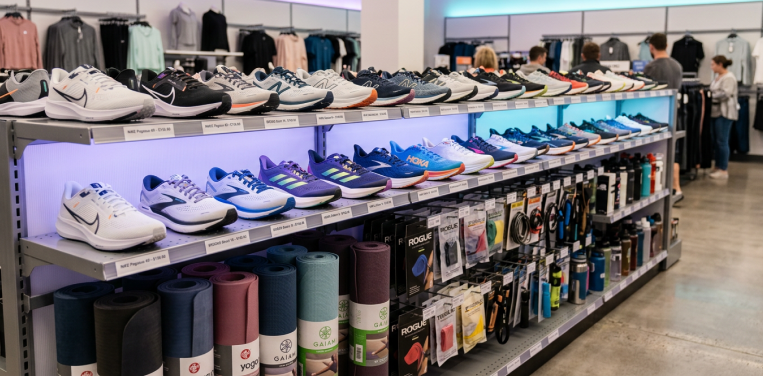
For example, a customer shopping for running shoes may consider several brands with similar features. A consumer purchasing a tennis racket may compare different models within the same performance tier. Fitness equipment, outdoor gear, and sports apparel frequently present multiple alternatives that appear similar in purpose.
This creates a substitution effect where customers may shift demand between comparable products when prices change.
However, substitution is rarely uniform. Brand reputation, performance characteristics, materials, and athlete endorsements often influence customer decisions. Two products may appear similar but attract different customer segments.
Traditional pricing systems struggle with this complexity. If a competitor lowers the price on a similar product, mere reactive systems may respond by matching the price without evaluating whether the products truly compete for the same demand.
Pricing Software for Retail must interpret substitution more intelligently.
Why Competitor Relevance Matters
Not every competitor influences customer behavior equally. A national sporting goods retailer may compete directly with certain stores but not others. A marketplace seller with limited inventory may not materially affect demand.
Even when products appear similar, they may not represent true substitutes. A premium running shoe with advanced cushioning may compete differently from an entry level alternative.
Competitor AI addresses this challenge by evaluating relevance before influencing pricing decisions.
Accurate product matching ensures that pricing comparisons are made only between truly comparable products or meaningful substitutes. Competitive signals are prioritized based on historical demand impact and market presence.
By filtering irrelevant competitor activity, Pricing Software for Retail prevents unnecessary price reactions that reduce margin without improving competitiveness.
Understanding Elasticity Across Product Clusters
Elasticity measures how demand changes when prices change. In sporting goods retail, elasticity often varies across product clusters rather than individual SKUs alone.
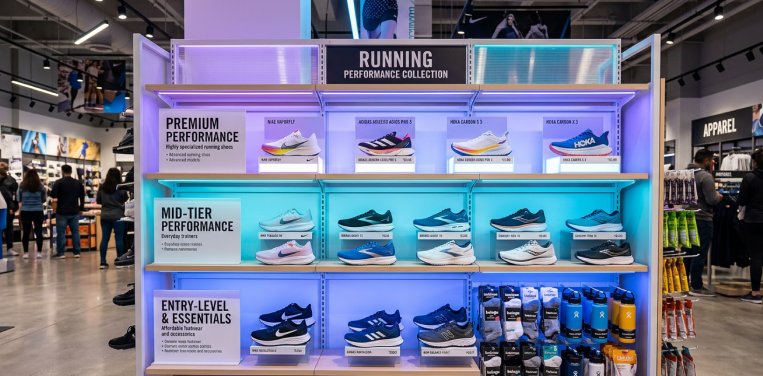
For example, premium performance products may show lower price sensitivity because customers value brand reputation and performance features. Mid tier products may show moderate elasticity as customers compare alternatives more closely. Entry level products may be highly price sensitive.
Pricing AI analyzes historical pricing behavior, sales response, and product characteristics to group items into elasticity clusters.
This clustering helps retailers understand how different segments of the assortment respond to price changes.
Instead of assuming that all substitutes behave similarly, Pricing Software for Retail identifies patterns across comparable product groups and applies pricing strategies accordingly.
Avoiding Unnecessary Price Matching
When substitution is misunderstood, retailers often overreact to competitor price changes.
For example, a competitor discount on one brand of athletic shoes may trigger defensive price matching across similar models even when demand for those products remains stable.
Elasticity clustering helps prevent this behavior.
If data shows that demand for a specific product cluster is resilient to small price differences, Pricing AI can recommend holding price confidently. This protects margin without sacrificing sales.
For clusters that demonstrate higher price sensitivity, targeted adjustments can still be applied where demand truly responds to pricing changes.
This approach allows retailers to compete effectively without engaging in unnecessary price wars.
Managing Substitution Through Intelligent Pricing
Substitution is not inherently negative. When understood correctly, it can help retailers guide demand strategically.
Pricing AI can identify situations where adjusting the price of one product shifts demand toward higher margin alternatives within the assortment. This allows retailers to optimize category performance rather than focusing on individual products in isolation.
For example, a modest price adjustment on a lower margin product may encourage customers to choose a similar product with better profitability.
Modern Pricing Software for Retail uses elasticity clustering to support these strategic decisions while maintaining competitive positioning.
Reducing Pricing Noise in Competitive Markets
Sporting goods retailers face constant pricing signals from competitors. Seasonal promotions, athlete driven campaigns, and product launches frequently create short term price fluctuations.
Without proper filtering, these signals can overwhelm pricing teams and trigger unnecessary price updates.
Competitor AI continuously evaluates competitive activity and distinguishes between temporary promotions and sustained market changes.
When Pricing Software for Retail focuses only on relevant competitive signals, pricing decisions become more stable and strategic.
This clarity is essential in markets where substitution and competitive noise occur simultaneously.
Micro Adjustments Across the Assortment
Managing substitution effectively requires precise pricing rather than broad adjustments.
Pricing AI enables small targeted changes across large assortments. These micro adjustments allow retailers to remain competitive on sensitive products while protecting margin on resilient ones.
Across thousands of SKUs, these incremental changes produce meaningful financial impact.
Instead of sweeping price changes across entire categories, Pricing Software for Retail supports granular decision making that balances demand response and profitability.
Explainable Pricing Builds Organizational Confidence
Pricing decisions in sporting goods retail often involve multiple stakeholders including merchandising teams, category managers, and finance departments.
When competitors change prices rapidly, pressure to react quickly can increase.
Explainable Pricing AI helps teams understand the reasoning behind pricing recommendations. Elasticity clusters, competitive signals, and expected demand outcomes are clearly presented.
This transparency builds confidence in disciplined pricing decisions and reduces reliance on instinct or reactive price matching.
From Reactive Matching to Strategic Pricing
Sporting goods retailers must manage complex substitution patterns while remaining competitive in fast moving markets.
Pricing Software for Retail powered by Pricing AI and Competitor AI enables retailers to:
- Identify meaningful substitutes through accurate product matching
- Understand elasticity patterns across product clusters
- Avoid unnecessary competitor price matching
- Guide demand toward profitable alternatives
- Protect margin while maintaining competitiveness
By combining elasticity clustering with competitor relevance filtering, retailers transform substitution from a pricing risk into a strategic opportunity.
Conclusion
Substitution is a defining characteristic of sporting goods retail. Customers compare alternatives constantly, but not all substitutes influence demand equally.
Modern Pricing Software for Retail must interpret these dynamics rather than reacting blindly to competitor price changes. By combining competitor relevance filtering with elasticity clustering, retailers can understand when substitution truly affects demand and when price holds are appropriate.
Platforms like Hypersonix enable sporting goods retailers to move beyond reactive price matching toward intelligent pricing strategies that protect margin while remaining competitive.
In categories where alternatives are abundant, the advantage does not belong to the retailer who reacts fastest. It belongs to the retailer who understands which substitutions matter and prices accordingly.





Ready to Let AI Agents Work for Your Margins?
Leading brands are already growing profits on autopilot. Join them.


Trusted by 1000+ leading retail brands