A carton of milk and a box of breakfast cereal may sit in the same grocery basket, but they do not necessarily require the same pricing strategy.
The same applies to fresh vegetables and canned foods, bakery products and packaged snacks, fresh meat and frozen alternatives, or seasonal produce and shelf-stable pantry essentials.
These products have different commercial characteristics.
Fresh grocery products often have shorter selling windows, greater exposure to spoilage, and inventory conditions that can become more important as products approach the end of their usable life.
Packaged products may have longer shelf lives, more predictable replenishment cycles, and different competitive pricing requirements.
Yet grocery retailers sometimes apply similar pricing rules across products with very different economic and operational conditions.
A competitor reduces the price of a packaged grocery staple, creating pressure to respond. Meanwhile, a fresh produce category may be experiencing changes in supply costs, inventory exposure, or anticipated demand that require an entirely different evaluation.
A retailer may also apply a broad discount across a category without considering whether the affected products have different margin structures, selling windows, or product roles.
These situations highlight an important question.
Should grocery retailers use the same pricing approach for fresh and packaged products?
In many cases, the answer is no.
Modern Pricing Software for Retail and Pricing Software for Ecommerce should help grocery retailers evaluate product-level pricing opportunities using profitability, product roles, competitive positioning, and applicable business guardrails.
At the same time, Competitor Analysis Software for Retail and Competitor Analysis Software for Ecommerce should help teams compare relevant products without assuming that all grocery categories have equally reliable competitive benchmarks.
Hypersonix supports these decisions through Pricing AI and Competitor AI, complemented by Inventory AI and Forecasting AI.
Hypersonix Pricing AI supports product-level pricing recommendations, predictive analytics, product clustering, margin floors, price movement limits, price holds, product-role rules, exception-based review, and explainable workflows.
Hypersonix Competitor AI supports product matching, competitor relevance filtering, meaningful price gap analysis, and competitor tracking on daily, weekly, or monthly cadences.
Inventory AI provides visibility into the retailer's own stock position, while Forecasting AI supports demand forecasting and planning.
Together, these capabilities can help grocery retailers evaluate whether individual products deserve a price adjustment, a deliberate hold, or further investigation.
The objective is not simply to discount fresh products more frequently or keep packaged products at fixed prices.
It is to understand why different grocery products require different pricing considerations and make decisions that support profitability, inventory management, and competitive positioning.
Why Fresh and Packaged Grocery Products Require Different Pricing Approaches
Fresh and packaged products often operate under different commercial conditions.
Fresh produce, meat, seafood, dairy, and bakery products can have relatively short selling windows. Their quality and commercial value may be affected by storage conditions, handling, and remaining shelf life.
Packaged foods, beverages, canned goods, and household grocery staples may remain suitable for sale for longer periods.
This difference affects how retailers evaluate inventory, demand, and pricing.
Consider a retailer carrying fresh strawberries and packaged pasta.
The strawberries may have a relatively short period during which they can be sold at the intended quality level.
If demand is weaker than expected, the retailer may need to investigate its inventory exposure before the remaining stock becomes unsuitable for sale.
Packaged pasta may offer greater flexibility because it can typically remain in inventory for longer.
The retailer may therefore have more time to assess competitive pricing or wait for anticipated demand.
However, these differences are not absolute.
Some packaged foods have short remaining shelf lives, while certain fresh products can be stored and sold over longer periods under appropriate conditions.
The important distinction is the commercial situation of the individual product.
Hypersonix Pricing AI supports product-level pricing recommendations and product-role rules, allowing retailers to evaluate different products according to their intended business roles and pricing requirements.
For Pricing Software for Retail, the central principle is that a pricing strategy should reflect product economics and operational conditions rather than rely entirely on broad category-level rules.
Perishability Changes the Economics of Pricing Decisions
Perishability is one of the most significant differences between fresh and many packaged grocery products.
A fresh product may lose commercial value as its remaining usable life becomes shorter.
If the product is not sold within the appropriate period, the retailer may face additional waste or disposal exposure.
This creates a pricing question that may be less urgent for many shelf-stable products.
Consider a hypothetical grocery retailer selling fresh berries at $5 per pack, with a product cost of $3.
At the original price, gross profit per pack is $2 before other costs.
If the retailer has 500 packs available, the potential gross profit from selling all 500 at the original price is $1,000.
But suppose the retailer expects that only 300 packs may sell before the remaining stock becomes unsuitable for sale.
The retailer may need to evaluate whether a price adjustment, a promotional offer, or a different inventory action is appropriate.
A reduction to $4 per pack would lower unit gross profit to $1, assuming the product cost remains unchanged.
Whether that reduction improves the overall financial outcome depends on how many additional packs sell, the actual demand response, and the costs associated with unsold inventory.
The retailer should not assume that discounting automatically produces a better result.
Hypersonix Inventory AI supports inventory visibility, while Forecasting AI provides anticipated demand context.
Pricing AI supports product-level pricing recommendations within applicable profitability and pricing guardrails.
Together, these capabilities can inform a pricing review when perishability creates commercial pressure.
However, Hypersonix should not be interpreted as automatically determining the precise remaining freshness of every product batch or calculating the exact spoilage impact of every proposed price change.
Those considerations require appropriate operational data and business judgment.
Modern Pricing Software for Ecommerce should help teams evaluate pricing decisions alongside relevant inventory and demand information rather than using spoilage risk as an automatic reason to reduce prices.
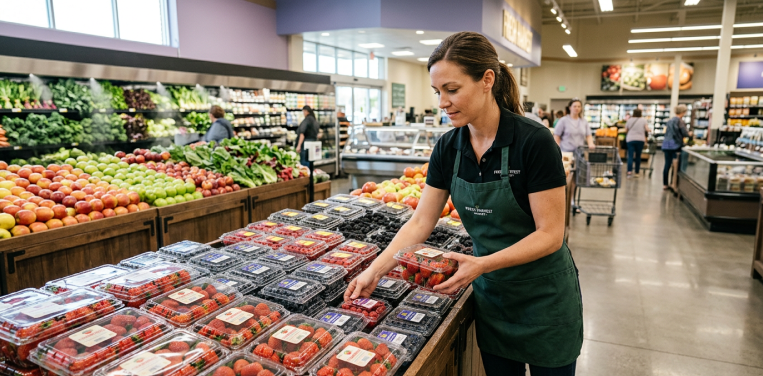
Packaged Products Often Require Greater Attention to Sustained Competitive Positioning
Many packaged grocery products are highly recognizable.
Customers may compare the prices of the same cereal, cooking oil, coffee, beverage, or household staple across retailers.
When brand, pack size, and product specifications match, competitive price comparisons can be relatively straightforward.
These products may also play an important role in a retailer's overall price perception.
For example, a grocery retailer may intentionally maintain competitive everyday prices on selected national-brand staples.
A meaningful competitor price gap on these products could deserve closer review.
However, not every packaged product is equally price-sensitive or competitively exposed.
An exclusive product, differentiated specialty item, or premium private-label offering may require a different benchmark.
Hypersonix Competitor AI supports product matching, competitor relevance filtering, and meaningful price gap analysis.
These capabilities help retailers focus on more appropriate competitive comparisons.
For Competitor Analysis Software for Retail, this distinction matters because packaged grocery products often contain variations in weight, pack size, formulation, and product positioning.
A retailer should not automatically match the lowest observed price without confirming that the competing offer is genuinely comparable.
Fresh Grocery Prices May Require More Operational Context
Fresh grocery pricing can involve several considerations that extend beyond headline competitor prices.
A produce retailer may need to evaluate supply cost changes, inventory availability, anticipated demand, and remaining selling opportunities.
A bakery retailer may have different pricing concerns for products sold throughout the day and products with a longer available selling period.
A fresh meat retailer may need to consider product specifications, portion sizes, sourcing, and storage requirements.
These conditions influence the interpretation of competitive price gaps.
Suppose one retailer sells a premium variety of fresh tomatoes while a competitor advertises a lower price for a different variety.
A direct comparison may be misleading.
The products may differ in grade, origin, quality, packaging, or intended market position.
Similarly, fresh meat products may have different cuts, weights, or preparation specifications.
Hypersonix Competitor AI supports product matching and relevance filtering to help teams evaluate appropriate competitive comparisons.
However, those capabilities should not be interpreted as automatically verifying freshness, product condition, sourcing quality, or every offer attribute when such information is unavailable.
For Competitor Analysis Software for Ecommerce, this is particularly important because online grocery listings may not fully communicate all the characteristics that influence product value.
The goal is to use relevant competitive evidence while recognizing when additional product context is necessary.
Shrink and Spoilage Can Affect Gross Profit Beyond Unit Margin
Gross margin is important in grocery pricing, but it does not always tell the entire profitability story.
Fresh grocery categories may experience shrink associated with spoilage, damage, handling, or other inventory losses.
A product can appear profitable on the basis of selling price minus unit cost while generating a weaker overall outcome after unsold inventory is considered.
Consider a hypothetical produce category.
A retailer purchases 1,000 units at $2 each, creating a total acquisition cost of $2,000.
The selling price is $3 per unit.
If all 1,000 units sell, revenue is $3,000, leaving $1,000 after the acquisition cost, before other expenses.
Now suppose only 850 units are sold and the remaining 150 cannot be sold.
Revenue falls to $2,550.
With the same $2,000 acquisition cost, the amount remaining is $550 before other expenses.
The product still generates a positive contribution relative to its acquisition cost, but the outcome is considerably different.
This example illustrates why grocery pricing teams should examine inventory exposure alongside product margins.
However, a price reduction is only one possible response.
Retailers may also review ordering quantities, replenishment plans, assortment decisions, or other operational factors.
Hypersonix Inventory AI provides stock visibility, and Forecasting AI supports demand planning.
Pricing AI provides product-level recommendations that can be evaluated alongside these insights.
For Pricing Software for Retail, the objective is to understand the broader commercial implications of pricing decisions, not simply maximize the margin percentage on each unit sold.
Supplier Cost Changes Can Affect Fresh and Packaged Products Differently
Supplier costs are an important input to grocery pricing.
Fresh categories may experience cost fluctuations due to seasonality, supply conditions, sourcing arrangements, or transportation requirements.
Packaged products may experience cost changes through supplier price revisions, packaging costs, ingredient costs, and broader production economics.
These developments create different pricing review requirements.
A fresh produce retailer may face a change in acquisition costs for a particular product over successive purchasing periods.
A packaged goods retailer may receive a supplier cost increase that applies to a product range.
In either case, maintaining the existing selling price can affect unit gross profit.
Consider a packaged product priced at $8 with a unit cost of $5.
Gross profit is $3 per unit.
If cost rises to $5.50 and the retailer maintains the price, gross profit falls to $2.50.
That represents a 16.7% decline in unit gross profit.
The retailer may consider a price increase, but competitive positioning and product roles remain important.
Hypersonix Pricing AI supports product-level recommendations and margin floors, helping teams evaluate profitability considerations when relevant cost data is available.
Modern Pricing Software for Ecommerce should support these reviews without assuming that every supplier cost change must be passed directly to customers.
The correct response depends on product economics, competitive conditions, and broader business strategy.
Fresh Products and Packaged Staples Often Play Different Product Roles
Not every grocery product serves the same purpose within the assortment.
Certain packaged staples may be strategically important for maintaining a competitive value proposition.
Fresh produce may contribute to perceptions of assortment quality and freshness.
Premium specialty products may support differentiation.
Private-label items may have distinct margin and pricing objectives.
Seasonal fresh products may require closer attention to their remaining selling windows.
These roles should influence pricing decisions.
Hypersonix Pricing AI supports product-role rules within governed pricing workflows.
For example, a retailer may decide that an important national-brand packaged staple requires close competitive review.
A differentiated specialty product may need stronger evidence before responding to a lower-priced alternative.
A fresh seasonal product may deserve additional evaluation because of inventory exposure and anticipated demand.
These are examples of retailer-defined strategies rather than automatic rules that apply universally.
For Pricing Software for Retail, product-role differentiation helps prevent a single category-wide pricing policy from governing products with different commercial objectives.
The question is not whether fresh or packaged products should always carry higher margins.
It is whether the proposed price supports the role and economics of the specific product.
Accurate Product Matching Is Essential in Grocery Competitive Analysis
Grocery products can appear comparable while differing in ways that matter to price.
Two packaged products may have different weights, unit counts, ingredients, or formulations.
Two fresh products may differ in variety, grade, origin, or packaging.
A retailer comparing these products solely by headline price may reach misleading conclusions.
Consider a retailer selling a 1 kg bag of rice for $4.50.
A competitor offers a visually similar product for $4.20, but the package contains only 900 grams.
The competitor's headline price is lower.
However, the price per kilogram is approximately $4.67, compared with $4.50 for the retailer's product.
The apparently cheaper offer is more expensive on a unit-weight basis.
This illustrates why pack sizes and unit measures deserve attention.
Hypersonix Competitor AI supports product matching to help retailers identify more relevant competitor comparisons.
For Competitor Analysis Software for Retail, accurate matching is especially important in grocery categories where small differences in package size can distort price gap analysis.
The same principle applies to fresh products sold by weight or unit.
A price comparison should account for the relevant quantity and product characteristics before influencing a pricing recommendation.
Fresh Produce Comparisons Need More Than Similar Product Names
Fresh produce presents additional challenges.
Two retailers may both list apples, potatoes, tomatoes, or grapes, but the products may differ in variety, grade, origin, or packaging.
A lower competitor price may reflect a different product specification rather than a genuine competitive disadvantage.
For example, a grocery retailer selling a premium apple variety should not automatically benchmark its price against a lower-cost variety.
Similarly, a competitor's advertised price for a small package of grapes may not be equivalent to a larger pack offered by another retailer.
Hypersonix Competitor AI supports product matching and competitor relevance filtering.
These capabilities can help teams focus on more meaningful comparisons when appropriate product information is available.
However, the retailer should use additional judgment where freshness, grade, origin, or quality differences cannot be reliably established from available listings.
For Competitor Analysis Software for Ecommerce, this distinction matters because online grocery product descriptions may omit attributes that influence value.
The lowest observed price is not necessarily the most appropriate benchmark.
Packaged Grocery Comparisons Require Attention to Brand, Size, and Formulation
Packaged products can also create misleading comparisons.
A retailer may sell a national-brand cereal alongside a smaller pack, a family-size pack, and a private-label alternative.
The products belong to the same category but may not be equivalent.
A branded product and a private-label alternative can serve similar needs while having different positioning.
A reduced-sugar formulation may differ from the original product.
A multipack may offer a different unit-price relationship from a single pack.
Accurate competitor analysis requires attention to these differences.
Hypersonix Competitor AI supports product matching, relevance filtering, and meaningful price gap analysis.
Retailers can use these capabilities to evaluate relevant market offers while verifying important product attributes.
For Competitor Analysis Software for Retail, the objective is not to compare every product in the category with the lowest available alternative.
It is to establish useful competitive benchmarks based on meaningful product comparability.
Competitor Relevance May Differ Across Fresh and Packaged Categories
A competitor that matters for packaged staples may not be equally relevant for fresh products.
A national supermarket may provide useful benchmarks for widely distributed branded products.
A specialist fresh-food retailer may be more relevant for particular produce or meat categories.
A discount retailer may focus on value-oriented assortments, while a premium grocer may compete through differentiated sourcing and product quality.
These differences can affect pricing decisions.
Hypersonix Competitor AI supports competitor relevance filtering.
This helps retailers focus on competitor observations that matter for the products being evaluated.
For example, a premium grocery retailer may use a mainstream supermarket as a reference for selected national-brand products while considering different benchmarks for specialty produce.
A discount-focused retailer may use a different competitive set when evaluating everyday essentials.
Modern Competitor Analysis Software for Ecommerce should support the use of relevant competitive evidence rather than treating every grocery seller as equally important.
A competitor can be relevant in one category and less relevant in another.
Meaningful Price Gaps Depend on Product Economics and Product Roles
A grocery retailer may observe a competitor selling an equivalent packaged product at a lower price.
Another competitor may offer fresh produce at a price that appears substantially cheaper.
The commercial significance of these gaps can differ.
A small difference on a high-volume staple may matter because the product is purchased frequently and contributes to the retailer's value positioning.
A larger gap on a specialty fresh product may be less meaningful if the products are not directly comparable.
The retailer also needs to consider profitability.
A price reduction on a low-margin packaged staple may have different consequences from a reduction on a product with greater margin flexibility.
Hypersonix Competitor AI supports meaningful price gap analysis.
Hypersonix Pricing AI supports margin floors, product-role rules, meaningful gap thresholds, and product-level recommendations.
These capabilities provide complementary inputs for evaluating competitive price differences.
For Competitor Analysis Software for Retail, the goal is not to identify every gap and recommend a matching reduction.
It is to help retailers focus on competitive differences that are relevant to their business.
A price gap is useful information.
Whether it warrants a price change remains a separate commercial decision.
Competitor Tracking Cadence Should Reflect Grocery Product Importance
Grocery products may require different competitor monitoring frequencies depending on category conditions and business priorities.
High-visibility packaged staples may benefit from closer competitive tracking.
Some fresh products may also require frequent review because of competitive importance or changing market conditions.
Other differentiated categories may be suitable for less frequent monitoring.
Hypersonix Competitor AI supports daily, weekly, or monthly tracking.
Retailers can select an appropriate cadence based on their products and objectives.
For example, a retailer may choose daily monitoring for selected key value items and weekly or monthly monitoring for other categories.
These are illustrative choices rather than fixed tracking requirements.
Importantly, a daily competitor observation does not mean that the retailer must change prices daily.
Monitoring and pricing action are separate decisions.
Scheduled competitor tracking may also not capture every temporary market change occurring between observations.
For Competitor Analysis Software for Ecommerce, the appropriate cadence can help teams remain informed while avoiding unnecessary responses to every observed price difference.
Packaged Grocery Comparisons Require
Fresh grocery products may have a limited window in which they can be sold at the intended quality.
As that window becomes shorter, pricing decisions may carry different implications.
A fresh bakery product that remains unsold near the end of its selling period presents a different problem from a packaged pantry staple with substantial remaining shelf life.
The retailer may need to evaluate the balance between preserving unit margin and reducing the risk of unsold inventory.
However, the appropriate decision depends on actual demand expectations and the product's remaining commercial value.
A markdown may improve sell-through.
It may also reduce profitability unnecessarily if demand would have been sufficient at the existing price.
Hypersonix Inventory AI supports inventory visibility, while Forecasting AI provides demand planning context.
Pricing AI supports governed product-level recommendations.
These capabilities can inform the retailer's review when fresh product inventory becomes commercially sensitive.
They should not be described as independently calculating exact expiration timing, determining food safety, or making automatic shelf-life-based markdown decisions.
Modern Pricing Software for Retail should support informed evaluation of the situation while allowing retailers to apply the necessary operational and commercial judgment.
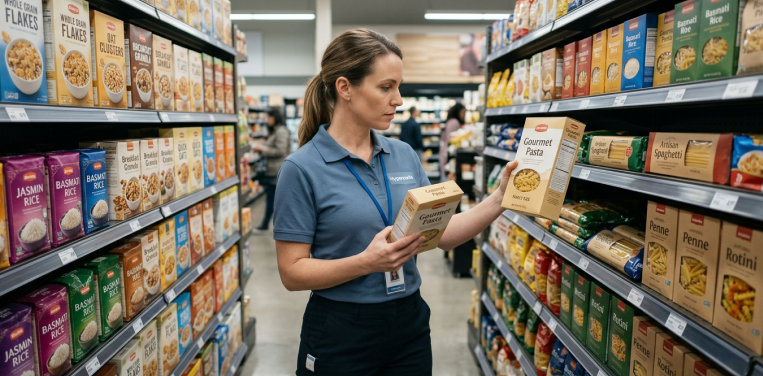
Packaged Products May Support Longer Pricing Review Horizons
Many shelf-stable packaged products offer retailers greater flexibility in inventory planning.
A retailer may be able to carry inventory across multiple selling periods without the same immediate perishability concerns associated with some fresh products.
This can influence pricing strategy.
A packaged product with excess inventory does not necessarily require an immediate markdown.
The retailer may consider anticipated demand, replenishment plans, competitive position, and profitability.
For example, a retailer may hold substantial stock of a popular packaged snack before an expected seasonal demand period.
The inventory position could be commercially appropriate rather than a reason for discounting.
Hypersonix Forecasting AI supports demand forecasting and planning.
Inventory AI provides visibility into stock conditions.
Pricing AI supports price holds and product-level recommendations.
Together, these capabilities can help retailers consider whether existing packaged product prices remain appropriate.
For Pricing Software for Ecommerce, this distinction helps avoid applying fresh-category urgency to packaged products with different inventory characteristics.
However, packaged products can still face expiry risk, discontinuation, or seasonal demand changes.
The appropriate review horizon depends on the product rather than its category label alone.
Demand Forecasting Adds Important Context to Grocery Pricing
Current inventory levels do not always explain future commercial risk.
A product with substantial stock may also have strong anticipated demand.
Another product may have modest inventory but face weaker demand over the coming period.
This distinction is important for both fresh and packaged grocery.
For example, a retailer may carry higher fresh produce inventory ahead of an expected demand period.
A pricing review should consider whether that stock is likely to sell within the relevant window.
A packaged product may have excess inventory but enough anticipated demand to support maintaining the existing price.
Hypersonix Forecasting AI supports demand forecasting and planning.
These forecasts can provide context when retailers evaluate pricing opportunities alongside inventory conditions.
However, demand forecasting does not automatically establish the precise sales response to a particular price increase or discount.
The retailer should not assume that a lower price will produce a specific volume increase unless that conclusion is supported by appropriate analysis.
For Pricing Software for Retail, demand planning contributes useful information without replacing pricing judgment.
Inventory Visibility Helps Retailers Identify Different Types of Pricing Risk
Inventory exposure can create different pricing questions across grocery categories.
A fresh product with high remaining stock and a short usable selling window may require attention.
A packaged product with high stock but stable expected demand may not need a price change.
A product with limited availability may require a review of replenishment plans rather than a price increase.
Hypersonix Inventory AI supports visibility into the retailer's own inventory and inventory-aware decisions.
This information can complement product-level pricing recommendations from Pricing AI.
For example, a retailer may examine whether a proposed markdown is commercially justified for a fresh product with inventory exposure.
Another product may be suitable for a price hold because anticipated demand and stock levels remain appropriate.
Inventory context helps identify questions worth investigating.
It does not independently establish the correct selling price.
For Pricing Software for Ecommerce, inventory visibility can be particularly valuable when online grocery catalogs include many products with different stock positions and selling windows.
Retailers should also distinguish their own inventory conditions from competitor availability.
Hypersonix Inventory AI should not be interpreted as providing comprehensive visibility into competitor stock levels.
Fresh and Packaged Products Need Different Promotional Evaluations
Temporary promotions can play an important role in grocery retail.
But promotional objectives may differ across fresh and packaged products.
A fresh produce promotion may be considered to support sell-through during a limited selling period.
A packaged staple promotion may be designed to support a seasonal campaign or category objective.
A branded packaged product may be included in a supplier-supported promotion.
A retailer may also promote selected fresh products as part of a broader merchandising initiative.
These activities require separate evaluations from regular pricing decisions.
Hypersonix Promo AI supports promotion planning and effectiveness analysis.
Hypersonix Pricing AI supports product-level everyday pricing recommendations and profitability guardrails.
The distinction matters because a temporary promotional discount should not automatically become a permanent price reduction.
For example, a retailer may discount fresh berries during a short campaign to support a particular inventory objective.
That does not necessarily mean the everyday selling price of future berry inventory should be permanently reduced.
Similarly, a packaged cereal promotion may increase sales during a campaign without establishing that the regular price is commercially inappropriate.
Modern Pricing Software for Retail should help teams maintain discipline in everyday pricing, while promotional planning is evaluated against the relevant campaign objectives.
Why Broad Grocery Discounts Can Create Unnecessary Margin Leakage
Uniform discounts can be operationally simple.
A retailer may offer 10% off an entire grocery category or apply the same markdown across multiple product groups.
However, broad discounts can affect products with very different unit margins and commercial conditions.
Consider two hypothetical grocery products.
The first is a packaged staple priced at $10 with a unit cost of $8.
Its gross profit per unit is $2.
The second is a fresh specialty item priced at $10 with a unit cost of $6.
Its gross profit per unit is $4.
A 10% reduction brings both selling prices to $9.
The packaged staple's gross profit falls to $1, a 50% decline in unit gross profit.
The fresh specialty product's gross profit falls to $3, a 25% decline.
The same discount produces different financial effects.
This does not establish that the fresh product should be discounted.
It demonstrates why retailers need product-level profitability analysis before approving broad price reductions.
Hypersonix Pricing AI supports margin floors, price movement limits, and product-level recommendations for governed pricing decisions.
Promo AI supports promotion planning and effectiveness analysis.
Retailers should evaluate temporary promotional discounts against their own financial and approval requirements rather than assuming Pricing AI's regular price guardrails automatically govern every promotion.
The objective is to avoid unnecessary margin erosion while allowing commercially justified pricing and promotional actions.
Price Holds Can Be Appropriate for Both Fresh and Packaged Products
Price changes are not always necessary.
A fresh product may have adequate anticipated demand and manageable inventory despite a relatively short selling window.
A packaged product may be competitively positioned and profitable at its existing price.
In both situations, holding the current price may be appropriate.
Hypersonix Pricing AI supports price holds as part of governed pricing workflows.
A deliberate hold can help retailers maintain an existing price when the available information does not justify a change.
Consider a retailer selling packaged pasta at an appropriate margin and competitive position.
A competitor's temporary promotion may create an observed price gap.
The retailer may choose to hold its everyday price rather than permanently respond to a short-term offer.
Similarly, a fresh produce product may have substantial stock but enough anticipated demand to support continued selling at its existing price.
A hold may be appropriate after reviewing the relevant conditions.
For Pricing Software for Ecommerce, the key distinction is between a deliberate pricing decision and failure to review the product.
An unchanged price can be a sound commercial outcome when supported by evidence.
Margin Floors Help Protect Profitability Across Grocery Categories
Grocery products often operate under different margin requirements.
A high-volume staple may have relatively limited pricing flexibility.
A differentiated specialty product may have a different margin structure.
Fresh products may require additional consideration of inventory losses and other operational costs.
Hypersonix Pricing AI supports margin floors that help retailers evaluate pricing recommendations against acceptable profitability requirements.
For example, a competitor-driven reduction on a packaged staple may approach the product's margin floor.
That recommendation may deserve further review before approval.
A proposed reduction on a fresh product may also need to satisfy the retailer's pricing constraints.
However, margin floors should not be interpreted as automatically accounting for every element of spoilage, shrink, handling, and fulfillment cost unless those economics are appropriately represented in the relevant data and workflow.
For Pricing Software for Retail, margin floors provide a useful foundation for disciplined product-level pricing decisions.
The objective is to prevent competitiveness or inventory concerns from overriding profitability requirements without appropriate review.
Price Movement Limits Help Control Excessive Grocery Repricing
Grocery retailers may face pressure to adjust prices for many reasons.
Competitor prices may change.
Supplier costs may shift.
Inventory conditions may evolve.
Demand expectations may change.
These developments can lead to repeated pricing reviews.
However, frequent or substantial changes may create operational complexity and financial risk.
Hypersonix Pricing AI supports price movement limits that help define acceptable boundaries for proposed price adjustments.
For example, a retailer may consider a price increase following a supplier cost change.
If the recommended increase exceeds the established movement threshold, the proposal may require additional review.
A large reduction intended to address a competitive gap may also deserve closer evaluation.
Movement limits help teams maintain discipline without preventing justified changes.
For Pricing Software for Ecommerce, these controls support more consistent pricing decisions across large grocery assortments.
The objective is not to change prices as frequently as possible.
It is to make appropriate adjustments while respecting business guardrails.
Product Clustering Can Support More Structured Grocery Pricing Analysis
Grocery retailers manage extensive assortments containing products with different sizes, brands, formulations, costs, and strategic roles.
Reviewing every SKU independently can be difficult.
At the same time, relying on broad category averages may conceal important product-level differences.
Hypersonix Pricing AI supports product clustering and predictive analytics.
These capabilities can provide analytical context when examining related products.
For example, a retailer may review comparable packaged staples to understand differences in pricing and profitability.
Another review may focus on fresh products within a related category.
Clustering can help organize pricing analysis across a large assortment.
However, products within a cluster should not automatically receive identical pricing adjustments.
Two vegetables may have different costs, remaining selling opportunities, or competitive positions.
Two packaged products may have different margin requirements or product roles.
For Pricing Software for Retail, clustering helps teams identify patterns and potential pricing questions while maintaining appropriate product-level judgment.
Exception-Based Review Helps Teams Focus on Commercially Important Products
Grocery pricing teams may manage thousands of products and frequent pricing requests.
Not every product requires the same level of attention.
A high-volume staple with a meaningful competitor gap may be strategically important.
A fresh product facing inventory exposure may require further evaluation.
A proposed price increase that exceeds a movement limit may need additional approval.
A reduction approaching a margin floor may deserve review.
Hypersonix Pricing AI supports exception-based workflows that help teams evaluate recommendations requiring greater oversight.
For example, a retailer may review a recommendation involving a strategically important packaged product because of its competitive positioning.
A different recommendation involving a fresh product may require consideration of anticipated demand and inventory conditions.
These situations have different commercial implications.
Exception-based review helps retailers direct attention toward decisions that deserve more business judgment.
The goal is not to investigate every grocery product with equal intensity.
It is to focus on commercially important recommendations while maintaining a structured pricing process.
Explainability Helps Grocery Teams Understand Different Pricing Decisions
Grocery pricing often involves pricing teams, category managers, merchandising, finance, ecommerce, and operational stakeholders.
Different teams may emphasize different objectives.
Pricing may focus on competitive position.
Finance may focus on profitability.
Merchandising may consider product roles and promotional plans.
Operations may be concerned about inventory exposure.
These priorities can produce different perspectives on whether a product's price should change.
Hypersonix Pricing AI supports explainable workflows that help teams evaluate recommendations within their business context.
For example, a packaged grocery staple may receive a price hold because its competitive positioning remains appropriate.
A fresh product may be considered for a reduction because its inventory conditions and profitability requirements warrant review.
A premium product may require additional analysis before responding to a lower competitor offer.
Explainability helps teams understand why different products may receive different recommendations.
For Pricing Software for Ecommerce, this is valuable when large online assortments contain products with distinct commercial conditions.
The objective is not to make every grocery category follow the same pricing logic.
It is to ensure decisions can be evaluated using clear reasoning.
Price Execution Monitoring Matters Across Fresh and Packaged Grocery
A pricing recommendation only creates its intended commercial opportunity when the approved change is implemented correctly.
This is important in grocery because even small price differences can have cumulative financial effects on high-volume products.
A retailer may approve an increase following a supplier cost review.
If the price is not updated, the expected improvement in unit gross profit may not materialize.
A reduction may be approved for selected products but implemented incorrectly.
A product may also remain at its previous price after the approved change was intended to take effect.
Hypersonix Pricing AI supports price execution monitoring.
This capability helps teams review whether approved pricing changes were implemented as intended and identify discrepancies such as missed, delayed, incorrect, or inconsistent updates.
For example, a retailer may approve a new price for a packaged staple after reviewing its economics.
Execution monitoring can support verification that the approved price was implemented.
The same principle applies to fresh grocery products.
However, this capability should not be interpreted as automatically correcting every pricing error or independently controlling every promotional price.
For Pricing Software for Retail, execution monitoring adds accountability after the pricing decision.
The right recommendation still needs accurate implementation.
How Different Grocery Categories Can Apply Differentiated Pricing Strategies
The importance of differentiated pricing becomes clearer when considering individual grocery categories.
Fresh Produce
Fruit and vegetable pricing may require attention to variety, grade, sourcing, inventory exposure, perishability, and anticipated demand.
Retailers should avoid assuming that every lower competitor price represents an equivalent product.
Fresh Meat and Seafood
Cuts, weights, quality specifications, sourcing, and storage requirements may influence pricing.
Product comparability and remaining selling opportunities deserve careful evaluation.
Dairy Products
Dairy includes products with different shelf lives, packaging formats, and replenishment characteristics.
Retailers should consider unit economics, competitor comparability, and inventory conditions rather than applying a uniform pricing rule.
Bakery Products
Fresh bakery items may have relatively short selling windows, while packaged baked goods can have different shelf-life characteristics.
Pricing reviews should reflect these differences.
Packaged Pantry Staples
Rice, pasta, flour, canned products, and other staples may play important roles in a retailer's competitive value positioning.
Pack size, unit pricing, brand, and product role are important considerations.
Packaged Snacks and Beverages
These products may have substantial brand competition, varied pack sizes, and frequent promotional activity.
Everyday pricing should be evaluated separately from temporary promotional offers.
Frozen Foods
Frozen products may have longer usable lives than many fresh foods, but they also carry specific storage, inventory, and fulfillment considerations.
The pricing strategy should reflect product economics and competitive conditions rather than assuming frozen products are equivalent to shelf-stable packaged items.
Across these categories, the appropriate pricing approach depends on the specific product's economics, inventory conditions, competitive relevance, and business role.
A Practical Framework for Pricing Fresh and Packaged Grocery Products
Retailers can establish a structured approach to evaluating grocery pricing opportunities.
The following framework illustrates a retailer-defined process that can be informed by Hypersonix capabilities. It is not a claim that the platform independently performs every operational or financial analysis described.
1. Identify the Product's Commercial Characteristics
Determine whether the product has a short selling window, important inventory exposure, or specific replenishment requirements.
Consider its category and strategic role.
2. Review Product Economics
Evaluate the current selling price, unit cost, gross margin, and other relevant commercial considerations.
Where applicable, examine shrink, spoilage, and fulfillment economics through the retailer's own financial analysis.
3. Assess Inventory and Anticipated Demand
Use relevant inventory visibility and demand forecasts to understand whether stock conditions deserve closer review.
4. Evaluate Competitive Benchmarks
Review relevant competitor observations using product matching, competitor relevance filtering, and meaningful price gap analysis.
Validate important differences in pack size, grade, variety, brand, or formulation.
5. Apply Product-Role Rules and Pricing Guardrails
Evaluate recommendations against margin floors, movement limits, product roles, and other established business requirements.
6. Decide Whether to Move, Hold, or Review
Approve a commercially justified adjustment, maintain the existing price, or request further investigation.
7. Verify Approved Price Execution
Review whether approved changes were implemented correctly for the intended products.
This approach helps grocery retailers distinguish between genuine pricing opportunities and situations where maintaining the current price is more appropriate.
How Hypersonix Supports More Informed Grocery Pricing
Hypersonix provides complementary capabilities that can help grocery retailers evaluate product-level pricing decisions across fresh and packaged assortments.
Hypersonix Pricing AI supports:
- Product-level pricing recommendations
- Predictive analytics and product clustering
- Margin floors
- Price movement limits
- Price holds
- Product-role rules
- Meaningful gap thresholds
- Exception-based review
- Explainable pricing workflows
- Price execution monitoring
These capabilities help retailers evaluate recommendations within established business rules and review whether approved price changes were implemented as intended.
Hypersonix Competitor AI supports:
- Daily, weekly, or monthly competitor price tracking
- Product matching
- Competitor relevance filtering
- Meaningful price gap analysis
These capabilities help retailers work with more relevant competitor benchmarks and assess whether observed price differences deserve attention.
Hypersonix Forecasting AI supports demand forecasting and planning.
Hypersonix Inventory AI provides visibility into the retailer's inventory and supports inventory-aware decision-making.
Hypersonix Promo AI supports promotion planning and effectiveness analysis, helping retailers evaluate temporary promotional initiatives separately from everyday price recommendations.
Together, these capabilities can provide useful information for grocery pricing reviews.
However, it is important to maintain clear distinctions between their roles.
Pricing AI supports pricing recommendations and governed workflows. Competitor AI provides scheduled competitive price observations and product matching. Inventory AI provides the retailer's stock context. Forecasting AI supports demand planning. Promo AI supports promotional evaluation.
These capabilities should not be interpreted as automatically determining product freshness, measuring every source of grocery shrink, predicting the exact demand response to each price change, or independently setting expiration-driven markdowns.
Retailers remain responsible for maintaining appropriate product data, defining their business rules, evaluating commercial trade-offs, and approving pricing decisions.
What Grocery Retailers Should Look for in Pricing and Competitor Intelligence Software
Grocery retailers evaluating pricing technology should consider whether the solution can support the different economics of fresh and packaged products.
Modern Pricing Software for Retail should help teams evaluate product-level recommendations, margin floors, movement limits, price holds, product roles, and exception-based reviews.
Modern Pricing Software for Ecommerce should support structured pricing decisions across extensive online grocery assortments while considering relevant inventory and demand context.
Modern Competitor Analysis Software for Retail should support reliable product matching and competitor relevance filtering, particularly where pack sizes, formulations, grades, and varieties affect comparability.
Modern Competitor Analysis Software for Ecommerce should help teams interpret online competitor prices using meaningful product comparisons and appropriate daily, weekly, or monthly monitoring cadences.
Retailers should also consider how demand forecasting, inventory visibility, and promotional planning can contribute to pricing reviews.
The technology should support important business questions.
Does the product's remaining selling window create a reason for closer review? Is a competitor's lower price based on an equivalent product? Does the recommended change protect acceptable profitability? Is the product a key value item or a differentiated offering? Does its inventory position justify additional attention? Should the existing price move, hold, or receive further evaluation?
These questions help retailers avoid applying one pricing strategy to products with very different commercial characteristics.
Conclusion
Fresh and packaged grocery products may belong to the same retailer's assortment, but they often require different pricing considerations.
Fresh products can face shorter selling windows, greater exposure to spoilage, and inventory conditions that make the timing of pricing reviews important.
Packaged products may have longer shelf lives, recognizable competitive benchmarks, and different product roles within the retailer's value proposition.
Both groups can experience supplier cost changes, competitive pressure, and profitability challenges.
However, the appropriate pricing response depends on the specific product's economics, inventory conditions, anticipated demand, and competitive positioning.
Modern Pricing Software for Retail and Pricing Software for Ecommerce should help grocery retailers evaluate product-level opportunities through margin floors, price movement limits, price holds, product-role rules, exception-based review, explainable workflows, and price execution monitoring.
Modern Competitor Analysis Software for Retail and Competitor Analysis Software for Ecommerce should support reliable product matching, competitor relevance filtering, meaningful price gap analysis, and daily, weekly, or monthly competitor tracking.
Hypersonix Pricing AI and Competitor AI support these capabilities, while Inventory AI and Forecasting AI provide additional stock and demand-planning context.
Promo AI supports the separate evaluation of temporary promotional initiatives.
Together, these capabilities can help grocery retailers make informed pricing decisions






Ready to Let AI Agents Work for Your Margins?
Leading brands are already growing profits on autopilot. Join them.


Trusted by 1000+ leading retail brands