Grocery retailers operate in one of the most price-sensitive areas of retail. Customers notice the price of staples. Competitors adjust prices on visible items. Promotions can shift perception quickly. Ecommerce channels make comparisons easier. A small price difference on a high-frequency product can influence how shoppers view the retailer’s overall value.
That is why competitor intelligence matters.
But competitor visibility can also create risk.
If every competitor price gap becomes a price cut, grocery retailers can quickly move from competitive awareness to a price war. A competitor lowers the price on a staple. Another retailer reacts. Then the competitor responds again. Before long, prices move downward across products that may not need to be discounted, and margin begins to erode.
Modern Competitor Analysis Software for Retail and Competitor Analysis Software for Ecommerce should help grocery teams understand competitor movement without encouraging automatic price matching. Modern Pricing Software for Retail and Pricing Software for Ecommerce should help teams decide whether a product should move, hold, or be reviewed using margin floors, price movement limits, price holds, product-role rules, exception-based review, and explainable workflows.
Hypersonix supports this approach through Competitor AI and Pricing AI. Competitor AI helps retailers track competitors on daily, weekly, or monthly cadences, improve product matching, filter relevant signals, and evaluate meaningful price gaps. Pricing AI helps teams govern pricing decisions with margin protection, price movement control, price holds, product-role logic, exception-based review, and explainability.
The goal is not to ignore competitors.
The goal is to use competitor intelligence without letting competitors control the pricing strategy.
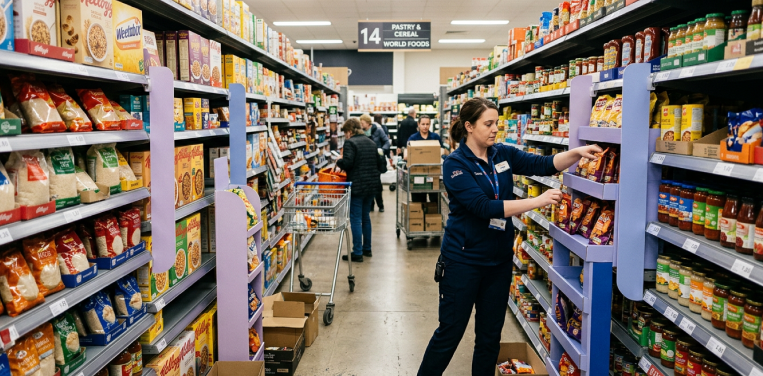
Why Grocery Competitor Intelligence Can Trigger Overreaction
Grocery teams face pressure to stay competitive because many products are frequently purchased and easy for shoppers to remember.
Milk, eggs, bread, rice, cereal, produce, household staples, beverages, and common pantry items can shape price perception. If a competitor is visibly cheaper on these products, pricing teams may feel pressure to react quickly.
But not every competitor signal deserves a price move.
A competitor may be running a short-term promotion. The pack size may differ. The product may be a private-label alternative rather than a true match. The item may be out of stock. The lower price may apply only through a loyalty program. The unit price may tell a different story than the headline price.
When competitor intelligence lacks context, it can create overreaction.
A lower competitor price may look like a threat, but the correct response may be a hold or review instead of an immediate price cut.
This is why Competitor Analysis Software for Retail should help grocery teams interpret competitor signals, not simply collect them.
Price Wars Often Start With a Single Misread Signal
Price wars rarely begin with a clear strategic decision to destroy margin.
They often start with one reaction.
A competitor lowers a price on a visible product. The retailer matches. Another competitor responds. The retailer follows again. Then the logic spreads into adjacent products, related categories, private-label items, and products that do not meaningfully influence price perception.
Soon, the retailer is not just protecting price image.
It is discounting too broadly.
In grocery, this is especially dangerous because many items have tight margins and high volume. A small reduction can scale quickly across frequent purchases. If the reduction is based on a weak competitor match or a temporary offer, the retailer may lose margin without gaining meaningful competitive advantage.
Modern Pricing Software for Retail should help grocery teams avoid this pattern by applying guardrails before price changes are approved.
A competitor signal should not automatically become a pricing action.
It should be evaluated through product matching, competitor relevance, meaningful gap thresholds, margin floors, product-role rules, and price holds.
Product Matching Is the First Defense Against Price Wars
Product matching is one of the most important parts of grocery competitor intelligence.
A competitor may appear cheaper, but the products may not be equivalent.
In grocery, price comparisons can be misleading when products differ by:
- pack size
- unit measure
- brand
- flavor
- variant
- formulation
- organic versus conventional
- fresh versus frozen
- single item versus multipack
- private label versus national brand
- loyalty price versus standard price
- promotion terms
If these details are missed, the retailer may react to a false price gap.
For example, a competitor may appear cheaper on a cereal, but the box size may be smaller. A produce item may look comparable, but quality, grade, or origin may differ. A household staple may be part of a multipack offer that is not directly comparable to a single-unit price.
Hypersonix Competitor AI helps support product matching so grocery teams can evaluate whether competitor comparisons are strong enough to influence pricing decisions.
For Competitor Analysis Software for Ecommerce, this is especially important because online product listings can make comparisons appear simple when the underlying details are not equivalent.
A weak product match should not trigger a price war.
It should trigger caution.
Unit Price Accuracy Matters in Grocery Comparisons
Headline price can be misleading in grocery.
A competitor may list a lower shelf price, but the unit price may tell a different story. Pack sizes, weights, counts, and multipacks can make headline prices difficult to compare.
For grocery teams, unit price accuracy is critical.
A retailer should not reduce price because a competitor appears cheaper if the competitor product is smaller, lighter, or sold under different quantity terms. Without proper unit comparison, pricing teams may mistake a packaging difference for a true competitive threat.
This is where Competitor Analysis Software for Retail needs to support context-rich competitor analysis.
Product matching should account for pack size and comparable units. Relevance filtering should help teams avoid weak comparisons. Meaningful gap analysis should help determine whether the price difference is large enough to matter.
Competitor intelligence should make price comparisons clearer, not more confusing.
Competitor Relevance Helps Grocery Teams Avoid Chasing the Wrong Players
Not every competitor should influence every grocery pricing decision.
A nearby supermarket may matter for one category. A discount grocer may matter for key staples. A premium grocer may matter for specialty and organic products. A marketplace seller may not be relevant for fresh categories. A regional competitor may matter in one location but not another.
Competitor relevance helps grocery teams focus on the competitors that truly shape customer perception and business outcomes.
Hypersonix Competitor AI supports relevance filtering so teams can reduce noise and focus on competitor signals that matter.
This is important because chasing every lower price from every seller can create unnecessary price movement.
A lower price from an irrelevant competitor should not automatically trigger a response. A temporary price from a seller outside the true competitive set may not justify a change. A competitor with different product quality, availability, service, or fulfillment may not be a suitable benchmark.
Modern Competitor Analysis Software for Ecommerce should help grocery teams answer:
- Is this competitor relevant for this product?
- Is the product truly comparable?
- Is the offer available and current?
- Is the gap meaningful enough to matter?
- Should this signal lead to action, review, or hold?
The right competitor set matters as much as the competitor price.

Meaningful Price Gaps Help Teams Avoid Reacting to Noise
Not every price gap matters.
A competitor may be slightly cheaper, but the difference may not affect customer behavior. A small gap on a low-visibility product may not deserve action. A larger gap on a key value item may require review. A meaningful gap on a true match may justify a move if it fits margin guardrails.
Meaningful price gap analysis helps grocery retailers separate real competitive pressure from pricing noise.
Hypersonix Competitor AI supports meaningful price gap analysis so teams can focus on gaps that are relevant enough to consider.
For Competitor Analysis Software for Retail, this capability is essential because grocery teams often face a large volume of competitor data. Without meaningful thresholds, teams may spend time and margin reacting to small differences that do not change shopper behavior.
A small gap may support a price hold.
A meaningful gap may require review.
A relevant and material gap may justify action.
The point is not to ignore gaps.
The point is to understand which gaps deserve attention.
Price Holds Help Grocery Retailers Avoid Unnecessary Discounting
A price hold is a strategic decision.
It means the retailer has evaluated the signal and decided that a price change is not justified.
In grocery, price holds are especially important because frequent purchases and high volume can make unnecessary reductions expensive. A small discount on a high-volume item can create meaningful margin leakage if it does not improve the business outcome.
Hypersonix Pricing AI supports price holds as part of governed pricing workflows.
A grocery product may hold price when:
- the competitor match is weak
- the unit comparison is not equivalent
- the gap is too small to matter
- the competitor offer is temporary
- the product is already competitively positioned
- the item is near a margin floor
- demand is stable
- the product has a strategic margin role
Modern Pricing Software for Ecommerce should help teams defend a price hold with explainable reasoning. A hold should not feel like a failure to act. It should be treated as a margin-protecting decision.
Sometimes the best way to avoid a price war is to not take the bait.
Product-Role Rules Help Grocery Teams Compete Where It Matters
Grocery assortments contain many different product roles.
Some products are key value items that shoppers remember and use to judge price image. Some are high-volume staples. Some are margin builders. Some are premium or specialty items. Some are private-label products. Others are long-tail SKUs that may not need frequent competitive response.
Product-role rules help grocery teams avoid applying the same competitor response across every product.
Hypersonix Pricing AI supports product-role rules as part of governed pricing workflows.
A key value item may require closer competitor monitoring and tighter meaningful gap thresholds. A margin builder may require stronger margin protection. A premium product may need a hold when competitor comparisons are weak. A long-tail SKU may not need action unless the gap is clearly meaningful.
This is important because price wars often begin when key value item logic spreads too broadly.
A grocer may need to compete aggressively on the few items shoppers remember. But that does not mean the retailer should discount the rest of the basket.
Modern Pricing Software for Retail should help teams apply different pricing logic based on product role.
Margin Floors Protect Profit During Competitive Pressure
Grocery retailers often operate with tight margins.
That makes margin floors essential.
A competitor may be cheaper, but matching that price may not be profitable. A price move may help price image on a key item, but if the move pushes the product below an acceptable margin threshold, the decision should be reviewed.
Hypersonix Pricing AI supports margin floors as part of pricing guardrails. These guardrails help teams prevent recommendations from creating unacceptable margin risk.
For Pricing Software for Ecommerce, this is especially important because online price visibility can push teams toward fast reactions. Margin floors help ensure that competitive pressure does not override profitability.
A grocery team may still choose to accept a lower margin on a strategic item, but that should be a governed decision.
It should not happen automatically because a competitor price appeared lower.
Price Movement Limits Prevent Competitive Overreaction
Price wars often involve repeated price movement.
A retailer lowers price once. Then again. Then again. Each move may seem small, but repeated changes can create price drift and margin erosion.
Price movement limits help control how much a price can move within a governed decision framework.
Hypersonix Pricing AI supports price movement limits that help prevent excessive reductions, repeated small cuts, and uncontrolled downward movement.
This is valuable for grocery because competitive pressure can be frequent, especially on visible items. Without movement limits, even disciplined teams can find themselves reacting too often.
Modern Pricing Software for Retail should help teams control price movement, not just approve price changes.
A product should not keep moving simply because competitors keep moving.
Temporary Competitor Promotions Should Not Become Permanent Base Price Cuts
Competitor promotions are common in grocery.
A competitor may run a weekend special, loyalty discount, multipack offer, digital coupon, temporary markdown, or seasonal promotion. These offers can create visible price gaps, but they may not represent a true market price change.
If a retailer responds by lowering base price, the temporary competitor signal can become permanent margin leakage.
Competitor intelligence should help teams distinguish between competitor base price and promotional activity.
Hypersonix Competitor AI supports competitor tracking on daily, weekly, or monthly cadences, helping teams monitor whether price movements are sustained or temporary. When connected with Hypersonix Pricing AI, teams can evaluate whether the right response is a move, hold, or review.
For Competitor Analysis Software for Ecommerce, this matters because promotional prices can appear frequently online. Grocery teams need context before reacting.
A temporary competitor promotion should not automatically become the retailer’s long-term price strategy.
Exception-Based Review Keeps Human Judgment in Competitive Decisions
Some competitor signals should not trigger automatic action.
They should be reviewed.
Exception-based review helps pricing teams evaluate sensitive decisions before price changes are approved. This is especially important when a product is a key value item, the competitor match is uncertain, the price gap is meaningful but margin risk is high, or the recommendation exceeds movement limits.
Hypersonix Pricing AI supports exception-based review workflows that help pricing, ecommerce, category, merchandising, and finance teams evaluate important recommendations with oversight.
A grocery product may need review when:
- the competitor match is uncertain
- unit price comparison is unclear
- the product is a key value item
- the price gap is large but margin impact is high
- the recommendation approaches a margin floor
- the price move exceeds approved limits
- the competitor offer appears promotional
- the product role requires special handling
For Competitor Analysis Software for Retail, review should be a valid outcome. Competitor intelligence should support action, hold, or review, not just price cuts.
Explainability Helps Teams Resist Price Wars
Pricing teams need to explain why they are not matching every competitor price.
This is especially true in grocery, where price image is sensitive and visible gaps can create internal pressure.
Hypersonix supports explainable workflows that help teams understand the reasoning behind recommendations.
If a product holds price, the team can see whether the reason is weak match quality, small gap size, temporary promotion, margin risk, product role, or movement limits. If a product is routed for review, the team can understand what makes the decision sensitive.
Explainability helps build confidence across pricing, ecommerce, category, merchandising, and finance teams.
For Pricing Software for Ecommerce, this matters because pricing decisions are often visible across channels and teams. A hold or review needs to be defensible.
Price wars thrive on panic.
Explainability supports discipline.
Competitor Tracking Cadence Should Match Product Role
Not every grocery product needs the same competitor tracking cadence.
Some products may need daily tracking because they are high-volume, highly visible, or central to price image. Others may need weekly or monthly review because they are more stable, less visible, or less strategically important.
Hypersonix Competitor AI supports competitor tracking on daily, weekly, or monthly cadences based on product role, business needs, and category volatility.
This helps grocery teams stay aware without creating unnecessary pressure to act.
For Competitor Analysis Software for Ecommerce, the right cadence matters because online markets can create frequent signals. Tracking cadence should support better decisions, not constant chasing.
A key value item may need closer monitoring.
A long-tail product may not.
A premium or specialty product may need a different review rhythm.
Cadence should support strategy.
How Hypersonix Helps Grocery Retailers Use Competitor Intelligence With Discipline
Hypersonix helps grocery retailers connect competitor intelligence with governed pricing decisions.
Hypersonix Competitor AI can help support:
- competitor tracking on daily, weekly, or monthly cadences
- product matching
- relevance filtering
- meaningful price gap analysis
- competitor-aware pricing decisions
Hypersonix Pricing AI can help support:
- product-level pricing recommendations
- margin floors
- price movement limits
- price holds
- product-role rules
- meaningful gap thresholds
- exception-based review
- explainable workflows
Together, these capabilities help grocery teams evaluate whether a competitor signal should lead to a price move, a price hold, or review.
This is what modern Competitor Analysis Software for Retail, Competitor Analysis Software for Ecommerce, Pricing Software for Retail, and Pricing Software for Ecommerce should support: competitive awareness without uncontrolled price matching.
What Grocery Retailers Should Look for in Pricing and Competitor Intelligence Software
Grocery retailers evaluating pricing and competitor intelligence platforms should look for solutions that support both market visibility and margin discipline.
The software should help teams understand competitor movement, but it should also help them avoid unnecessary reactions.
Important capabilities include:
- competitor tracking on daily, weekly, or monthly cadences
- product matching
- unit price and pack size comparison support
- relevance filtering
- meaningful price gap analysis
- margin floors
- price movement limits
- price holds
- product-role rules
- exception-based review
- explainable workflows
- move, hold, or review decision paths
A strong Competitor Analysis Software for Retail platform should help grocery teams interpret competitor signals before acting.
A strong Competitor Analysis Software for Ecommerce platform should help ecommerce teams manage visible online price differences with context.
A strong Pricing Software for Retail platform should help teams protect margin through guardrails and governed workflows.
A strong Pricing Software for Ecommerce platform should help teams respond quickly without starting a price war.
Conclusion
Grocery retailers need competitor intelligence.
But they need to use it with discipline.
A competitor price gap does not always require a price cut. The product match may be weak. The unit comparison may be wrong. The competitor may not be relevant. The offer may be temporary. The gap may not be meaningful. The move may create margin risk.
Modern Competitor Analysis Software for Retail and Competitor Analysis Software for Ecommerce should help grocery teams evaluate competitor signals before action. Modern Pricing Software for Retail and Pricing Software for Ecommerce should help teams decide whether to move, hold, or review using margin floors, price movement limits, price holds, product-role rules, exception-based review, and explainable workflows.
Hypersonix supports this approach through Competitor AI and Pricing AI. Competitor AI helps retailers track competitors on daily, weekly, or monthly cadences, improve product matching, filter relevant signals, and evaluate meaningful gaps. Pricing AI helps teams govern decisions with margin protection, movement control, price holds, product-role logic, exception-based review, and explainability.






Ready to Let AI Agents Work for Your Margins?
Leading brands are already growing profits on autopilot. Join them.


Trusted by 1000+ leading retail brands