Retailers today face an overwhelming volume of competitive data. Prices shift hourly, marketplaces introduce new sellers constantly, and competitor promotions appear and disappear faster than internal teams can react. The challenge is no longer about collecting competitive data. It is about identifying which changes genuinely matter and which ones are simply noise. Without an intelligent filter, teams become reactive, matching competitor moves that have little impact on demand while missing the shifts that truly threaten margin or market share. Hypersonix changes this dynamic by transforming scattered competitor activity into structured, actionable intelligence.
Why Raw Competitive Data Creates Confusion
Most retailers still rely on manual monitoring, spreadsheet comparisons, or basic repricing tools that generate endless streams of alerts. These systems notify teams every time a competitor changes a price, regardless of whether the product is truly comparable or whether the price move carries any significance. This results in constant noise. Teams scramble to react to every small fluctuation, often matching irrelevant price drops or promotional spikes that have no real impact on customer behavior. Traditional tools also lack the ability to distinguish between temporary flash promotions and meaningful shifts in pricing strategy. Because of this, retailers frequently make decisions based on incomplete or misleading information, creating unnecessary margin erosion.

How Hypersonix Filters Noise and Surfaces True Competitive Signals
Hypersonix transforms the competitive monitoring process by focusing not on raw activity but on relevance. The system collects fresh competitive data across websites and marketplaces daily, then prioritizes the changes that meaningfully affect pricing strategy. Instead of overwhelming teams with hundreds of updates, Hypersonix highlights only shifts that could influence demand, price perception, or profitability. This helps retailers respond strategically rather than reactively, saving both margin and time.
Why Accurate Product Matching Is Essential for True Competitive Insight
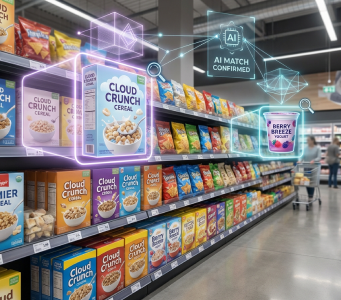
One of the biggest sources of noise in competitive monitoring comes from inaccurate product comparisons. Two items may look similar online but differ in size, material, features, or bundles. Most traditional scraping tools cannot detect these differences and treat non-equivalent items as direct matches. Hypersonix eliminates this issue with AI-powered product matching that uses natural language processing, computer vision, and attribute-level analysis to identify true equivalents and valid substitutes. This ensures that competitive insights are built on accurate product relationships instead of surface-level similarity. As a result, retailers respond only to the competitor moves that actually matter to their customers.

How Elasticity Converts Competitive Data Into Smart Pricing Decisions
Not every competitor price change requires action. Elasticity determines which ones do. Hypersonix measures price sensitivity at both SKU and category-cluster levels to understand how customers in each segment respond to price changes. If a competitor drops the price of a high elasticity item, Hypersonix identifies the potential demand risk. If the product has low elasticity, the system may recommend holding price, protecting margin instead of triggering unnecessary discounts. Elasticity transforms competitive intelligence from a fear-based response model into a disciplined, profit-focused strategy.
How Predictive Intelligence Identifies Real Market Shifts
Competitor price changes occur constantly, but not all of them represent meaningful trends. Hypersonix evaluates historical patterns, promotional cycles, and category behavior to determine whether a competitor move is temporary or represents a strategic shift. This predictive capability prevents retailers from matching short-lived discounts or reacting to isolated events that do not affect long-term demand. Instead, they respond only when sustained competitive pressure or market dynamics require a strategic adjustment.
Why Explainable AI Builds Organizational Confidence
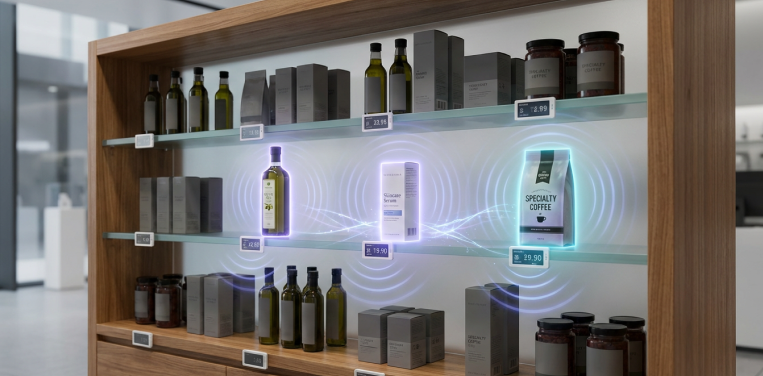
Retail pricing teams adopt AI more effectively when they understand not just the recommendation but the reasoning behind it. Hypersonix provides explainable intelligence that clearly outlines the “why” behind every suggested action. Teams can see which competitor triggered the alert, how elasticity informed the recommendation, and what financial impact is expected. This transparency builds trust across merchandising, pricing, and finance teams and creates alignment across decision-makers. Instead of debating assumptions, they act on shared evidence.
The Role of Execution Monitoring in Ensuring Competitive Precision
Even the best insights fail if price updates do not execute correctly across channels. Retailers often face mismatches between planned and live prices due to sync delays, platform differences, or human error. Hypersonix Price Execution Monitoring ensures that every approved price change goes live accurately across stores, websites, and marketplaces. When discrepancies occur, the system detects them instantly so teams can correct them before customers notice. This closes the loop between strategy and execution, ensuring that competitive intelligence translates into real-world performance.
Conclusion
Retailers today do not lack competitive data. They lack the clarity to distinguish true threats from irrelevant activity. Hypersonix transforms this challenge by combining daily competitive intelligence, AI-driven product matching, elasticity modeling, predictive analytics, and execution monitoring into a single source of truth. Instead of chasing every competitor move, retailers focus on the changes that truly matter. The result is smarter pricing, stronger margins, and a competitive strategy grounded in signal, not noise. In a world where information overload is the norm, intelligence—not speed—is the real advantage.